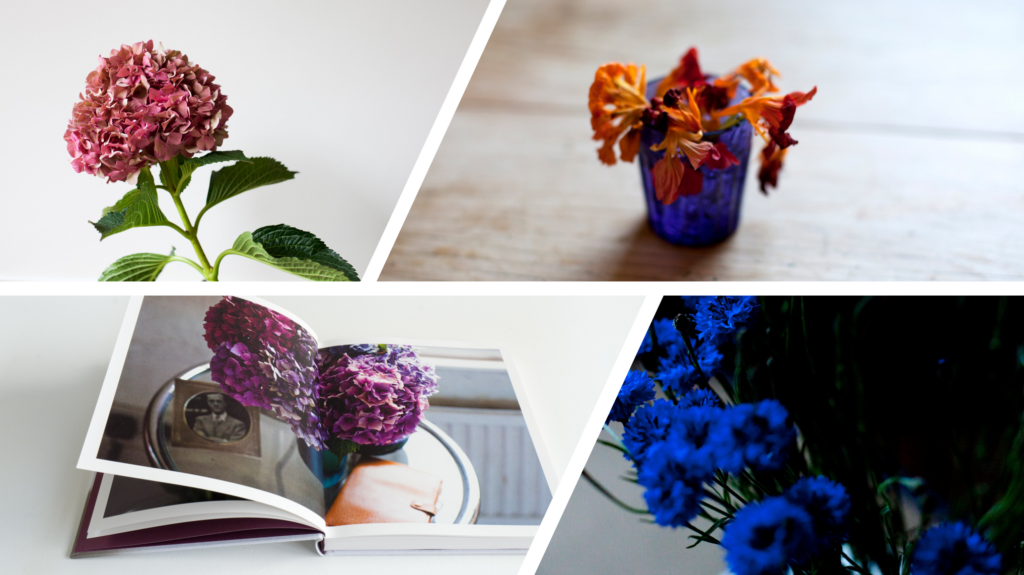
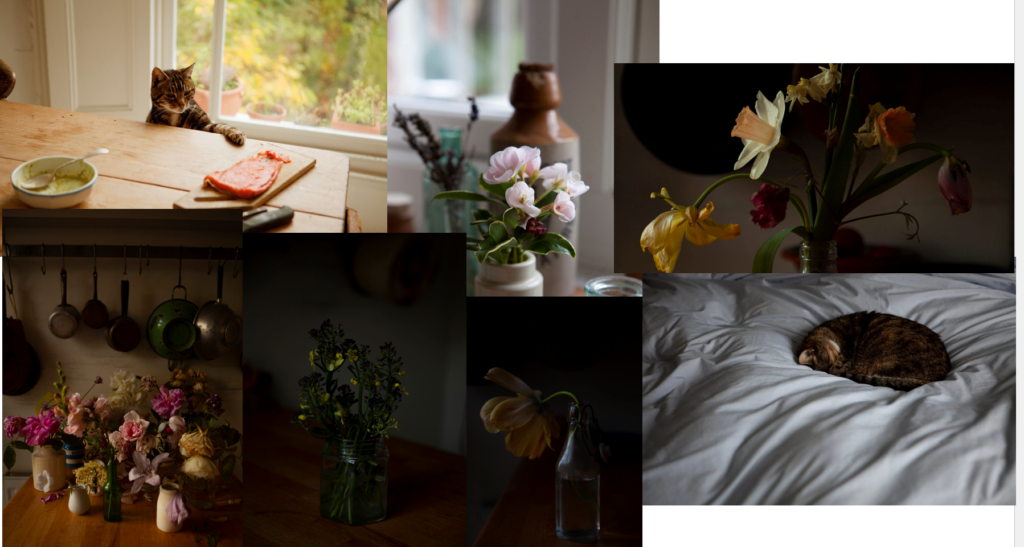
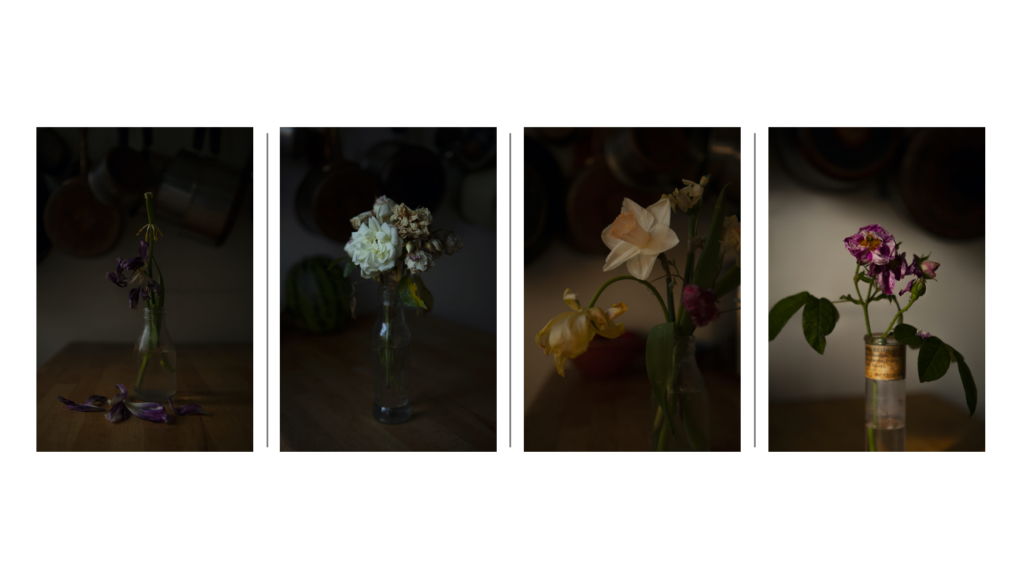
For my final project responding to the theme Origins I intend to explore life cycles, mortality and the inevitability of decay by photographing flowers, documenting their deterioration in a domestic setting. I find it fascinating that the beginning of life coincides with the commencement of decline and this is something I aim to explore throughout this project.
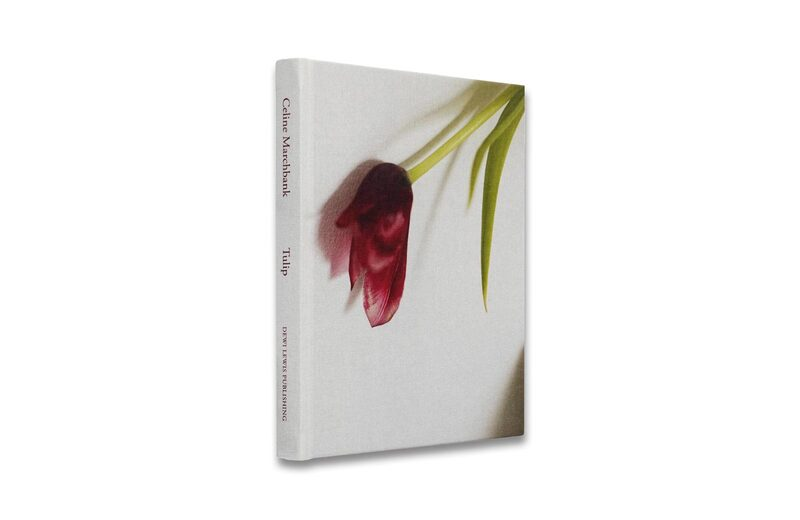
Tulip- Celine Marchbank
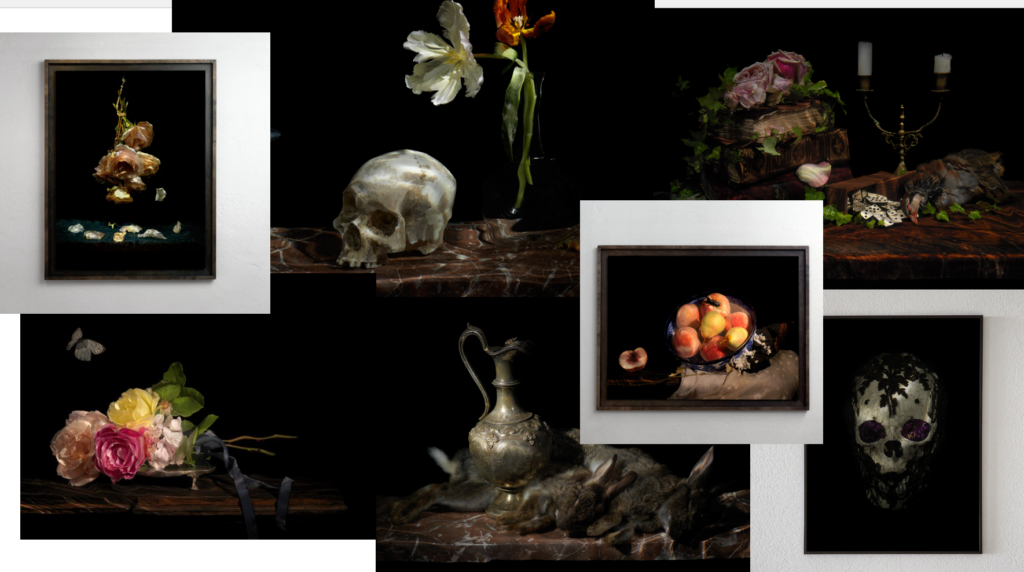
This idea was inspired by Celine Marchbank, particularly her Tulip series, where she uses flowers to reflect personal loss and the quiet progression of morality. I am also influenced by Alexamder James Hamilton’s modern approach to Vanitas, where he uses flowers and other symbolic objects to reference tradition and emphasize the impermanence of life. In addition, Robert Mapplethorpe’s work has informed my visual approach, particularly his use of dark minimalist backgrounds and dramatic lighting to isolate the subject and create a sense of intensity. Their approaches have informed my decision to use a domestic location, varied angles and controlled lighting, alongside subtle Vanitas elements such as glass, petals and water to create conceptual depth.
Underwater Still Life “The Resurrection of Love.” From the Series “Vanitas.” Artist — Alexander James Hamilton
For my final outcome, I plan to produce a physical installation of around 20-30 prints, displayed so that the first image connects to the last to symbolise cyclical life processes. I am going to arrange my images to transition from their peak/bloom through their decline and fragmentation before looping back to the beginning. The variety of angles, scale and abstraction aim to capture and highlight the process of decay in a creative way, enabling the viewer to consider the certainty of death in relation to origin.
Through this project, I intend to create a conceptually thoughtful, technically defined production of work that exposes the fragility of the life cycle, connecting domestic intimate environment with vanitas symbolism and the theme Origins.
This shoot is going to focus on observing and documenting the natural deterioration of flowers in a domestic setting. By photographing the same bunches of flowers repeatedly from different angles and under different lighting conditions, I aim to capture subtle physical changes like drooping petals, discolorations, and decay.
Location:
I am going to use a domestic setting in my home to create a personal and intimate atmosphere, inspired by Celine Marchbanks.
Subject:
Roses and other flowers that are already present in my home.
Experimentation:
Photographing from multiple angles (overhead, eye level, close-up)
Experimenting with natural and artificial lighting
Changing depth of field to isolate details
Capturing texture and subtle changes in form
Outcome:
This photoshoot begins documenting the process of decay, introducing the theme of mortality and establishing a consistent setting for the project.
Photoshoot Plan 2- Bloom and Vitality
Concept:
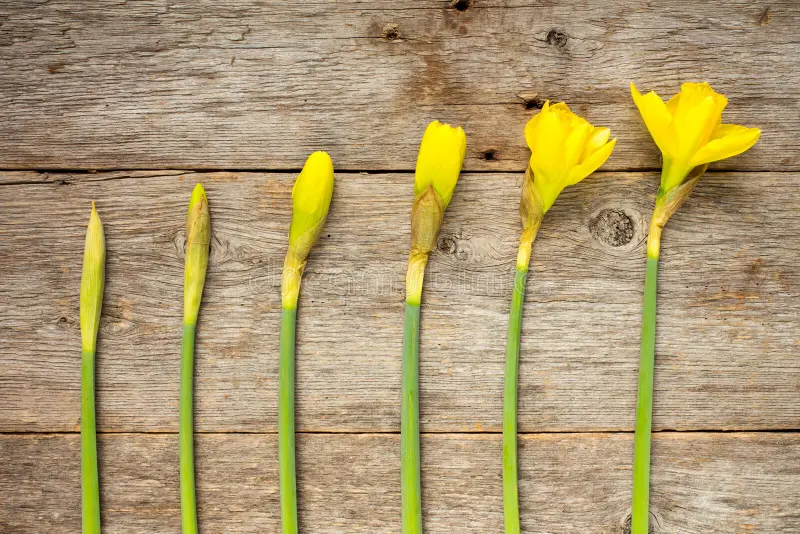
This photoshoot will explore the origin and peak stage of the life cycle, focusing on daffodils as they open and reach full bloom which creates a visual contrast with the deterioration shown in my first photoshoot.
Location:
Same domestic setting to maintain visual consistency.
Lighting:
• Dark background to isolate the flowers
• Directional lighting to create contrast and emphasize shape
Subject:
Daffodils photographed at different stages as they open.
This photoshoot shoot will represent the peak of life, providing a visual contrast to the decline explored in my previous images.
Photoshoot Plan 3- Vanitas and Symbolism
Concept:
This photoshoot will explore mortality and impermanence through vanitas symbolism. By incorporating objects associated with vanitas imagery, it aim to move beyond simple observation of decay and develop conceptual depth.
Location:
In the same domestic environment to maintain continuity.
Subject:
Flowers at various stages of decay along with symbolic objects.
Vanitas Objects:
• Glass containers
• Water
• Fallen petals
• Reflective surfaces/mirrors
• Dramatic lighting
Experimentation:
• Close-up images of texture and deterioration
• Exploring abstraction through detail
• Arranging objects to create symbolic compositions
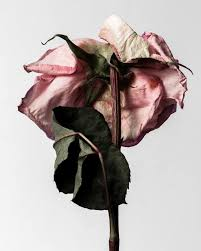
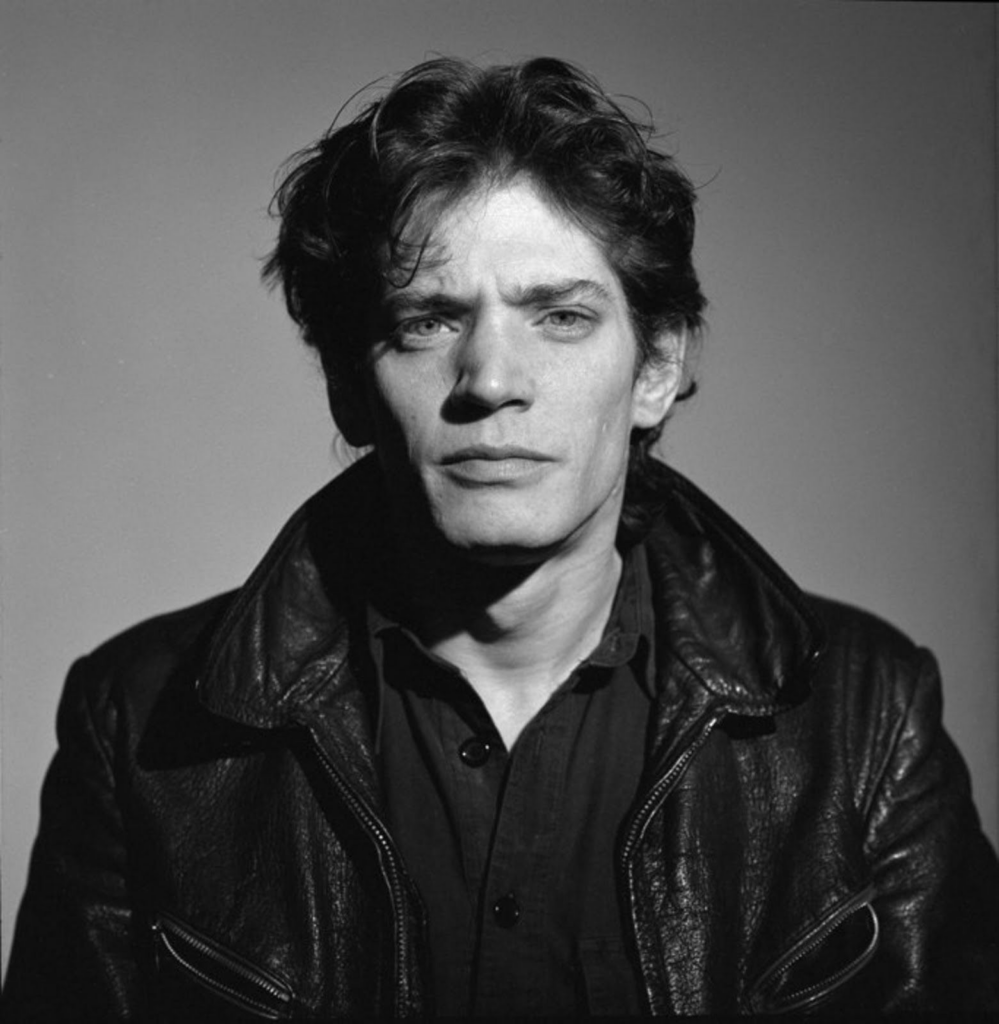
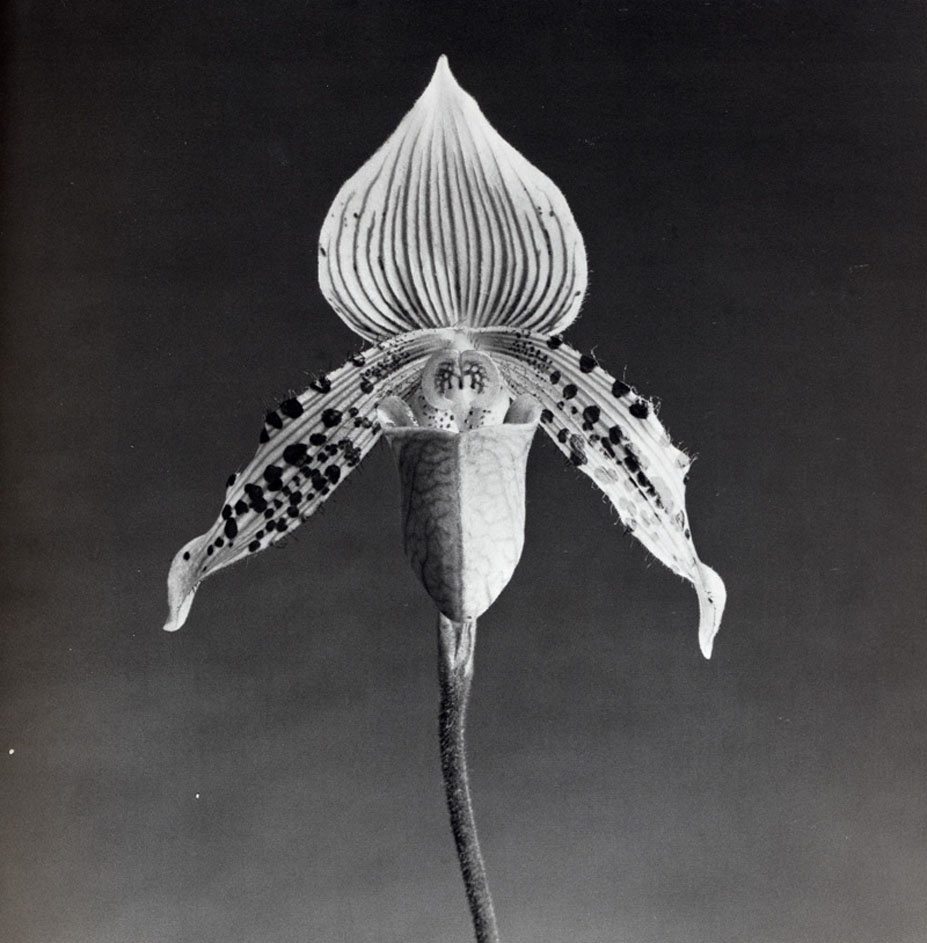
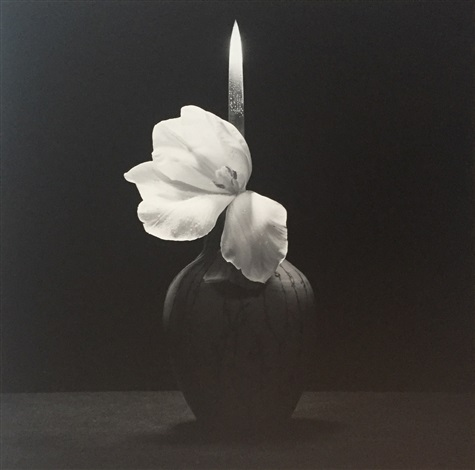
Robert Mapplethorpe (1942-1989) was an American photographer, known for his precise, carefully composed black and white images. Even though he is best known for his controversial nude images, his flower studies demonstrate an intense focus on form, beauty and contrast.
He once stated “I see things like sculptures.” this is shown in the way he isolates flowers against dark, empty backgrounds, transforming natural matter into monumental forms. His work shares a connection to vanitas traditions, where flowers become a symbol of mortality. Yet, unlike traditional Vanitas imagery that focuses on decay, Mapplethorpe captures flowers at their peak, full bloom. This implies that origin and ending exist together within a single moment.
I have chosen to research Mapplethorpe because he captures flowers in a moment of perfection/peak which paradoxically signals the beginning of decline. This makes a unique connection to my theme origin and exploration of mortality. His work includes modern techniques and historical symbolism, by positioning natural forms within a carefully controlled studio environment. The tension he captures between organic and regulated fragility is significant to my investigation and through researching and understanding Mapplethorpe’s work I aim to strengthen the context surrounding my project.
Flowers:
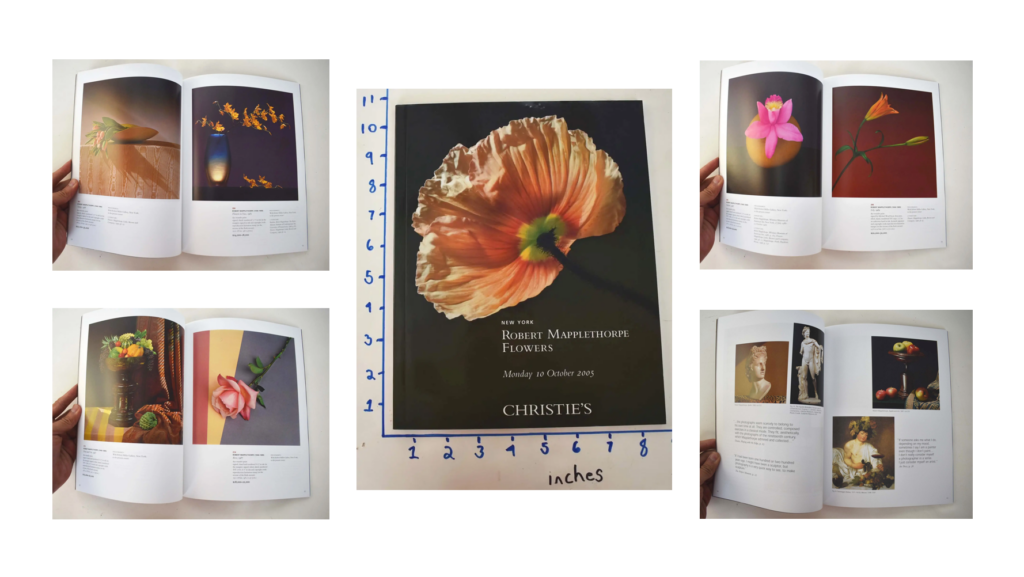
Robert Mapplethorpe: Flowers
Studying mapplethorpe has already influenced my understanding of how composition and lighting can enhance a simple subject and turn it into something symbolic. His use of black-and-white imagery to emphasise form, contrast and tone inspires me to experiment with dark backgrounds to isolate my flowers. However, unlike Mapplethorpe’s images that suggest mortality through control and stillness, my images will reveal it through visible change.
Visually, the image presents a simple still life composition featuring a single flower placed in front of an up-right knife. The flower appears delicate, with soft curved petals and a thin stem, while the knife introduces a stiff, sharp form. These contrasting shapes create visual tension within the image. The background is dark, which isolates the two objects and directs attention to their relationship. The shiny, reflective surface of the knife contrasts with the soft texture of the flower, emphasizing the flowers’ natural fragility. The minimalistic composition makes the interaction between the two subjects the main focus of the image and highlights the strong contrast between them.
Technical
Robert Mapplethorpe is known for his precise studio photography and controlled compositions. In this image, the lighting appears directed to highlight the forms and textures of both the flower and the knife. The strong contrast between light and dark emphasizes and defines the shape of the petals and the blade. The image is carefully composed and balanced; the knife and flower are placed close together, which immediately brings their relationship to attention. He uses a shallow depth of field to keep the subjects in sharp focus while the background remains subdued and unobtrusive.
Conceptual
Conceptually, the image explores the contrast between beauty and danger. The flower symbolizes life and natural beauty, while the knife represents sharpness, threat, and potential harm. By Placing these objects together, Mapplethorpe suggests that beauty is vulnerable and temporary. The knife can be interpreted as a symbol of mortality and used to remind viewers that life is fragile and can easily be destroyed. Through this simple yet powerful composition, Mapplethorpe visualizes the delicate balance between life and death.
Contextual
Mapplethorpe frequently photographed flowers and still-life subjects in his studio, treating them almost like sculptures. His images focus on form, balance, and symbolism. Flowers have historically been used in vanitas still life imagery to symbolize the temporary nature of beauty and life. By introducing a knife into the composition, Mapplethorpe creates a modern interpretation of this which suggests vulnerability and the potential for destruction within something beautiful.
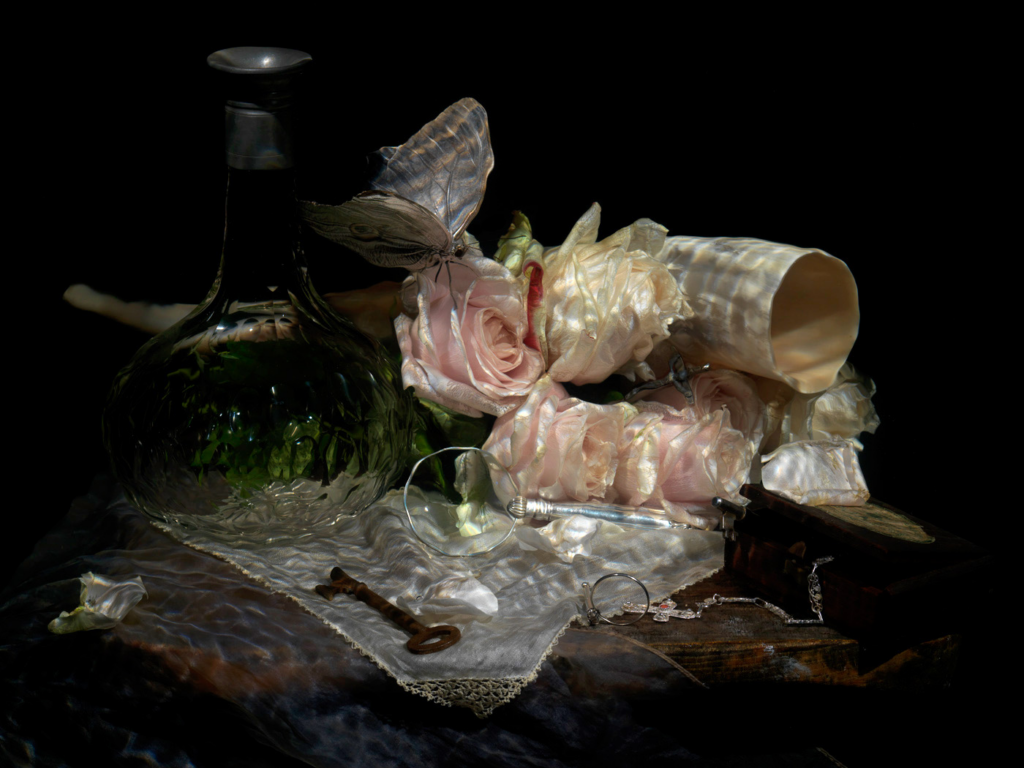
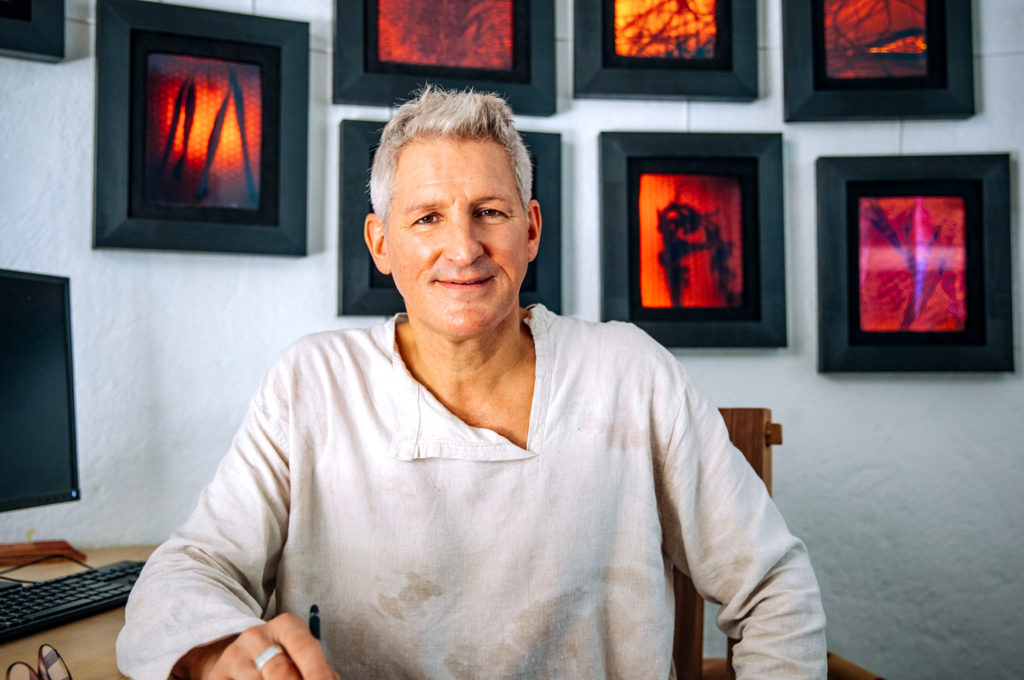
Alexander James hamilton is a British contempory photographer. His work is majorly influenced by the 17th century vanitas painting. He explores this genre by creating staged, carefully composed still-life images which focus on mortality, flowers, decay and the passage of time. His work is a combination of historical artwork and modern photography, incorporating traditional symbolism with present-day techniques. Hamilton often uses dark backgrounds to showcase his subjects, including flowers submerged in water, allowing them to be captured clearly and distinctly. This contrast dramatizes the image and evoking a spiritual atmosphere.
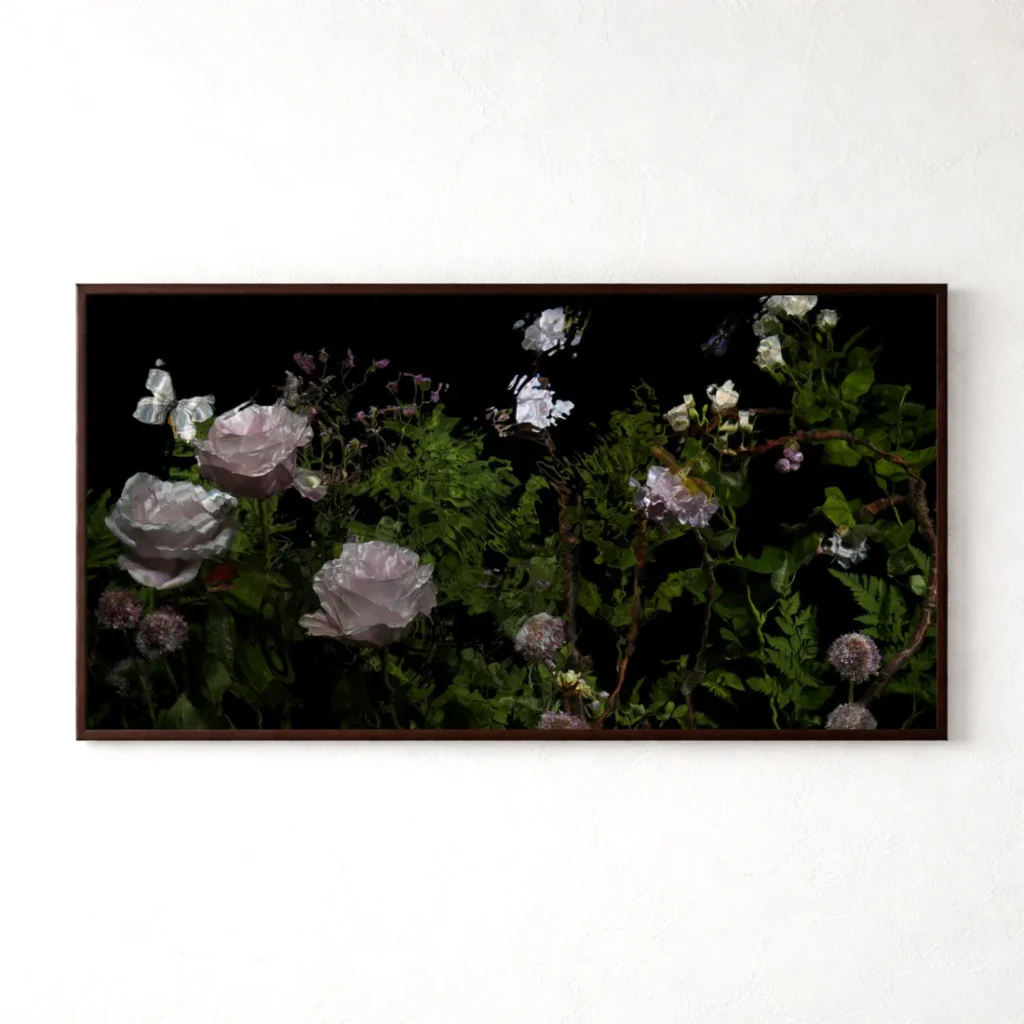
Riverbrook with roses
Riverbrook with roses is one of the many underwater floral scenes Hamilton has created and captured, he is passionate about and well known for this set up. This technique enables him to capture flowers in a slow, rippling state, creating suspension and exposing the flowers fragility.
Image Analysis
from the ´A beautiful announcement of death´ (2012 – 2013) a Vanitas still life tableau constructed entirely underwater, using artist-grown flowers the scene is photographed directly ´in camera without digital intervention.
Visual
The image displays a wide arrangement of flowers and foliage submerged in water against a dark background. Light pink roses, green ferns, and delicate circular flowers are scattered horizontally across the frame, which creates a layered composition, depth, and movement. The dark background isolates the floral forms, which in turn emphasizes their colours and textures. The water distorts areas of the plants, causing petals and leaves to appear blurred or . This distortion creates an almost painterly quality and introduces movement, which reinforces the organic shapes within the composition.
Technical
Technically, the photograph appears to be created using controlled studio lighting, which highlights the delicate textures of the flowers while maintaining strong contrast against the dark background. The scene is photographed underwater, which refracts and warps the light, creating distortion and highlighting areas of the image. This technique causes subtle movement and fragmentation within the composition, which creates a dreamlike visual effect. The wide, panoramic framing allows the botanical elements to interact across the frame. Whilst the depth created by the water intensifies the three-dimensional form of the plants.
Conceptual
Conceptually, the image explores themes of fragility, impermanence, and mortality. Flowers were traditionally used to symbolize beauty and life, yet when they become submerged underwater, they appear distorted, and unstable. The water acts as both a visual and symbolic element by demonstrating the passage of time and visualizing the gradual transformation of living organisms. The distortion of the flowers alters their natural appearance, which acts as a reminder that beauty is short-lived and constantly changing. Through this image, James reflects on the temporary nature of life whilst making direct connections to vanitas symbolism.
Contextually
This image is part of Alexander James’ series of vanitas-inspired images. His work makes references to 17th century vanitas still life paintings, which used floral and natural objects to symbolize the transience of life. By photographing flowers underwater, James reimagines this historical tradition in a creative, contemporary way. The use of water evokes a sense of instability and transformation, reiterating the temporal nature of life and beauty.
Why I Chose This Artist
I chose Alexander hamilton because his work directly connects to my theme ‘Origin’ and exploration of flowers as symbols of life cycles and mortality. I was particularly interested by his connection to Vanitas, particularly how he modernised the tradition by focusing nature and the life cycles of flowers and drawing away from the obvious symbols like skulls etc. His work has influenced meto think about how I can make my images more symbolic and meaningful using ligbting and conposition. His combination of past and present has inspired me to explore this within my own project and create images that have meaning.
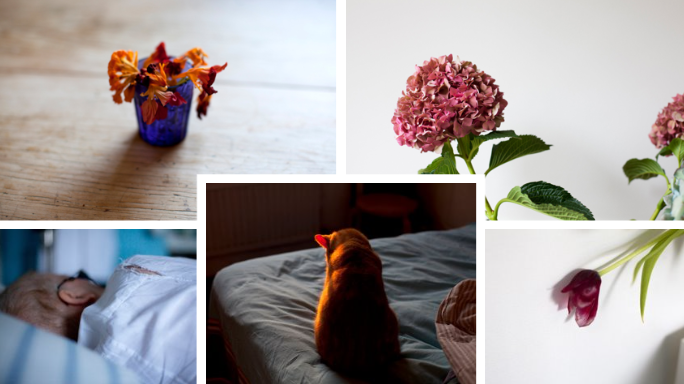
Celine Marchbank is a British photographer/artist who lives in London. Her work explores the complexity and beauty in everyday life, often intimate and reflective. She investigates themes such as memory, family and home, using photography to reflect on/capture emotional processes and life changes. She also teaches photography at Falmouth University, bringing technical and academic aspects to her work. Her work has been broadly recognized and is displayed in many international collections. She continues to teach photography whilst producing her own images that encourage viewers to reflect on personal and universal human experiences.
“I am interested in the way flowers visually represent the ageing process. Flowers express the effects of time in a very short period. They remind me of the mortality of everything around us. We are literally watching them die on a daily basis but it is such a beautiful process.”
Celine Marchbank
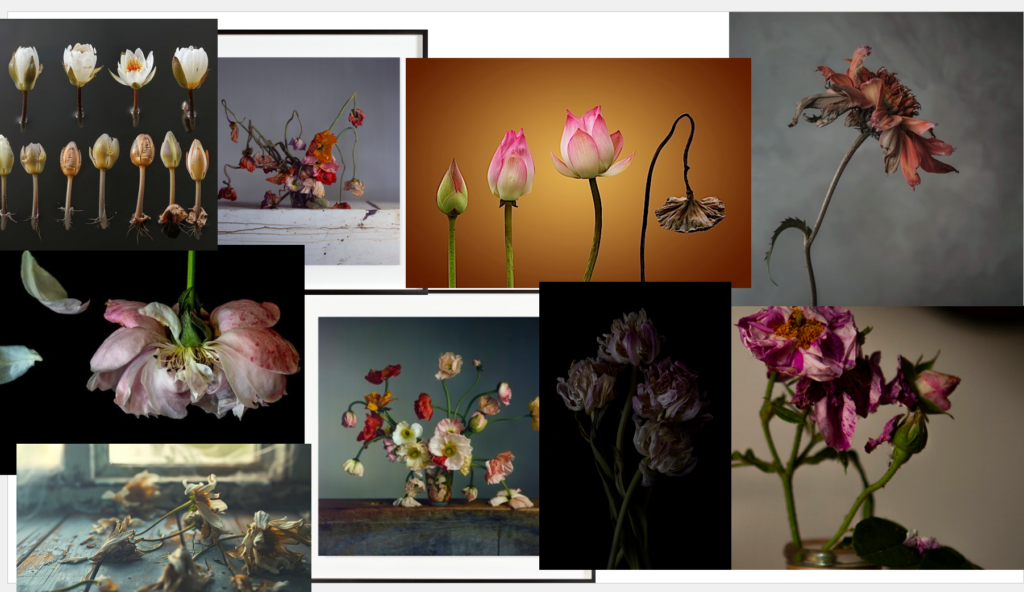
Moodboard of her Images
Tulip
Context:
Tulip, my mothers favourite flower
In September 2009 my Mum was diagnosed with Stage 4 lung cancer, the worst it could be. This meant that the cancer had already spread to distant parts of the body, she had developed a secondary tumour in her brain and a third near her spine. Following a succession of emotionally and physically debilitating treatments including brain operations, chemotherapy, new drug trials and radiotherapy, it was clear that nothing was working. It was too late. By April 2010 they had confirmed it was terminal.
Having painfully come to terms with the fact she was going to die, I decided I didn’t want this project to become a graphic portrayal of her death. My mother was an amazing woman, and it would have been impossible, and wrong, to focus only on the dying part. I wanted to look at the things that made her uniquely her. Her love of flowers was a beautiful part of her personality; the house was always full of them, and I realised as I photographed them, that they were symbolic of what was happening – they represented happiness, love, kindness and generosity, but also isolation, decay, and finally death. Her house was, like she was, so individual. She had distinctive, slightly childlike taste, loving anything bright and cheerful, especially stripes. I needed to document it all. This project became not just about her, but our family home, our life, and of course, her beloved cats.
Celine Marchbank
Tulip- Celine Marchbank
Tulip was Celine’s first photobook, published in 2016. It’s a personal project, made during her mother’s final year of life. In September 2009 her mum was diagnosed with stage 4 lung cancer She chose to focus not on her mothers illness but the small, intimate details that formed her mothers world- especially her love of flowers. In Tulip, Marchbank uses flowers in a domestic setting, the flowers first appear vibrant, colourful and full of life. As the book progresses they begin to wilt and decay in a natural almost cyclical way, linking to the project title Origin by visualizing death as a continuous process rather than the end. Her decision to photograph scenes of things her mother loved and cherished is significant because it focuses on her mothers identity, uniqueness and essence, rather than documenting her illness in a cold, clinical way. Her work has been broadly recognized and is displayed in many international collections. She continues to teach photography whilst producing her own images that encourage viewers to reflect on personal and universal human experiences.
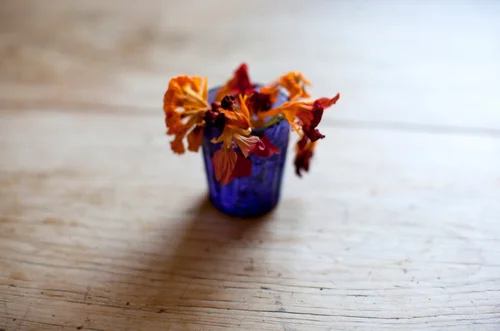
‘Shot in Isolation’- Celine Marchbank
I was also inspired by her later series- Shot in Isolation, she explores emotional separation by framing her flowers to emphasize distance and vulnerability. Her use of flowers to symbolize emotion and visualize life/death and mortality fascinated me, inspiring me to explore this within my title ‘Origin’.
In this image, you can see a small arrangement of wilted flowers inside a blue glass container on a wooden table. The image has a minimal composition; the subject is positioned in the center and surrounded by large amounts of negative space, which evokes a sense of isolation. The warm colours of the flowers- orange, red, and yellow- contrast against the cooler muted tones of the background, emphasizing the flowers’ fragility and deteriorating form. The drooping petals and irregular shapes suggest movement and deterioration, highlighting texture and decay. Her use of space and simplicity within the frame intensifies the flowers’ vulnerability and encourages the viewer to focus on their gradual decline.
Technical
Marchbank appears to use natural light, likely from a window, which creates soft illumination and subtle shadows over the subject. The lighting isn’t direct; it is diffused, which produces a subtle tonal range rather than harsh contrast. A shallow depth of field is used, keeping the flowers in focus while the background becomes blurred, isolating the subject from its surroundings. The camera angle is slightly elevated, allowing the viewer to observe the texture of the arrangement clearly. The controlled focus and soft lighting create a calm and observational image.
Contextual
This image is part of the Tulip Series, created by Celine during the final year of her mother’s life. The project documents flowers within a domestic setting; it reflects themes of loss, fragility, and the passage of time. Her work can also be connected to vanitas traditions, a genre of art historically used to symbolize the impermanence of life and the inevitability of death. By photographing flowers as they deteriorate, Marchbank references these historical ideas while presenting them within a contempory, personal context.
Conceptual
Conceptually, the image explores the relationship between beauty, fragility, and mortality. The wilted flowers symbolize the impermanence of life and the inevitability of mortality. The domestic setting demonstrates how life cycles and loss occur in everyday environments. Rather than depicting death in a dark alarming way, Marchbank focuses on subtle visual changes, such as fading colours and withering petals. This visualizes the quiet progression of time and encourages viewers to reflect on death as something natural and inevitable.
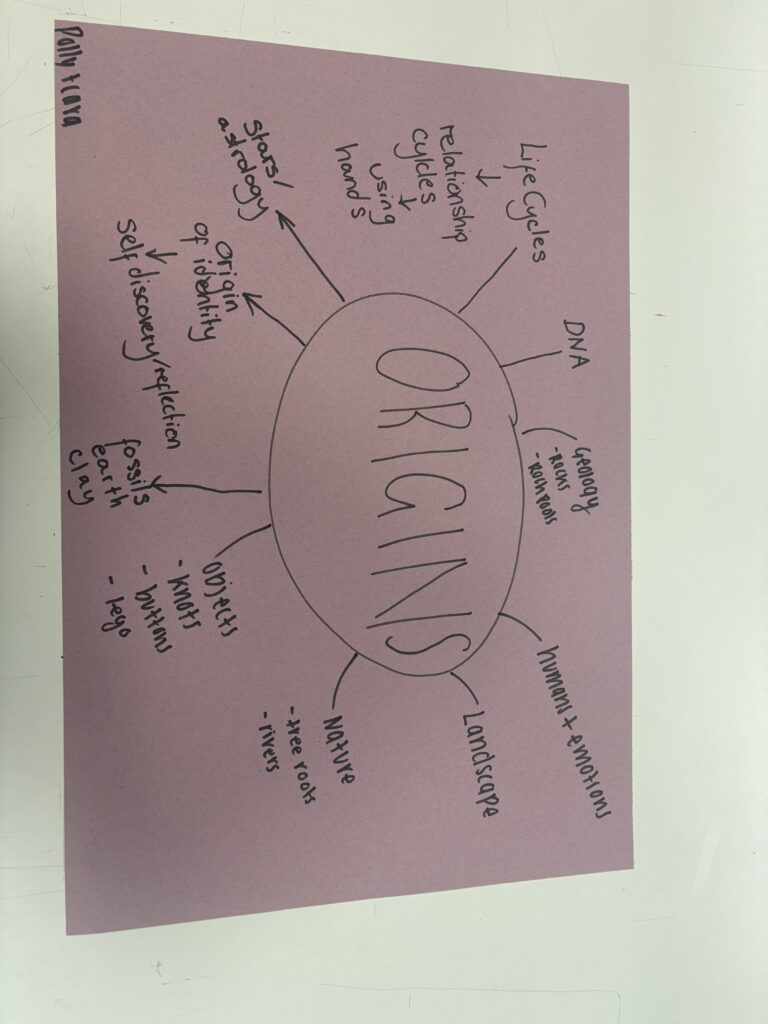
The word “origin” refers to the point which something begins, its source or starting place.
Origins Moodboard
My Moodboard
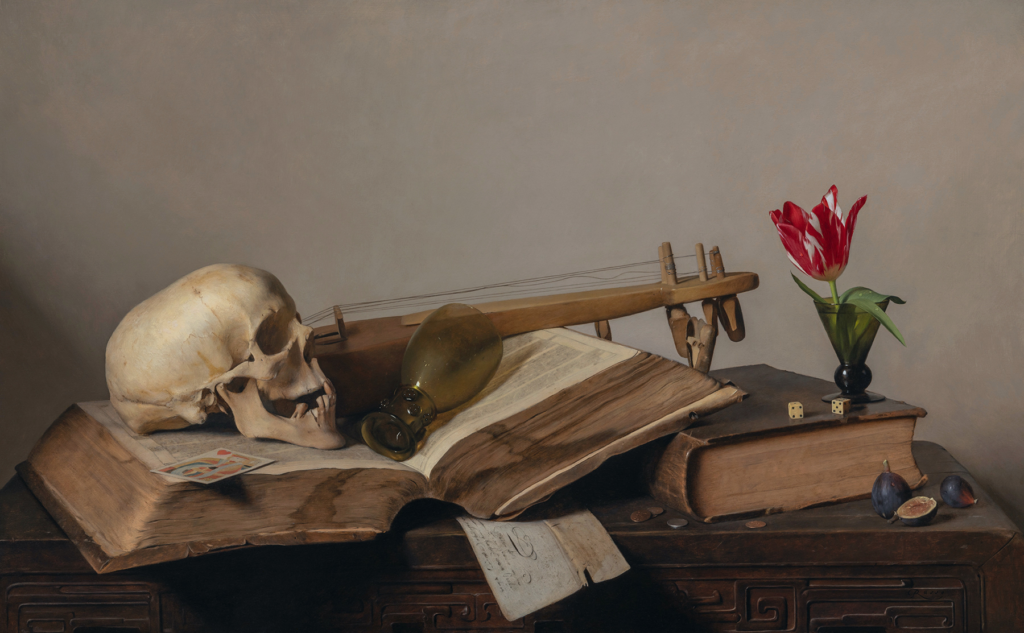
Vanitas Research- context
Carlo Russo, “Vanitas,” 2023, oil on panel, 23 x 37 in.
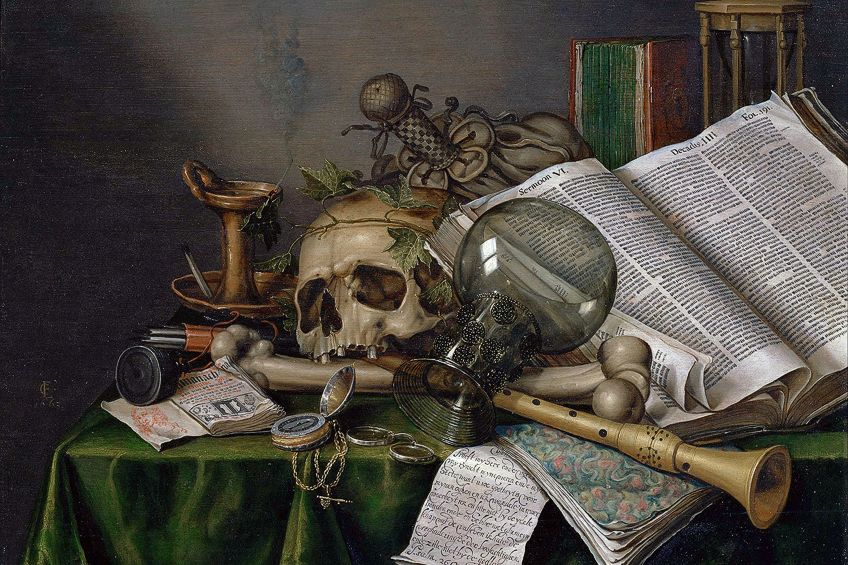
Vanitas is a still-life art style that developed in the 17th century Dutch Golden Age. The word Vanitas comes from the Latin phrase “Vanitas vanitatum“ meaning “vanity of vanities, all is meaningless.”
These artworks were designed to communicate the temporary nature of life and the inevitability of death, often using symbolic objects.
Common Symbolic Objects
Skull= Mortality
Candles burning= Ending of life
Rotten Fruit= Decay
Books/Instruments/Dice= Temporary Pleasures
Wilting Flowers= Beauty fading
Clocks/hourglasses= Time Passing
How it links to Origin
Vanitas imagery conceptually links to my theme Origins as it explores themes of life and death and the cycle of beginning and ending. Vanitas traditionally focuses on mortality but the focus on death also implies that everything has a starting point.
By analysing Vanitas imagery, I am exploring how objects and living things develop from an origin, change over time, and eventually decline. Which emphasises the relationship between origin, existence, and deterioration.