
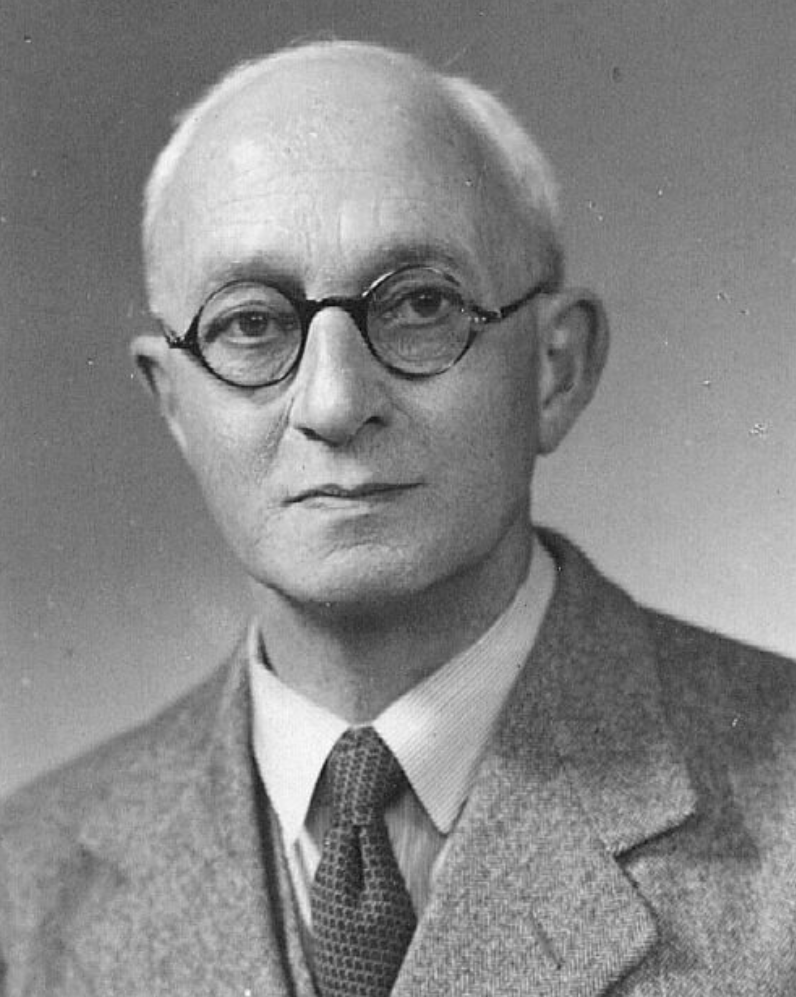
Emile Guiton was a Jersey photographer whose work focused primarily on landscape, heritage, and local history. He is most recognised for his black-and-white and early colour images of Jersey’s landscapes, Neolithic sites, and historic buildings. What separates him from traditional landscape photographers is that his work is not decorative or romanticised. Instead, it feels grounded, serious, and reflective of both place and history.
Through my research using the Jersey Heritage Archive, Société Jersiaise collections, and historical publications, I found that Guiton’s photography often explores how landscapes and built environments have been shaped over centuries. His images suggest that heritage is not static or untouched. It is layered with history, human activity, and cultural memory.
Guiton also believed in physically engaging with his subjects. He would explore sites and surroundings extensively before photographing them, ensuring an informed and deliberate perspective. This is important for my own project because I am not simply photographing heritage sites for visual effect. I am investigating origin through specific Jersey locations, which have detailed archaeological documentation, archival material, and heritage management records. This allows my project to be historically structured and contextually grounded.
INTRODUCTION
I chose Emile Guiton because his photographic approach aligns strongly with my intentions for the theme Origin. When I think about origin, I think of history, ancestry, and human interaction with landscape over time. My project is very literal: I am photographing Jersey’s Neolithic heritage sites, including dolmens, burial chambers such as La Hougue Bie, fossils, bones, and museum artefacts.
What fascinates me is that early humans were able to construct and position massive stones thousands of years ago. It feels mysterious. It also feels strange that today I can stand beside these ancient structures freely and document them with a digital camera. That contrast between ancient permanence and modern accessibility forms part of my conceptual thinking.
Guiton’s black-and-white and early colour imagery supports my decision to shoot in monochrome. Removing colour allows focus on form, structure, symmetry, and texture. Neolithic materials such as stone carry visible evidence of erosion and weathering. Black and white enhances this, making time physically visible within the frame.
I want my images to feel calm yet slightly eerie. Calm because the sites are silent and still. Eerie because they represent burial, ritual, and ways of life that no longer exist. Guiton achieves a similar balance through careful composition, attention to detail, and respect for the subject.
Emile Guiton’s work is widely recognised as important in Jersey’s photographic heritage. His early adoption of colour photography and extensive documentation of local landscapes and archaeological sites highlight the historical and cultural significance of Jersey’s environment.
PHOTO DECONSTRUCTION 1
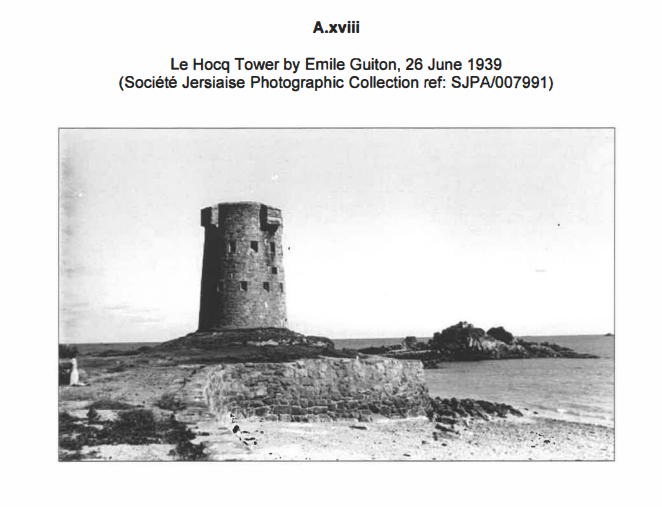
Le Hocq Tower, Jersey (26 June 1939)
Photograph by Emile Guiton, Société Jersiaise Photographic Archive
(Source)
TECHNICAL
Guiton uses natural daylight, likely diffused by overcast skies, which produces soft but controlled lighting. The tonal range is broad but balanced, with highlights in the sky retaining detail and the tower’s stone surfaces not underexposed. This preserves texture.
A small aperture creates a deep depth of field, keeping everything from the foreground grass to the distant horizon in focus. This maintains the tower’s relationship with its surrounding landscape rather than isolating it. The ISO appears low, ensuring minimal grain and maximum clarity, allowing the tower’s stone surfaces and weathering to be visible.
For my own work, I will use a small aperture and low ISO to maintain depth of field and maximise texture detail in Jersey’s Neolithic monuments. Texture communicates age and the passage of time, which is essential for exploring origin.
VISUAL
The dominant visual elements are tone, texture, form, and space. The tower functions as a strong vertical form within the frame. Its weathered stone creates tactile texture that contrasts against the smooth tonal gradation of the sky.
Compositionally, the tower is positioned slightly off-centre, giving room for its environment to contextualise the structure. The horizon is low, allowing the sky to provide negative space that emphasises isolation and permanence.
No human presence appears, removing distraction and guiding the viewer’s eye directly to the monument. In my project, I aim to use space and scale similarly, creating images that feel deliberate, structured, and historically grounded.
CONTEXTUAL
Le Hocq Tower is a historic coastal fortification on Jersey’s south-east coast. By 1939, it had centuries of human history embedded in its structure. Guiton’s photograph captures the tower as part of its landscape, avoiding romanticisation and presenting it as a living historical object.
For Jersey, this is relevant because many Neolithic and heritage sites exist within modern environments. By acknowledging surroundings, my work can show that origin survives within the present rather than existing as a disconnected past.
CONCEPTUAL
Conceptually, the photograph communicates endurance and continuity. The tower represents not only a specific historical moment but also the accumulation of human activity over time. Black-and-white treatment removes colour as a distraction, allowing structure, material, and the passage of time to dominate the image.
This aligns directly with my interpretation of Origin. Ancient structures and monuments are physical traces of belief, identity, and ancestry. Through careful composition, texture emphasis, and tonal control, I want my images of Jersey’s Neolithic sites to function as visual evidence rather than romanticised landscapes.
PHOTO DECONSTRUCTION 2
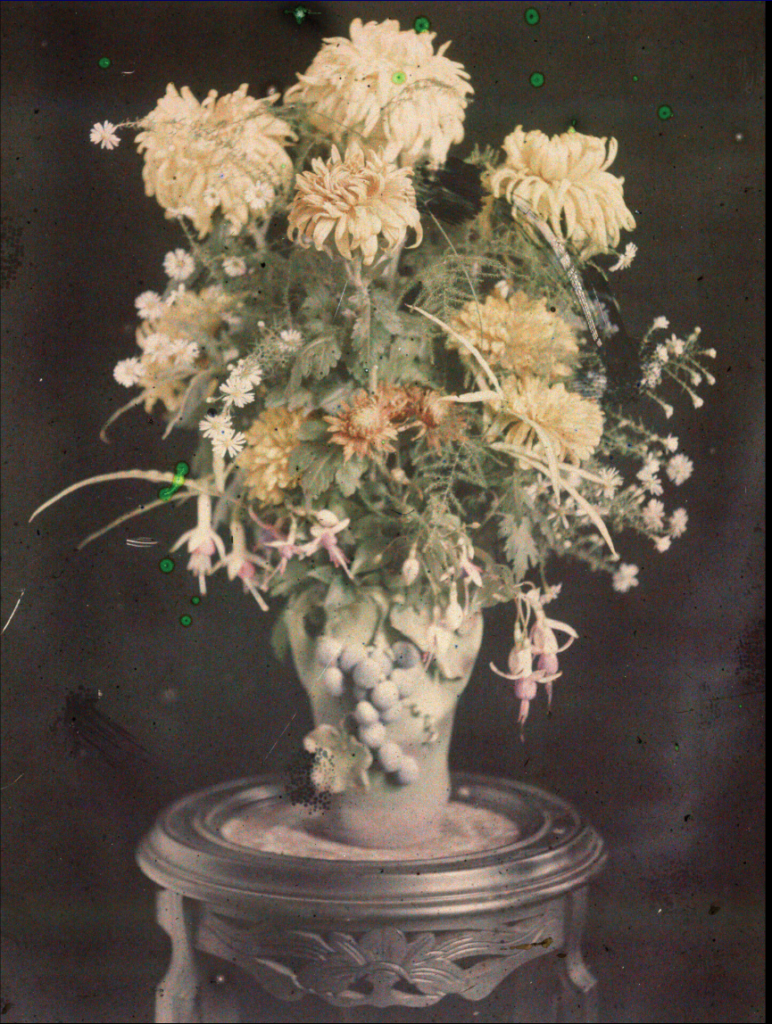
1904, Flowers, Lumière Autochrome, Jersey (ca. 1907–1911)
Photograph by Emile Guiton, Société Jersiaise Photographic Archive
(Source)
TECHNICAL
Guiton was experimenting with the Autochrome Lumière process, the first commercially practicable colour photographic technique, which used dyed microscopic potato starch grains on glass plates. Exposures had to be long and deliberate due to low light sensitivity, prioritising form and structure over movement.
Colours are muted, showing pastel greens, soft earth tones, and gentle floral hues. This creates a timeless, historic quality rather than vibrant spectacle.
For my project, understanding Guiton’s technical choices informs my decision to use monochrome, prioritising texture and structure over colour.
VISUAL
The dominant visual elements are tone, texture, and spatial calm. Foreground elements are sharply related to background forms, providing depth and structural clarity. Muted colour and soft light produce a quiet, reflective mood.
Composition is measured, with the flower sitting harmoniously within its environment, avoiding distraction or embellishment. This restraint allows the historic and material qualities of the scene to dominate.
CONTEXTUAL
This autochrome represents one of the first colour photographs taken in Jersey, documenting gardens, towns, and landscapes. Guiton’s work shows that photography can record place historically and technically while still exploring the potential of new media.
For my project, this shows that technical experimentation can serve conceptual aims, as long as it foregrounds historical significance.
CONCEPTUAL
The photograph communicates quiet presence and historical situatedness. Subtle colour acts as evidence rather than decoration, aligning with my approach of using black-and-white to foreground structure, material, and temporal endurance.
Through texture, composition, and spatial calm, Guiton’s autochrome demonstrates how photography can document place while also prompting reflection on time and continuity. These are qualities I aim to replicate in photographing Jersey’s Neolithic sites.
RESEARCH REFERENCES
- Jersey Heritage Archive (n.d.) Emile Guiton Collection. Available at: https://catalogue.jerseyheritage.org/emile-guiton-1879-1972/
- Bailiwick Express (2023) The Birth of Local Colour Photography. Available at: https://www.bailiwickexpress.com/news/gallery-birth-colour-photography/
- Société Jersiaise (n.d.) Jersey Photographic Archive. Available at: https://societe.je/departments/photo-archive/
- Jersey Post (2023) Jersey Stamps Celebrate Société Jersiaise. Available at: https://www.jerseypost.com/about-us/news/2023/jersey-stamps-celebrate-150-years-of-the-societe-jersiaise/
- Société Jersiaise Collection (n.d.) First Colour Photograph in Jersey. Available at: https://collections.societe.je/view/2072022-the-first-colour-photograph-taken-in-jersey-by-g-guiton-and-e-guiton