
Fay Godwin
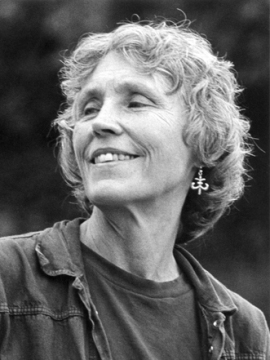
One photographer who has influenced my project is Fay Godwin, a British photographer known for documenting landscapes and historic sites across the United Kingdom. Godwin often photographed ancient locations/stone structures capturing the relationship in history of the land altered by human presence. Her work consistently explores how historical landmarks and prehistoric monuments exist within the natural environment.
Fay was born in Berlin. Her father was a British diplomat and her mother an American painter. She was educated at nine schools and, in the 1950s, after working for a travel company, she went into publishing. In 1961, she married Tony Godwin, of Penguin Books.
In her photographs Godwin commonly used black and white filters which emphasises the texture and structure of the landscape. This technique helps highlight the age and permanence of the historic sites, making ancient stones and monuments appear more dramatic and timeless. Her compositions often include wide landscapes with strong foreground elements, allowing viewers to see how historic structures are positioned within the surrounding land.
This approach is relevant to my project exploring the origins of human activity in Jersey, particularly when photographing prehistoric monuments such as the dolmens at La Pouquelaye de Faldouet and the passage grave at La Hougue Bie. Like Godwin, I aim to show how these ancient structures fit in with the landscape and how they have remained in place for thousands of years.Inspired by Godwin’s work, I plan to experiment with black and white editing, strong contrasts lights and darks and wide landscape compositions to truly show the scale and historical significance of Jersey’s Neolithic sites
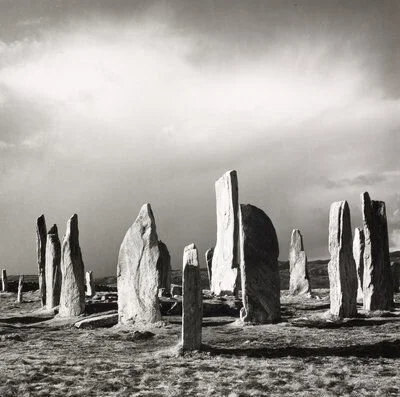
The image focuses on a group of large standing stones arranged in a circular formation. These stones date back to the Neolithic time period and were likely used for ritual purposes however astronomical observation or just casual gatherings were also possible. The photograph emphasises the mystery and ancient origins of human civilisation, which links strongly to themes of heritage and the relationship between humans and the landscape.
Composition
Godwin uses a wide framing that allows multiple stones to be visible across the image. The tallest stone sits slightly off-centre, acting as a visual anchor that draws the viewer’s attention in first. The surrounding stones create a natural circular rhythm guiding the viewer’s eye around the image. The low camera angle makes the stones appear monumental and powerful, reinforcing their historical importance.
Lighting
The dramatic sky and strong contrast between light and shadow create a moody and atmospheric scene. The clouds appear heavy and textured, which adds tension and emphasises the harsh environment in which these stones have stood for thousands of years. The lighting highlights the rough surfaces of the stones, enhancing their texture and age.
Texture
Because the photograph is monochrome, the viewer focuses more on form and texture rather than colour. The weathered surfaces of the stones show erosion and time, symbolising endurance and the passage of history.
Context and Connection to Origins
Images like this explore humanity’s earliest attempts to shape the environment and create places of meaning. This relates well to my project about prehistoric cultures and origins in jersey as we have sites such as La Cotte de St Brelade, where early humans lived and used stone tools.
Overall the photograph creates a sense of timelessness and mystery. The stones stand strongly against the sky, encouraging the viewer to reflect on the origins of civilisation.