
Celine Marchbank
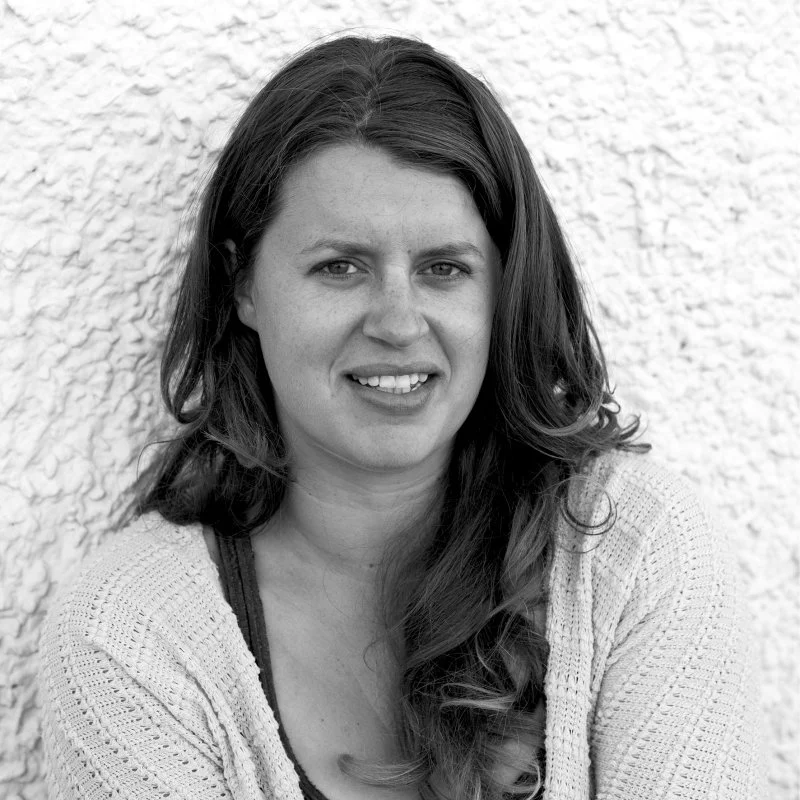
Celine Marchbank is a British photographer/artist who lives in London. Her work explores the complexity and beauty in everyday life, often intimate and reflective. She investigates themes such as memory, family and home, using photography to reflect on/capture emotional processes and life changes. She also teaches photography at Falmouth University, bringing technical and academic aspects to her work. Her work has been broadly recognized and is displayed in many international collections. She continues to teach photography whilst producing her own images that encourage viewers to reflect on personal and universal human experiences.
“I am interested in the way flowers visually represent the ageing process. Flowers express the effects of time in a very short period. They remind me of the mortality of everything around us. We are literally watching them die on a daily basis but it is such a beautiful process.”
Celine Marchbank
Moodboard of her Images
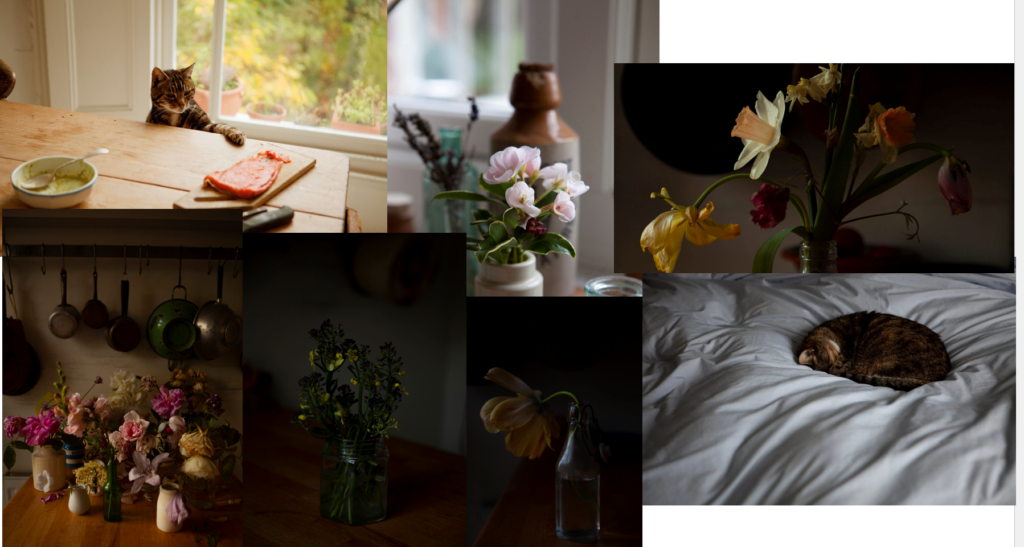
Tulip
Context:
In September 2009 my Mum was diagnosed with Stage 4 lung cancer, the worst it could be. This meant that the cancer had already spread to distant parts of the body, she had developed a secondary tumour in her brain and a third near her spine. Following a succession of emotionally and physically debilitating treatments including brain operations, chemotherapy, new drug trials and radiotherapy, it was clear that nothing was working. It was too late. By April 2010 they had confirmed it was terminal.
Having painfully come to terms with the fact she was going to die, I decided I didn’t want this project to become a graphic portrayal of her death. My mother was an amazing woman, and it would have been impossible, and wrong, to focus only on the dying part. I wanted to look at the things that made her uniquely her. Her love of flowers was a beautiful part of her personality; the house was always full of them, and I realised as I photographed them, that they were symbolic of what was happening – they represented happiness, love, kindness and generosity, but also isolation, decay, and finally death. Her house was, like she was, so individual. She had distinctive, slightly childlike taste, loving anything bright and cheerful, especially stripes. I needed to document it all. This project became not just about her, but our family home, our life, and of course, her beloved cats.
Celine Marchbank
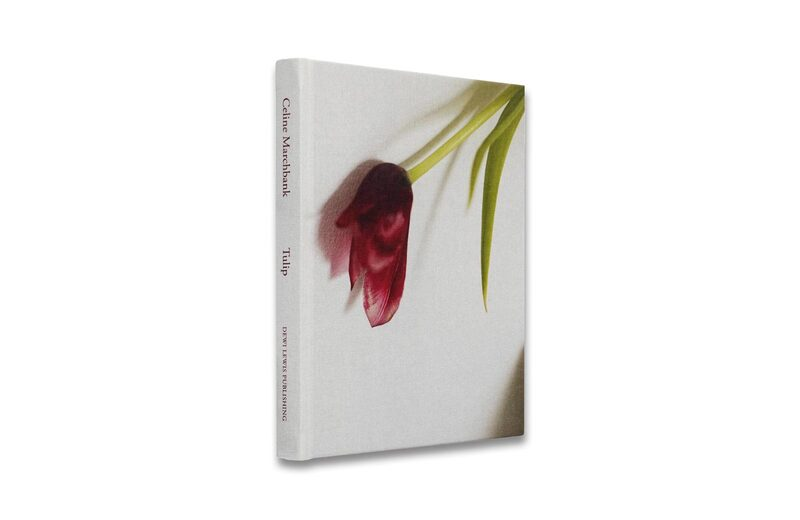
Tulip was Celine’s first photobook, published in 2016. It’s a personal project, made during her mother’s final year of life. In September 2009 her mum was diagnosed with stage 4 lung cancer She chose to focus not on her mothers illness but the small, intimate details that formed her mothers world- especially her love of flowers. In Tulip, Marchbank uses flowers in a domestic setting, the flowers first appear vibrant, colourful and full of life. As the book progresses they begin to wilt and decay in a natural almost cyclical way, linking to the project title Origin by visualizing death as a continuous process rather than the end. Her decision to photograph scenes of things her mother loved and cherished is significant because it focuses on her mothers identity, uniqueness and essence, rather than documenting her illness in a cold, clinical way. Her work has been broadly recognized and is displayed in many international collections. She continues to teach photography whilst producing her own images that encourage viewers to reflect on personal and universal human experiences.
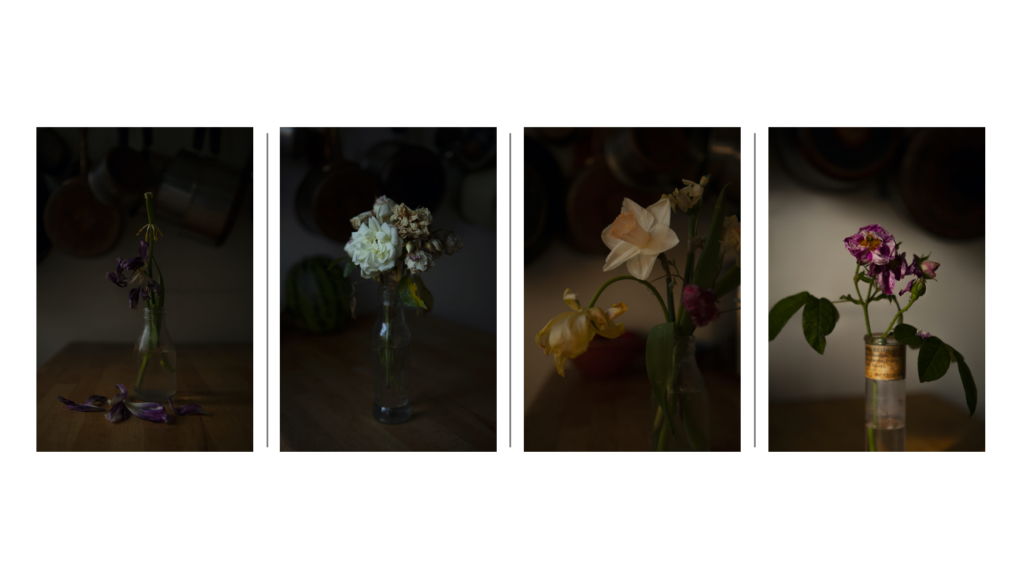
I was also inspired by her later series- Shot in Isolation, she explores emotional separation by framing her flowers to emphasize distance and vulnerability. Her use of flowers to symbolize emotion and visualize life/death and mortality fascinated me, inspiring me to explore this within my title ‘Origin’.
Image Analysis
Visual
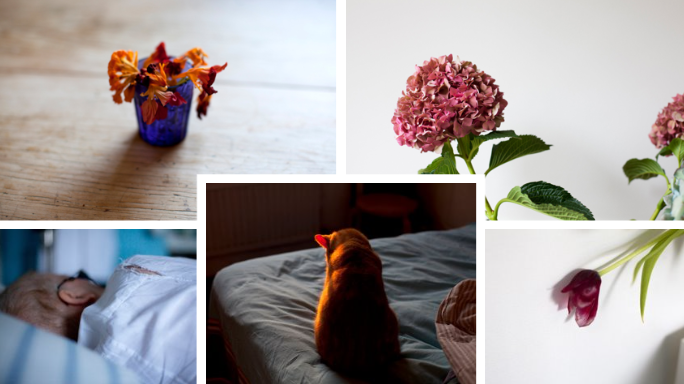
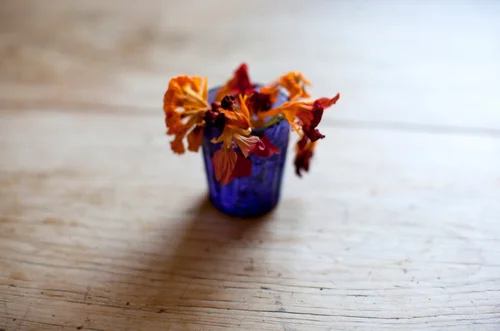
In this image, you can see a small arrangement of wilted flowers inside a blue glass container on a wooden table. The image has a minimal composition; the subject is positioned in the center and surrounded by large amounts of negative space, which evokes a sense of isolation. The warm colours of the flowers- orange, red, and yellow- contrast against the cooler muted tones of the background, emphasizing the flowers’ fragility and deteriorating form. The drooping petals and irregular shapes suggest movement and deterioration, highlighting texture and decay. Her use of space and simplicity within the frame intensifies the flowers’ vulnerability and encourages the viewer to focus on their gradual decline.
Technical
Marchbank appears to use natural light, likely from a window, which creates soft illumination and subtle shadows over the subject. The lighting isn’t direct; it is diffused, which produces a subtle tonal range rather than harsh contrast. A shallow depth of field is used, keeping the flowers in focus while the background becomes blurred, isolating the subject from its surroundings. The camera angle is slightly elevated, allowing the viewer to observe the texture of the arrangement clearly. The controlled focus and soft lighting create a calm and observational image.
Contextual
This image is part of the Tulip Series, created by Celine during the final year of her mother’s life. The project documents flowers within a domestic setting; it reflects themes of loss, fragility, and the passage of time. Her work can also be connected to vanitas traditions, a genre of art historically used to symbolize the impermanence of life and the inevitability of death. By photographing flowers as they deteriorate, Marchbank references these historical ideas while presenting them within a contempory, personal context.
Conceptual
Conceptually, the image explores the relationship between beauty, fragility, and mortality. The wilted flowers symbolize the impermanence of life and the inevitability of mortality. The domestic setting demonstrates how life cycles and loss occur in everyday environments. Rather than depicting death in a dark alarming way, Marchbank focuses on subtle visual changes, such as fading colours and withering petals. This visualizes the quiet progression of time and encourages viewers to reflect on death as something natural and inevitable.