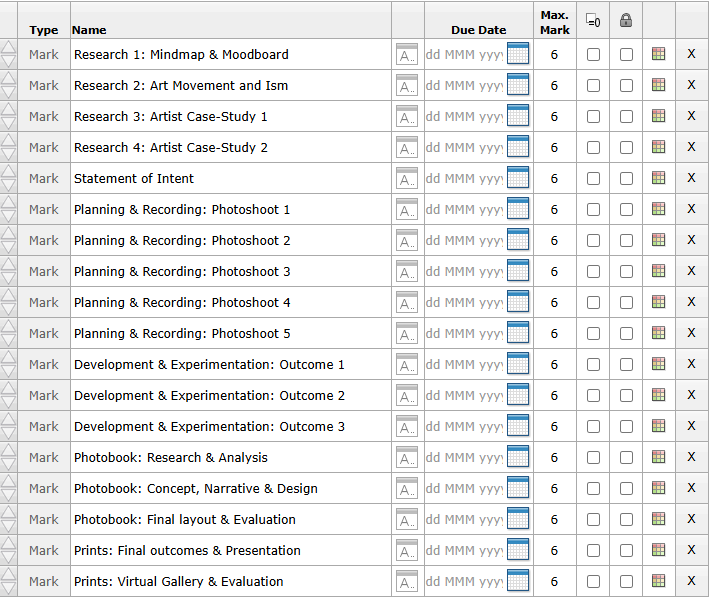
BLOGPOSTS:List of work to be completed on the blog
Assessment Objectives A2 Photography: (Edexcel)
AO1 – Develop your ideas through sustained and focused investigations informed by contextual and other sources, demonstrating analytical and critical understanding.
To achieve an A or A*-grade you must demonstrate an Exceptional ability (Level 6) through sustained and focused investigations achieving 16-18 marks out of 18.
Get yourself familiar with the assessment grid here:
To develop your ideas further from initial research using mind-maps and mood-boards based on the theme ‘ORIGINS’, you need to be looking at the work of others (artists, photographers, filmmakers, writers, theoreticians, historians etc) and write a Statement of Intent with 1 or 2 unique ideas that you want to explore further.
ARTISTS REFERENCES
Research and analyse the work of at least 2 (or more) photographers/ artists. Explore, discuss, describe and explain key examples of their work relevant to your project and intentions. Use these subheadings as a guide to structure your artists case study > make it insightful and meaningful!
RESEARCH > in-depth research of an artist is the first step
Always start by making use of resources on the blog produced by the teachers.
If there are hyperlinks, click on them and learn more. Explore relevant sources both on the internet and also ask teacher if books exists of their work in the classroom (often we have books of the artists we study).
Make notes of what you read, including relevant quotes and also copy hyperlink to online sources, or if a book write title, author, year of publication and publisher.
MOODBOARD > gallery of their images
Introduce an artist with a mood board showing a selection of their images in relation to theme of ‘ORIGINS’, or a particular body of work that inspires you and relates to your personal project and ideas.
INTRODUCTION > background and context of the artists work
Write a paragraph where you introduce the artist describing why you have chosen to study them and how they relate to the theme and ideas you want to explore in your project
Provide an overview of their work, including describing methods, techniques, style, approach, meaning and subject-matter (if relevant)
Also consider any personal, artistic or historical context that you read about their work that might be useful for you to include.
Incorporate quotes and comments from sources used to gain knowledge and understanding, such as an interview or statement by the artist themselves or others (art critics, art historians, curators, writers, journalists etc) using a variety of sources such as online articles, reviews, books, YouTube etc.
Make sure you reference sources and embed links to the above sources in your blog post.
IMAGE ANALYSIS > meaning behind images using photographic vocabulary
Select at least one image from the moodboard and analyse in depth using methodology of: TECHNICAL > VISUAL > CONTEXTUAL > CONCEPTUAL.
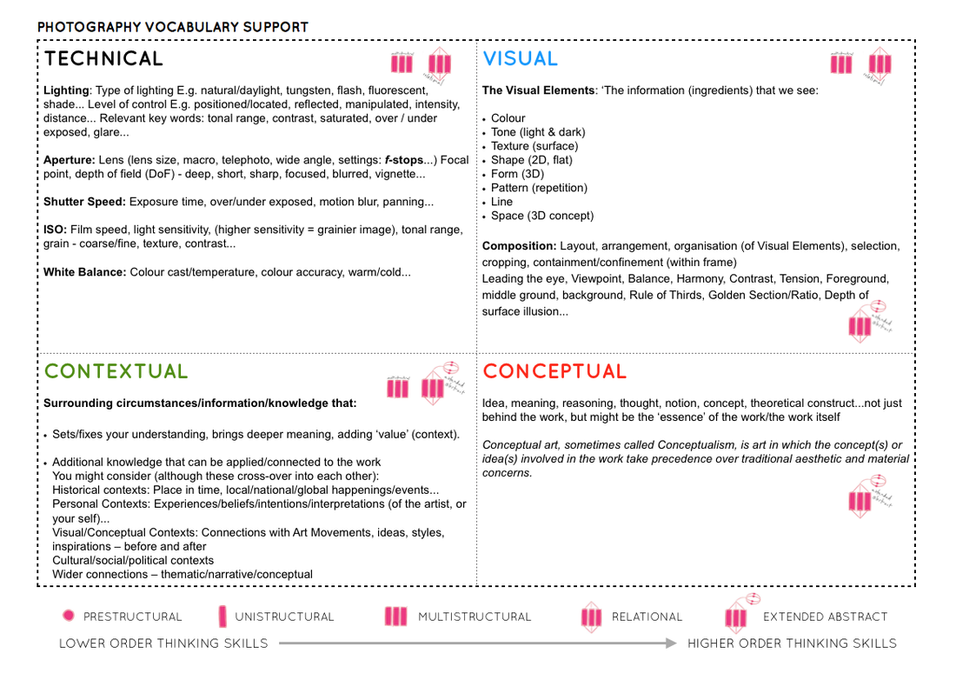
Write a paragraph for each element of analysis using specific words from photography vocabulary sheet below.
Click here for a full guide to on how to produce a quality ARTIST CASE STUDY.
For more help and guidance on image analysis go to Photo Literacy
STATEMENT OF INTENT
Write a Statement of Intent that clearly contextualise;
What you want to explore?
Why it matters to you?
How you wish to develop your project?
When and where you intend to begin your study?
Make sure you describe how you interpret the exam themes; ‘ORIGINS’, subject-matter, topic or issue you wish to explore, artists references/ inspirations and final outcome – zine, photobook, film, prints etc.
AO3 RECORD IDEAS, OBSERVATIONS AND INSIGHTS RELEVANT TO INTENTIONS, REFLECTING CRITICALLY ON WORK AND PROGRESS
PHOTO-SHOOTS
Each week you are required to make a photographic response (still-images and/or moving image) that relates to the research and work that you explored in that week. Sustained investigations means taking a lot of time and effort to produce the best you can possibly do – reviewing, modifying and refining your idea and taking more pictures to build up a strong body of work with a clear sense of purpose and direction
PLANNING & RECORDING: Produce a number of photographic responses to your exam theme and bring images from new photo-shoots to lessons:
Plan at least 4-5 shoots in response to your ideas and artists references. What, why, who, how, when, where?
Save shoots in folder on Media Drive: and import into Lightroom
Organisation: Create a new Collection from each new shoot inside Collection Set: EXAM
Editing: select 8-12 images from each shoot.
Experimenting: Adjust images in Develop, both as Colour and B&W images appropriate to your intentions
Export images as JPGS (1000 pixels) and save in a folder: BLOG
Create a Blogpost with edited images and an evaluation; explaining what you focused on in each shoot and how you intend to develop your next shoot.
Make references to artists references, previous shoots, experiments etc.
EXPERIMENTING:
Export same set of images from Lightroom as JPEG (4000 pixels)
Experimentation: demonstrate further creativity using Photoshop to make composite/ montage/ typology/ grids/ diptych/triptych, text/ typology etc appropriate to your intentions
Zine design: Begin to explore different layout options using InDesign and make a new zine/book. Set up new document as A5 page sizes.
Photobook design: Make a rough selection of your 40-50 best pictures from all shoots.
Make sure you annotate process and techniques used.
EVALUATION: Upon completion of photoshoot and experimentation, make sure you evaluate and reflect on your next step of development. Comment on the following:
How successful was your photoshoot and experimentation?
What references did you make to artists references? – comment on technical, visual, contextual, conceptual?
How are you going to develop your project from here? – comment on research, planning, recording, experimenting.
What are you going to do next? – what, why, who, how, when, where?
Photography Agencies and Collectives World Press Photo – the best news photography and photojournalism Magnum Photos – photo agency, picture stories from all over the world. Panos Picture – photo agency Agency VU – photo agency INSTITUTE – photo agency Sputnik Photos – photo collective made of Polish and East European photographers A Fine Beginning – photo collective in Wales Document Scotland – photo collective in Scotland NOOR – a collective uniting a select group of highly accomplished photojournalists and documentary storytellers focusing on contemporary global issues.
STARTING POINTS > IDEAS > INTERPRETATIONS > INSPIRATIONS < Below are inspirations and artists references exploring the exam theme of ‘ORIGINS’.
See pages 25-28 in exam booklet which provide creative starting points that may help you form ideas. Use them as a source information or produce your own individual response to the theme. Make sure you read the whole paper as any section, eg. Fine art or Textile design or Three-dimensional design may provide you with inspiration.
STARTING POINT 1:PHOTOGRAPHY & MOMENTS > pg 25 < Capturing significant and insignificant moments < Multiple truths and viewpoints
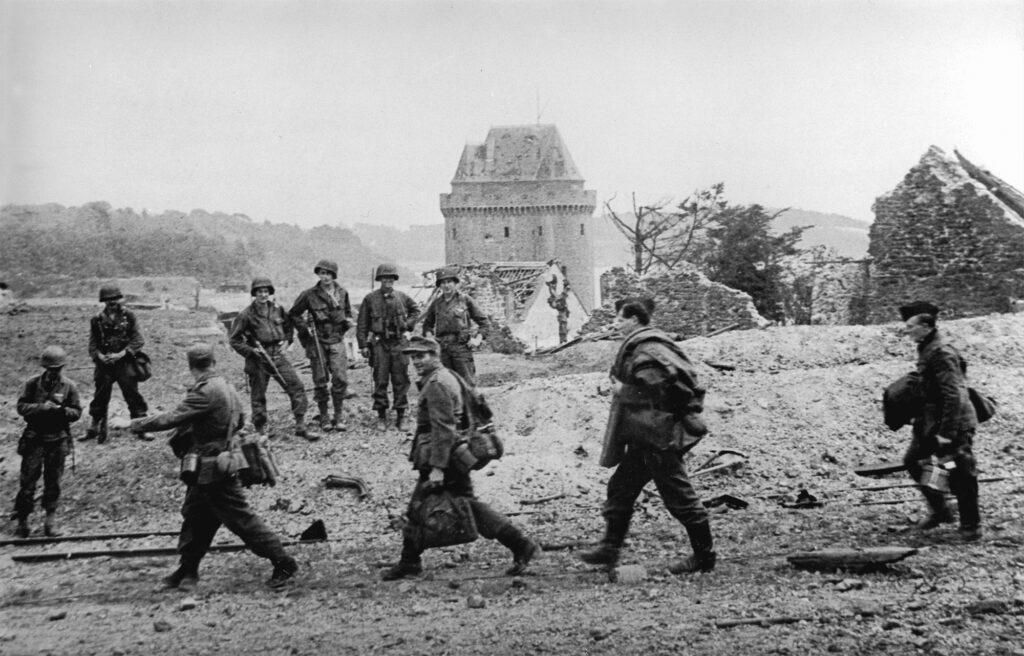
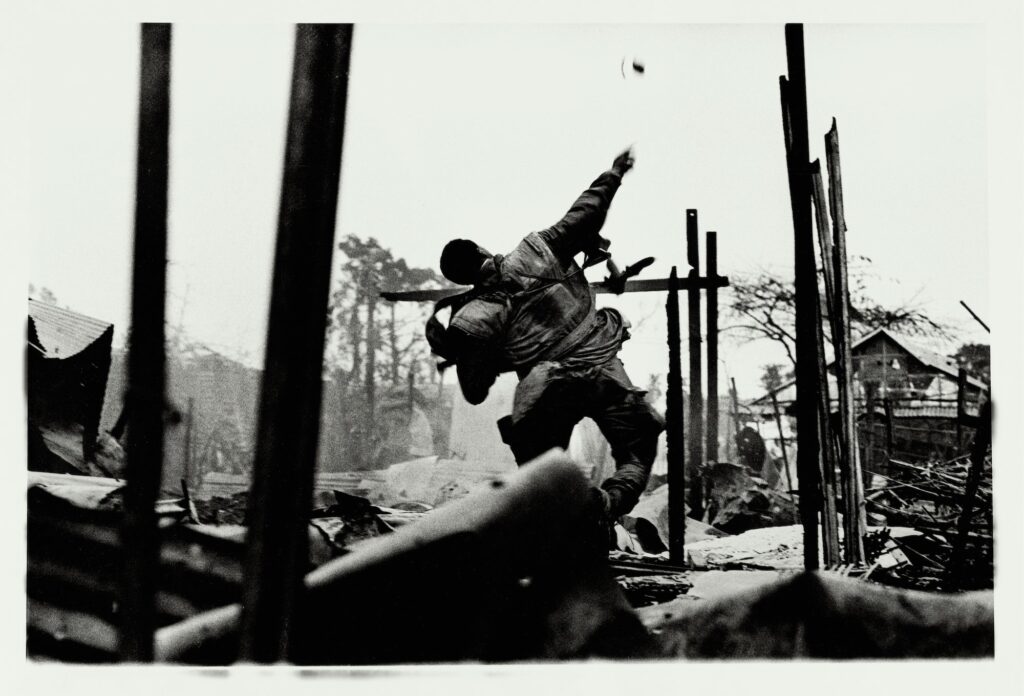
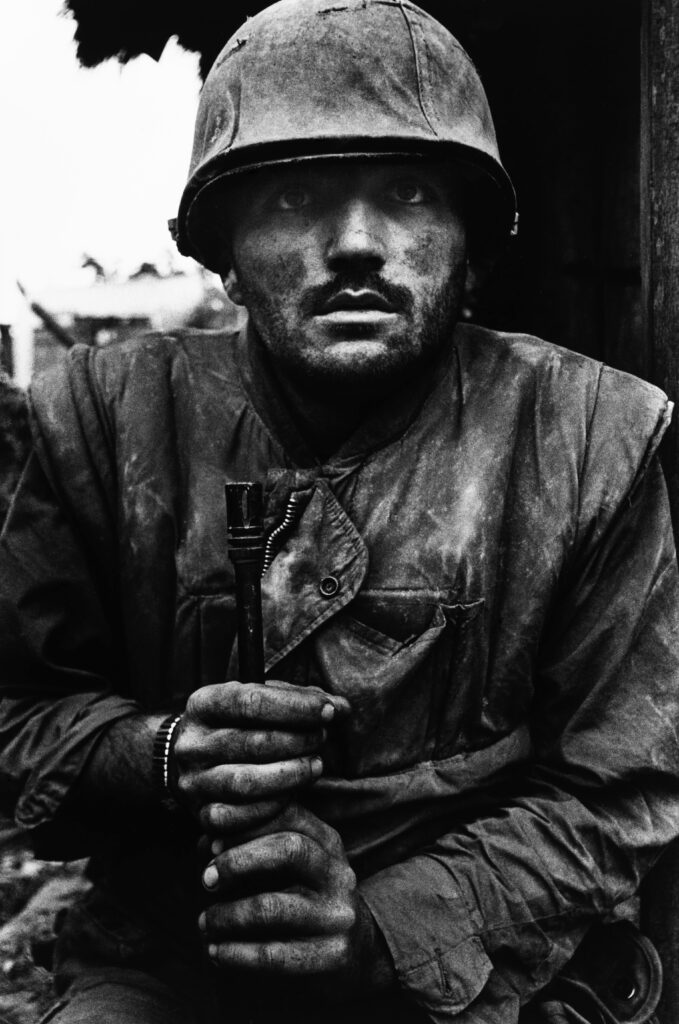
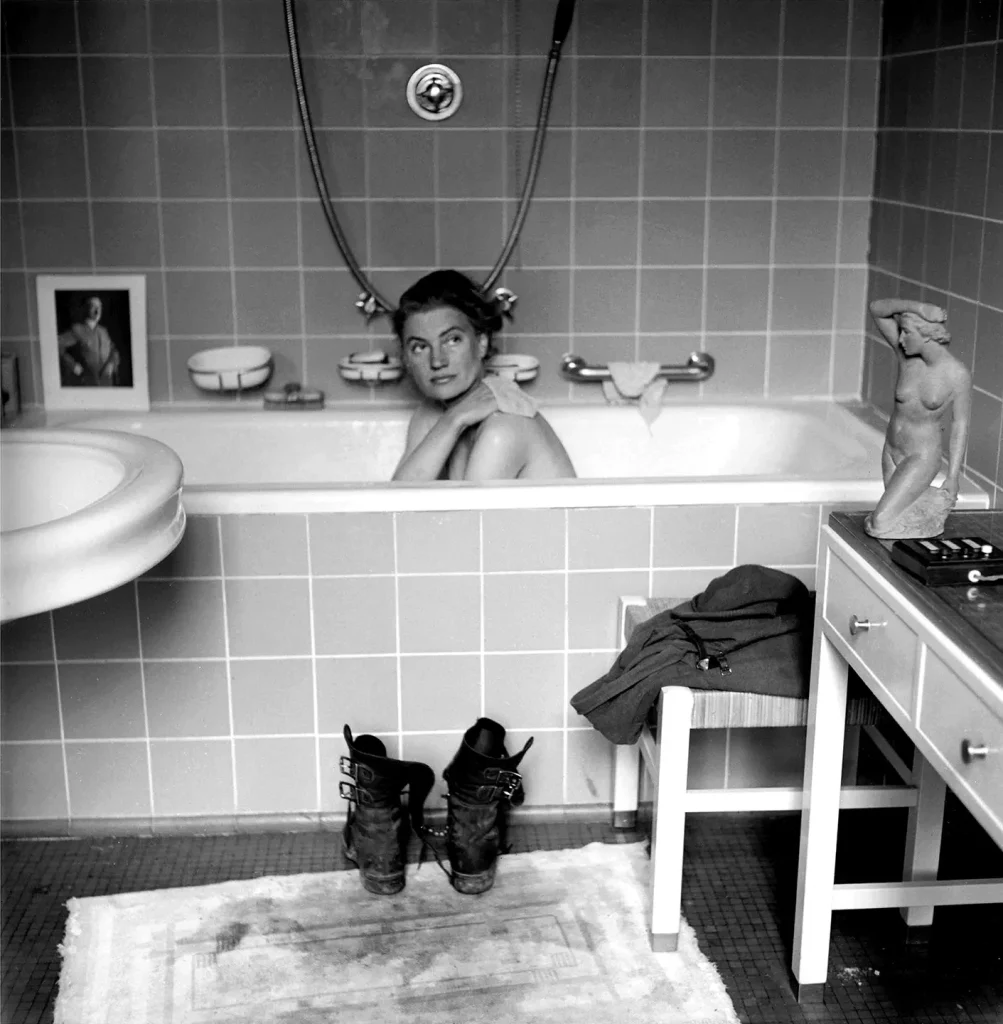
Photographers will often need to find the exact moment or location to ensure they capture a successful photograph. This can sometimes mean going to the extreme to achieve the best results. War photographers such as Lee Miller and Don McCullin were often first on the scene to bring the viewer the most authentic recording of humanity’s most challenging situations. The smartphone has meant that nearly everyone is now capable of capturing both significant and insignificant moments. This culminates in the origin of multiple truths, as different viewpoints all show slightly different variations of events. Social media as a communication tool can mean that people become entrenched in one opinion or another as they experience the echo chamber effect, consolidating their own frame of reference.
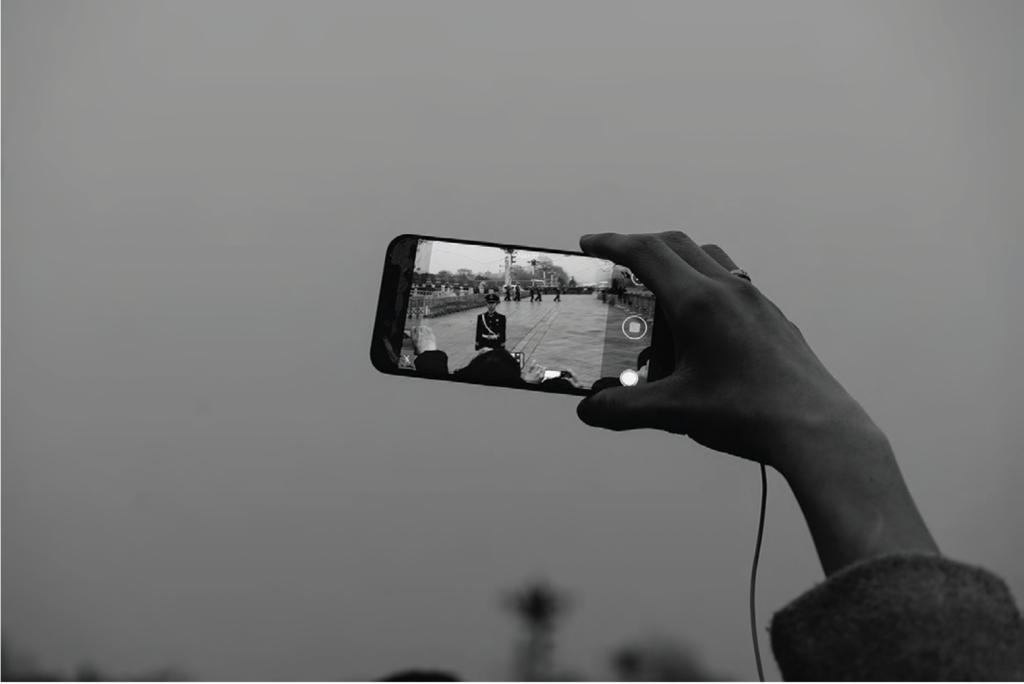
Markus Winkler: Person holding a smartphone and taking a video in China. (Source: Photo by Markus Winkler https://unsplash.com/collections/3582765/smartphone)
Lee Miller, WW II
Don McCullin, Vietnam war
Don McCullinLee Miller
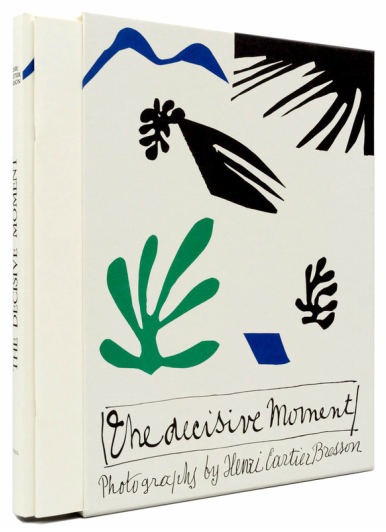
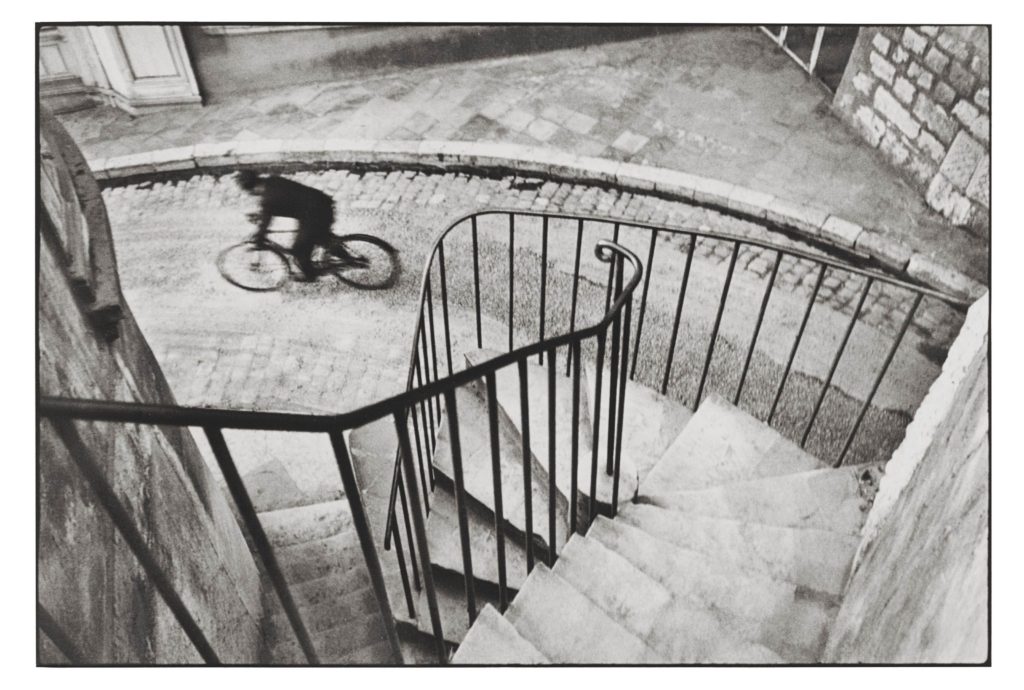
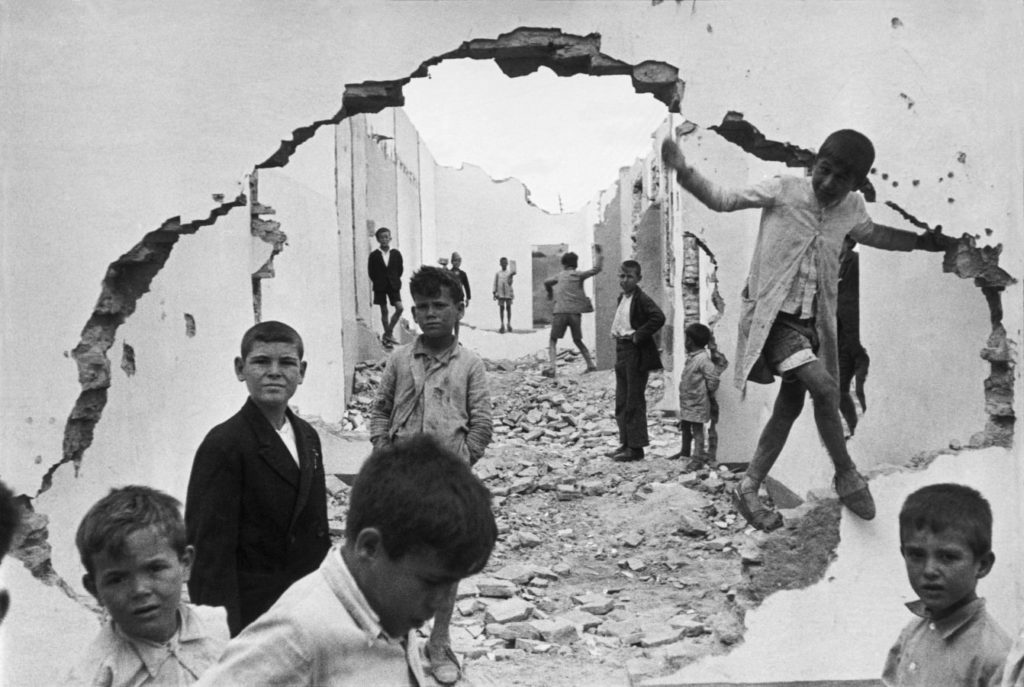
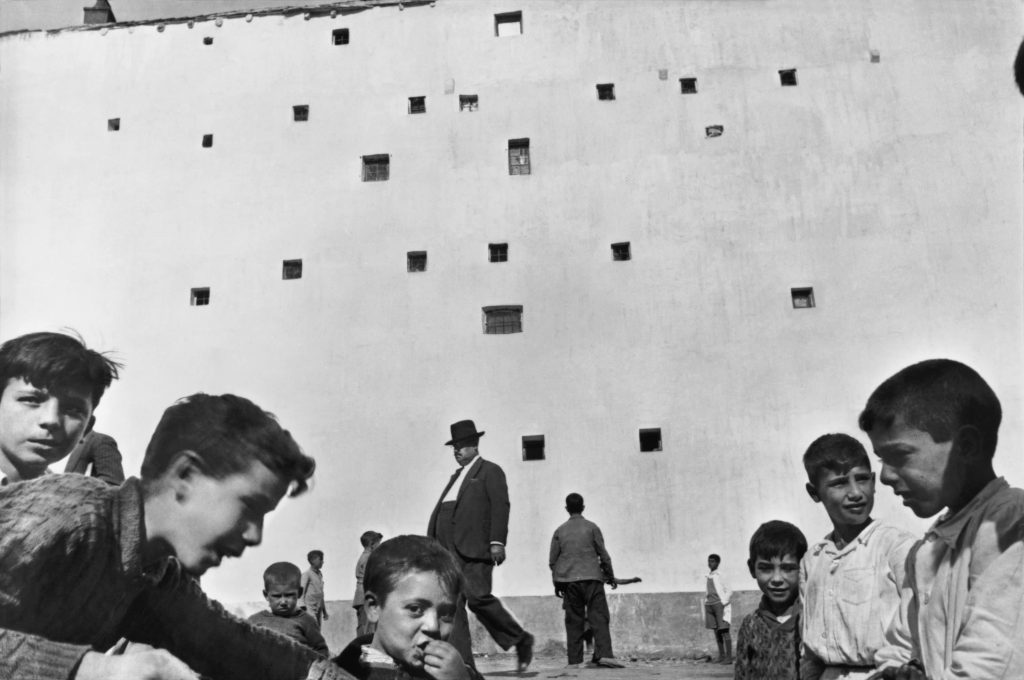
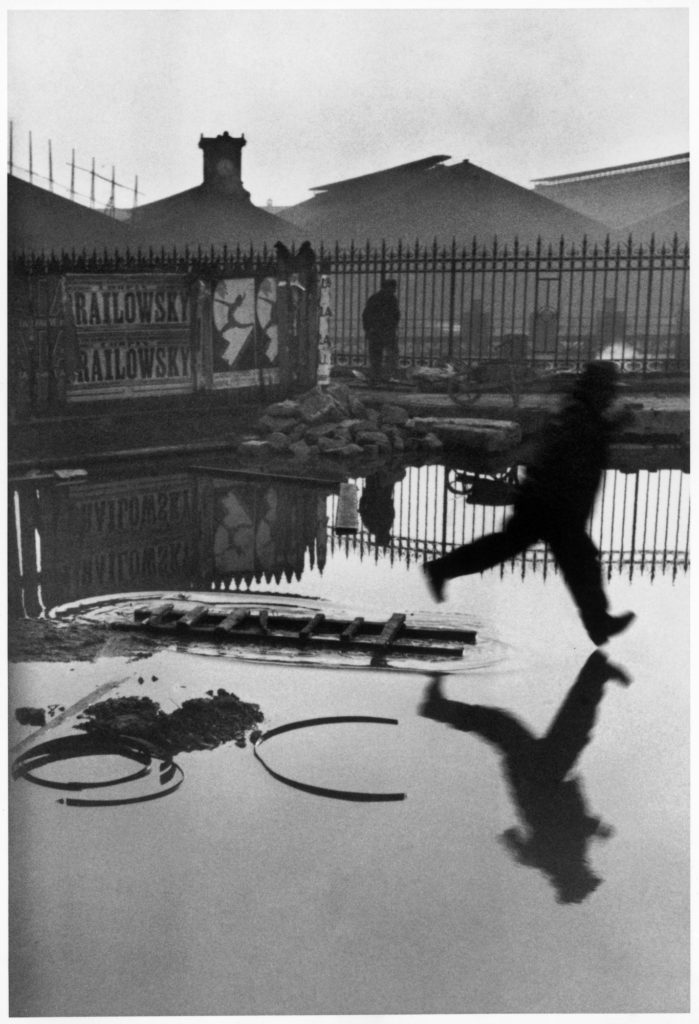
Henri Cartier-Bresson: The Decisive Moment.
“The simultaneous recognition, in a fraction of a second, of the significance of an event as well as the precise organization of forms which gives that event its proper expression.”
This famous formulation of the essence of photography can be found in the introduction to Cartier-Bresson’s 1947 book ‘The Decisive Moment’. He began photographing seriously in the 1930s, influenced by the Surrealists and their understanding of the camera’s ability to create a new reality. The book is divided into two chronological and geographical sections: the first spans the years 1932 to 1947 and is made up of photographs taken in the west; the second spans 1947 to 1952 and was shot mostly in the east. Cartier-Bresson was obsessed with form and composition, with the aesthetics of photography. His images are momentary glimpses of reality but organised into a geometric pattern. This desire to organise and control has drawn admiration and
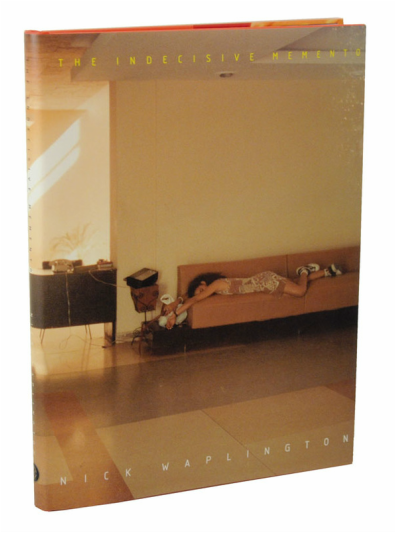
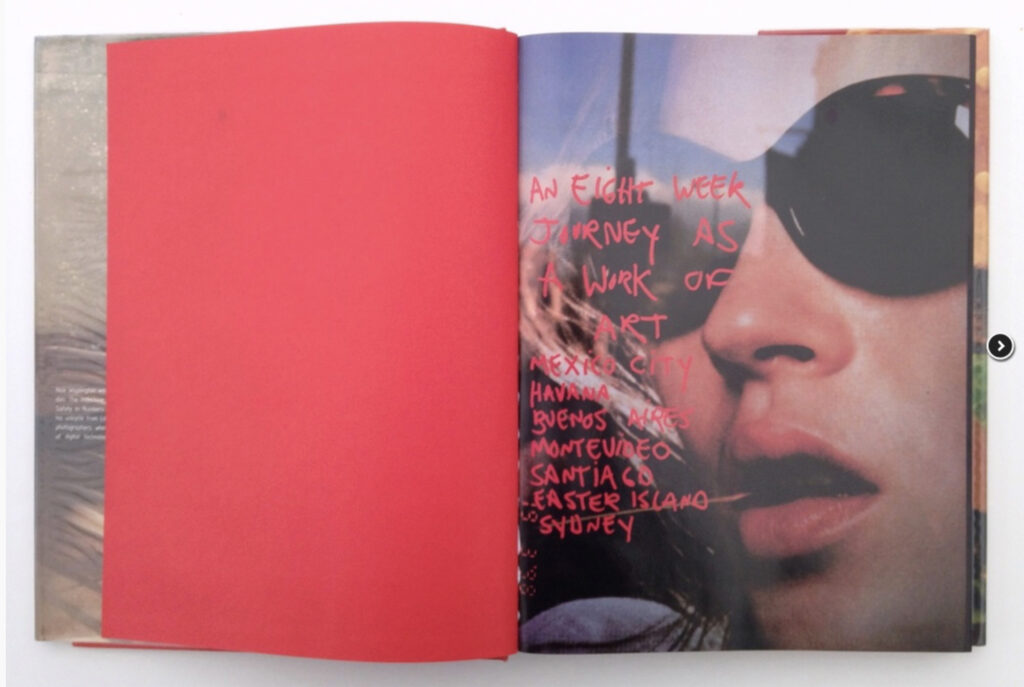
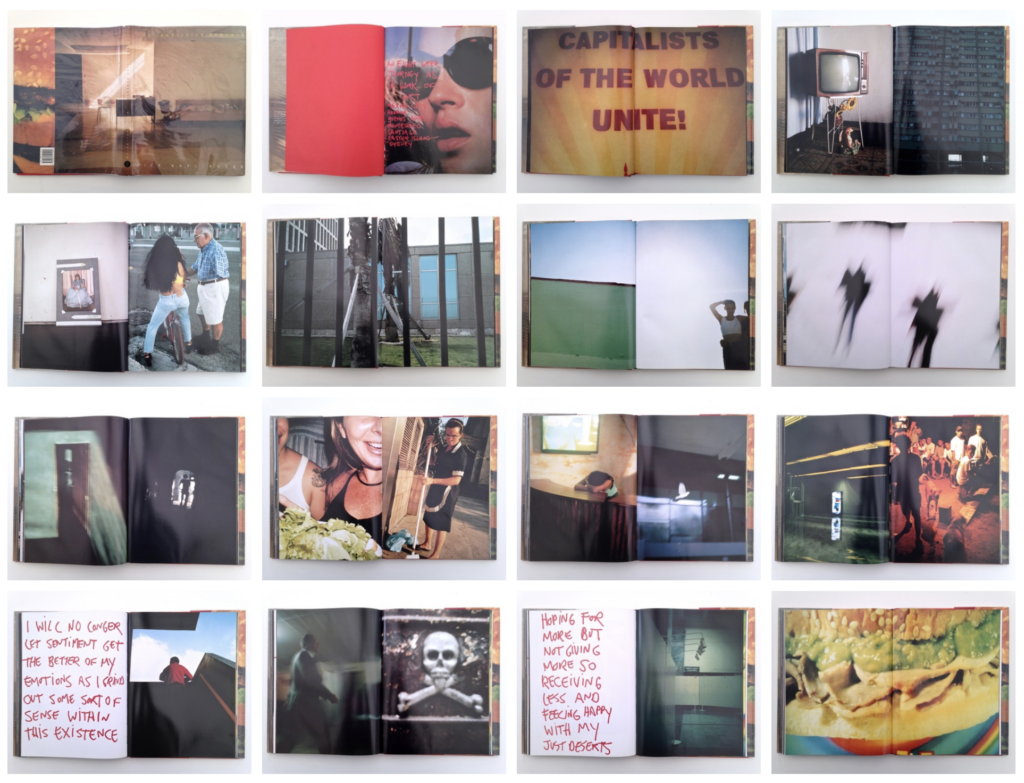
Nick Waplington’s ‘Indecisive Memento’ is a kind of document ‘An eight week journey as a work of art’ through Central and South America and the Pacific. In an introductory conversation with Mark Sanders, Waplington describes the project and his way of working:
I try to never pre-visualise what I am going to make … I work with ideas but I am conscious that they will slowly evolve through the act of taking photographs. It is that feeling that always leads me through the work. Sometimes I’m not quite sure why I have made work until years afterwards but then that is just a different way of working […] I wanted to make work that wasn’t trying to campaign for a particular issue, work that was not purporting to be the truth […] There is no doubt that the twentieth century photographically has been the century of the reportage image and Cartier-Bresson is undoubtedly the greatest reportage photographer of our time. Yet his idea of the decisive moment, in which you have one chance to capture an image and either you get it or you miss it, seems dated. We live in post-modern age where non-moments have become as relevant as moments. Everything has validity and yet this idea of the decisive moment is still given credence within photographic circles. What I am trying to do is address this preconception and say that every and any moment works. You can take a picture of anything and it still holds resonance […] There are no guidelines. Everything is open and everything is possible…
Waplington’s work is famously diverse and appears to have no signature style or subject matter. He is a painter and he collaborates with other creative practitioners, such as the fashion designer Alexander McQueen. He claims to be “interested in everything.” He does not describe himself as a photographer but as an artist. His work is predominantly photographic.
My position as photographer and artist has always been about trying to make pictures that ask questions as opposed to pictures that draw conclusions. I don’t see that I can do any more beyond that.
Nick Waplington, The Indecisive Memento
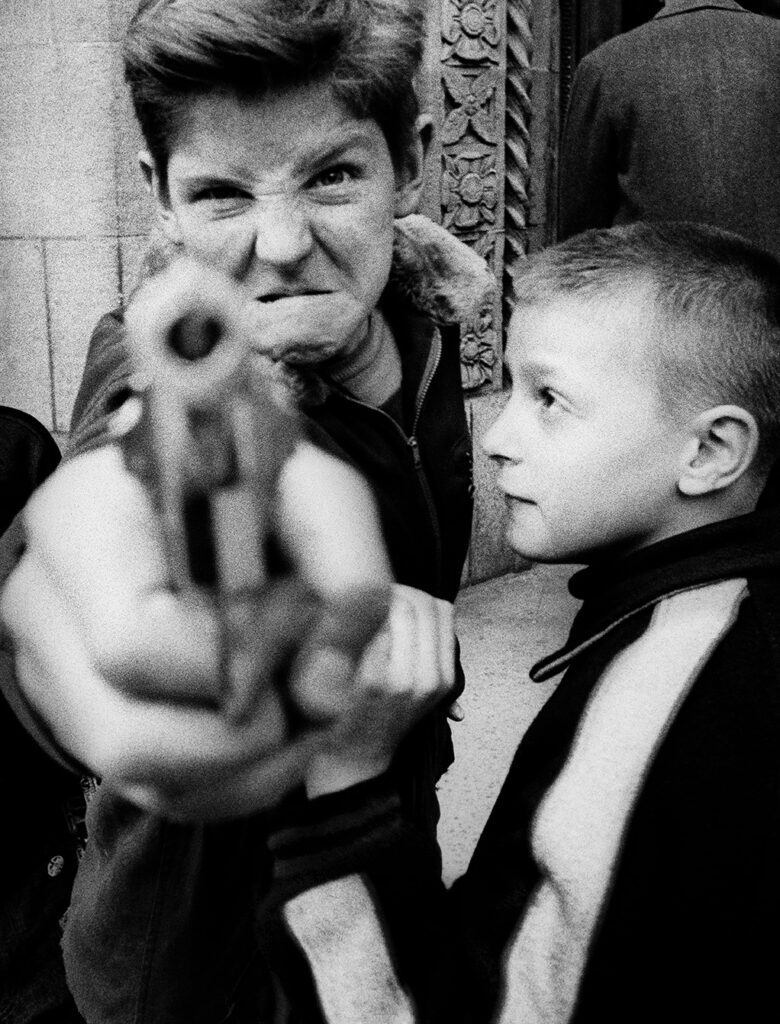
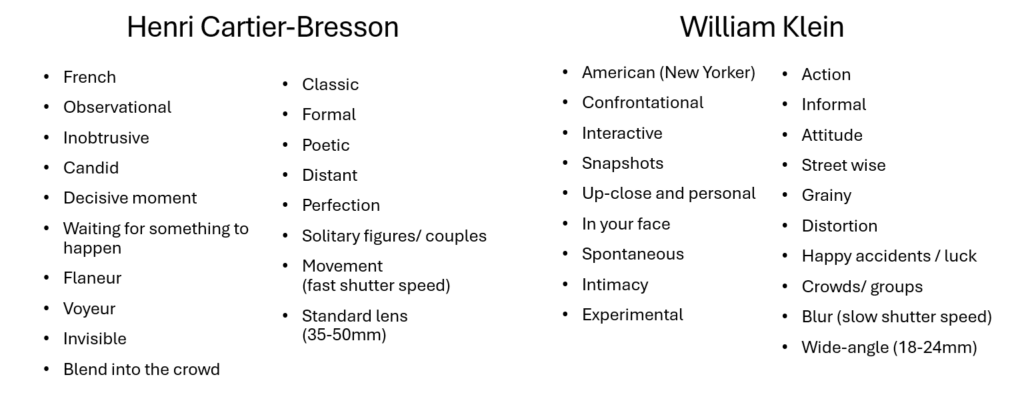
Compare & Contrast > Henri Cartier-Bresson and William Klein and their different approach to street photography which can be described as observational vs confrontational
STARTING POINT 2:PHOTOGRAPHY & ORIGINS > pg 26 < The origin of the medium < Pinhole photograph < Camera obscura
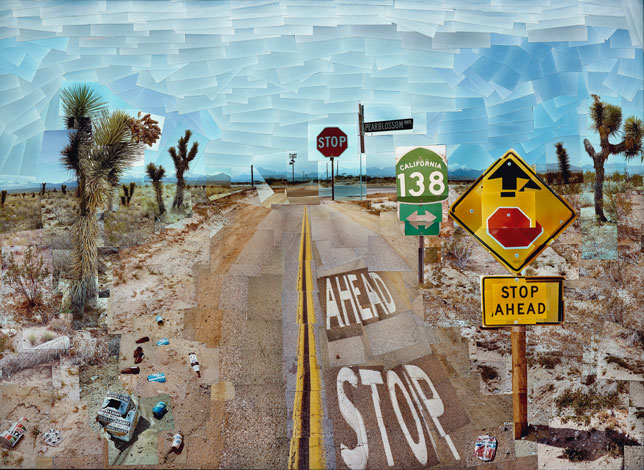
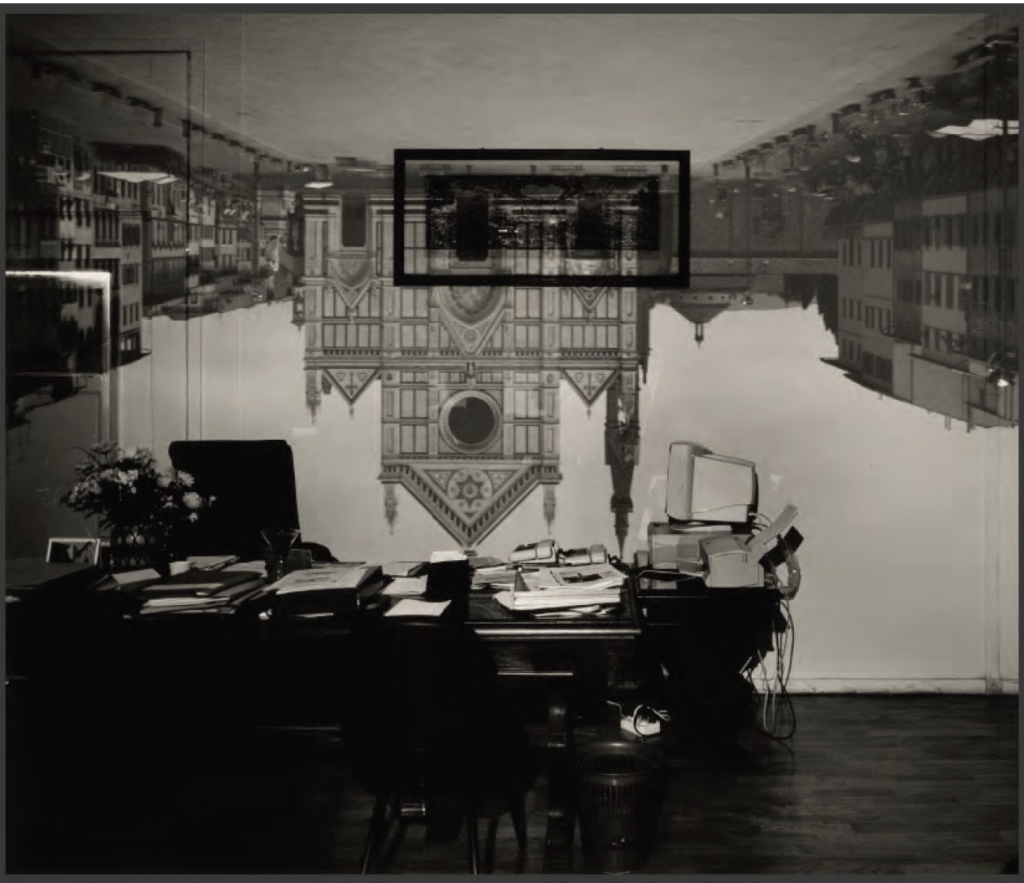
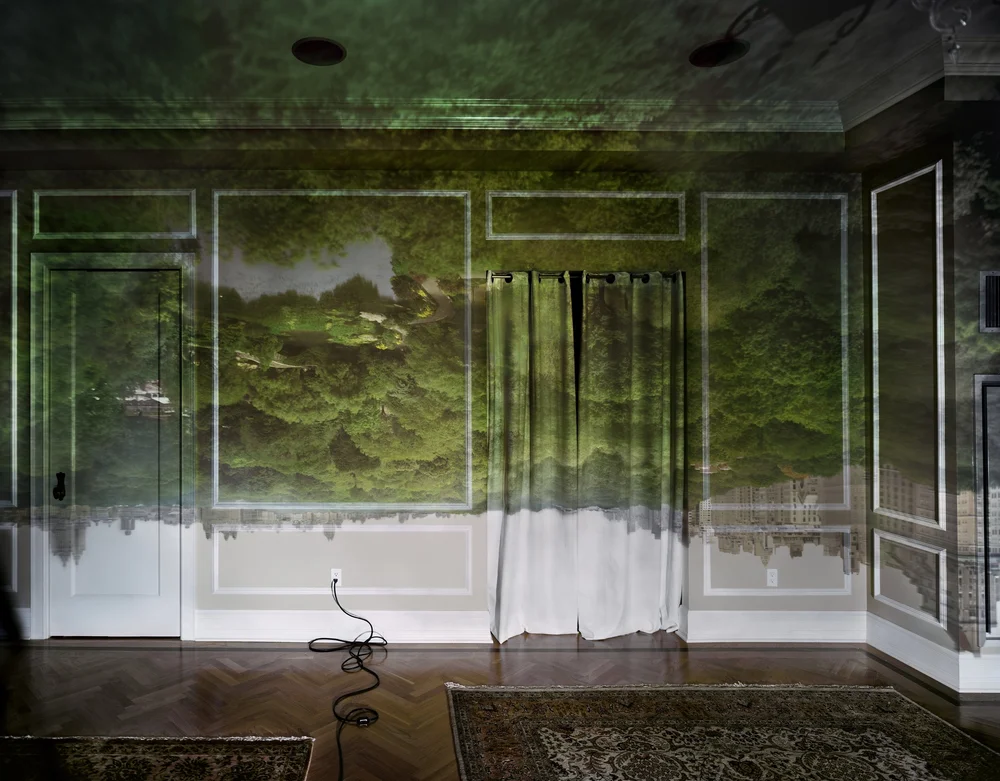
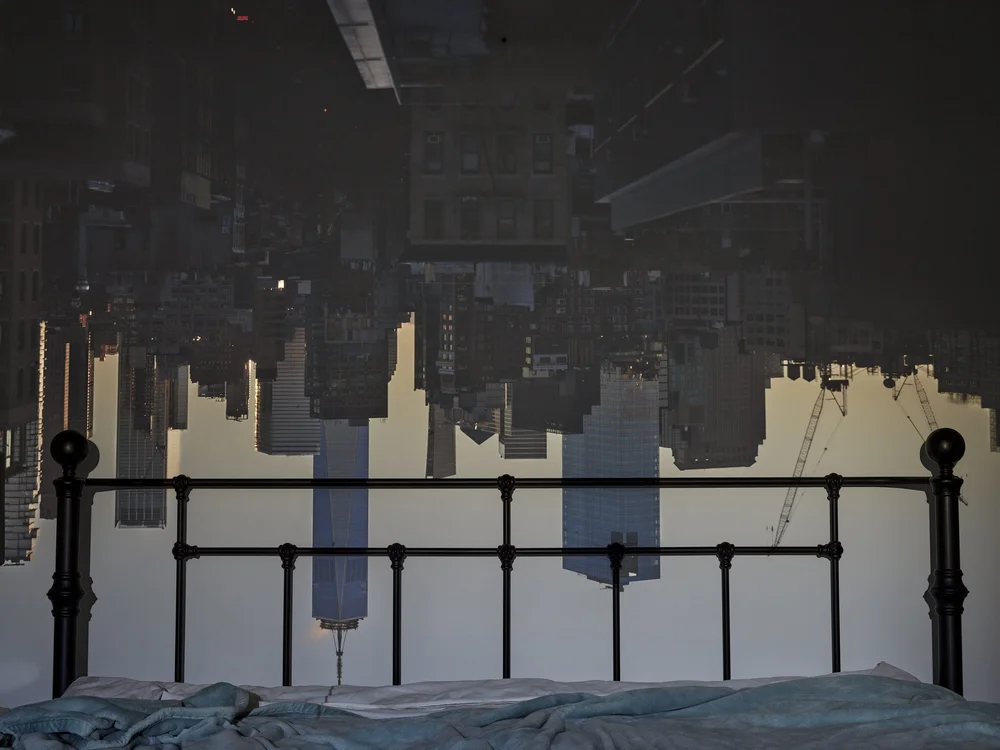
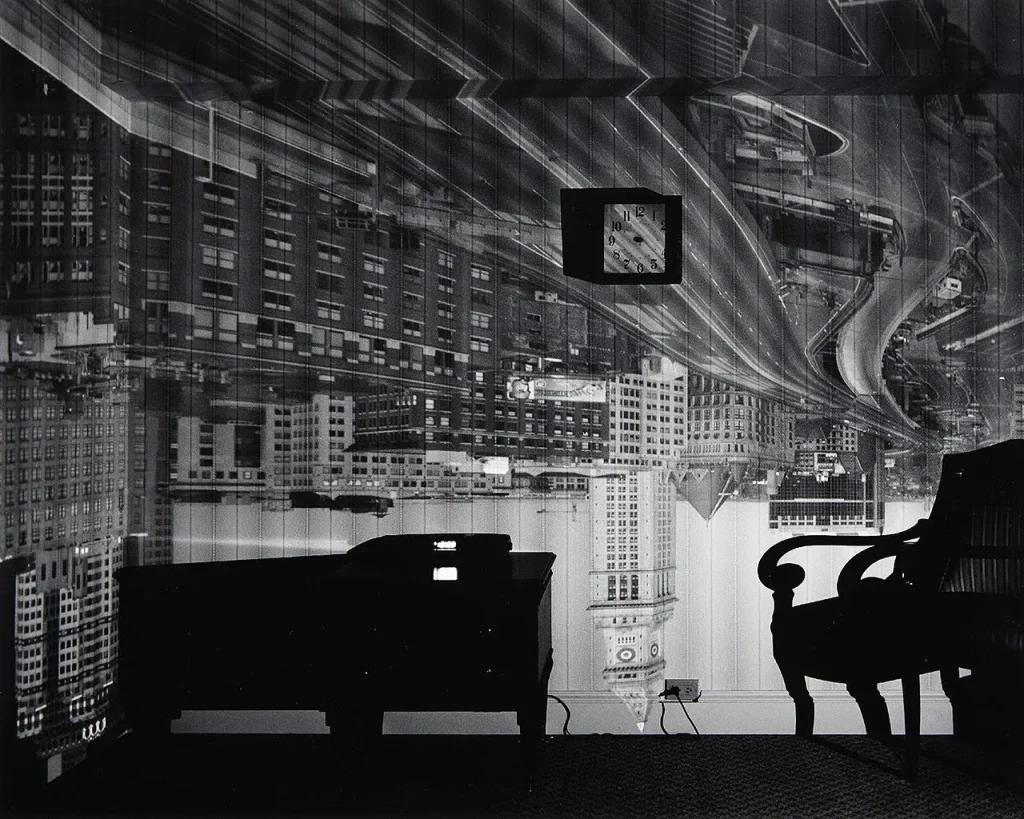
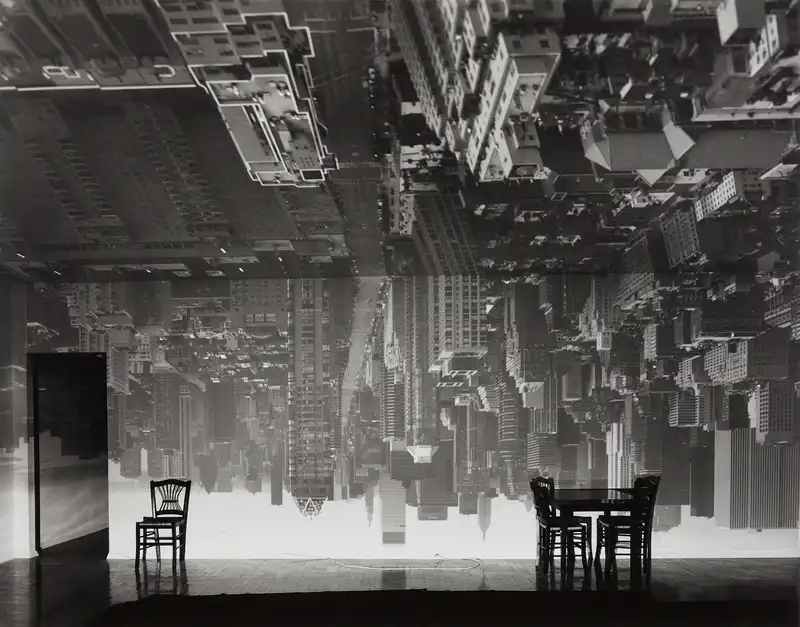
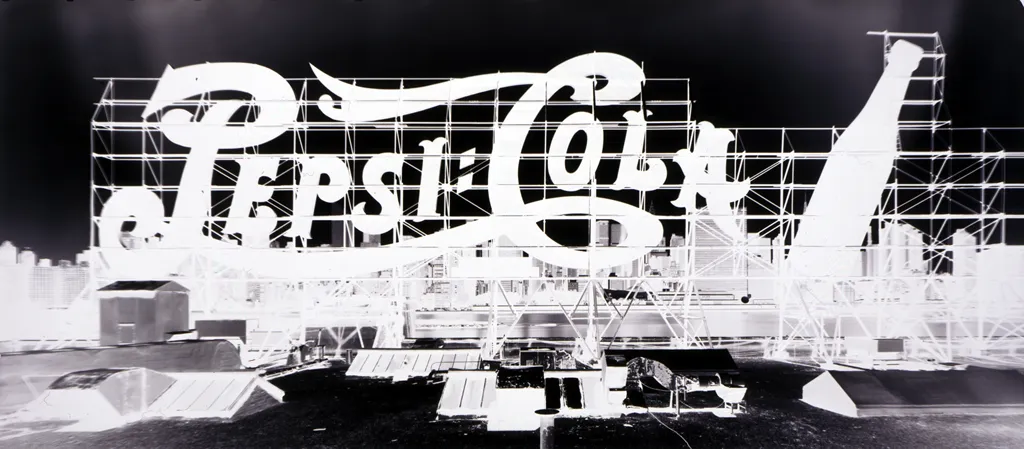
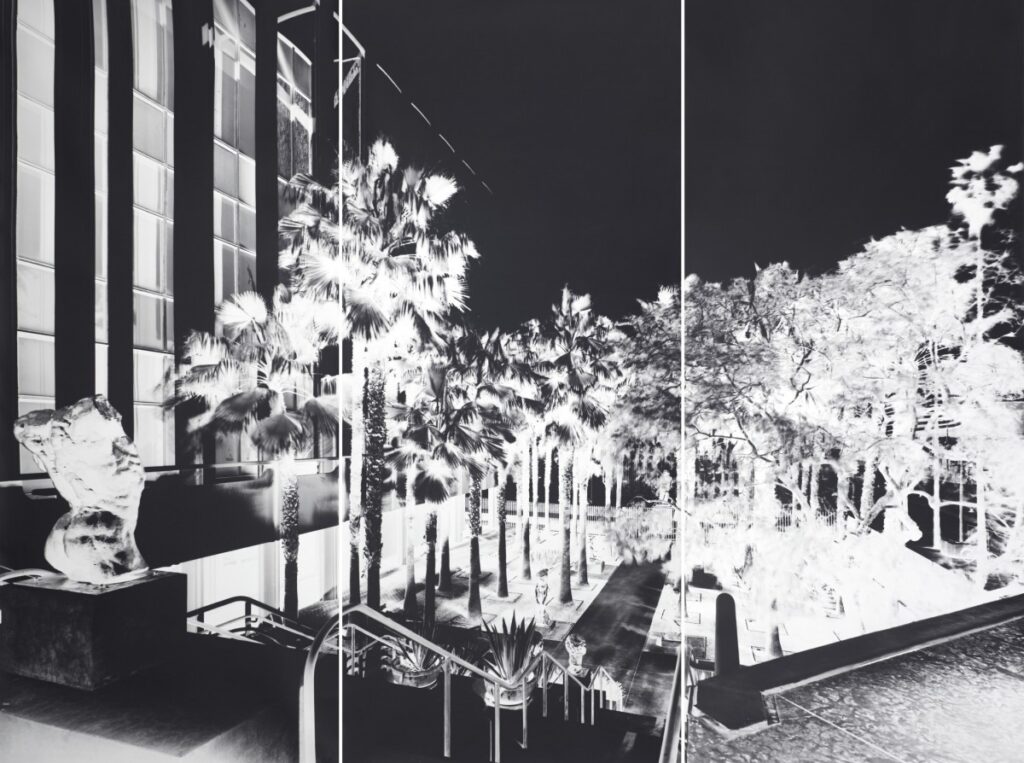
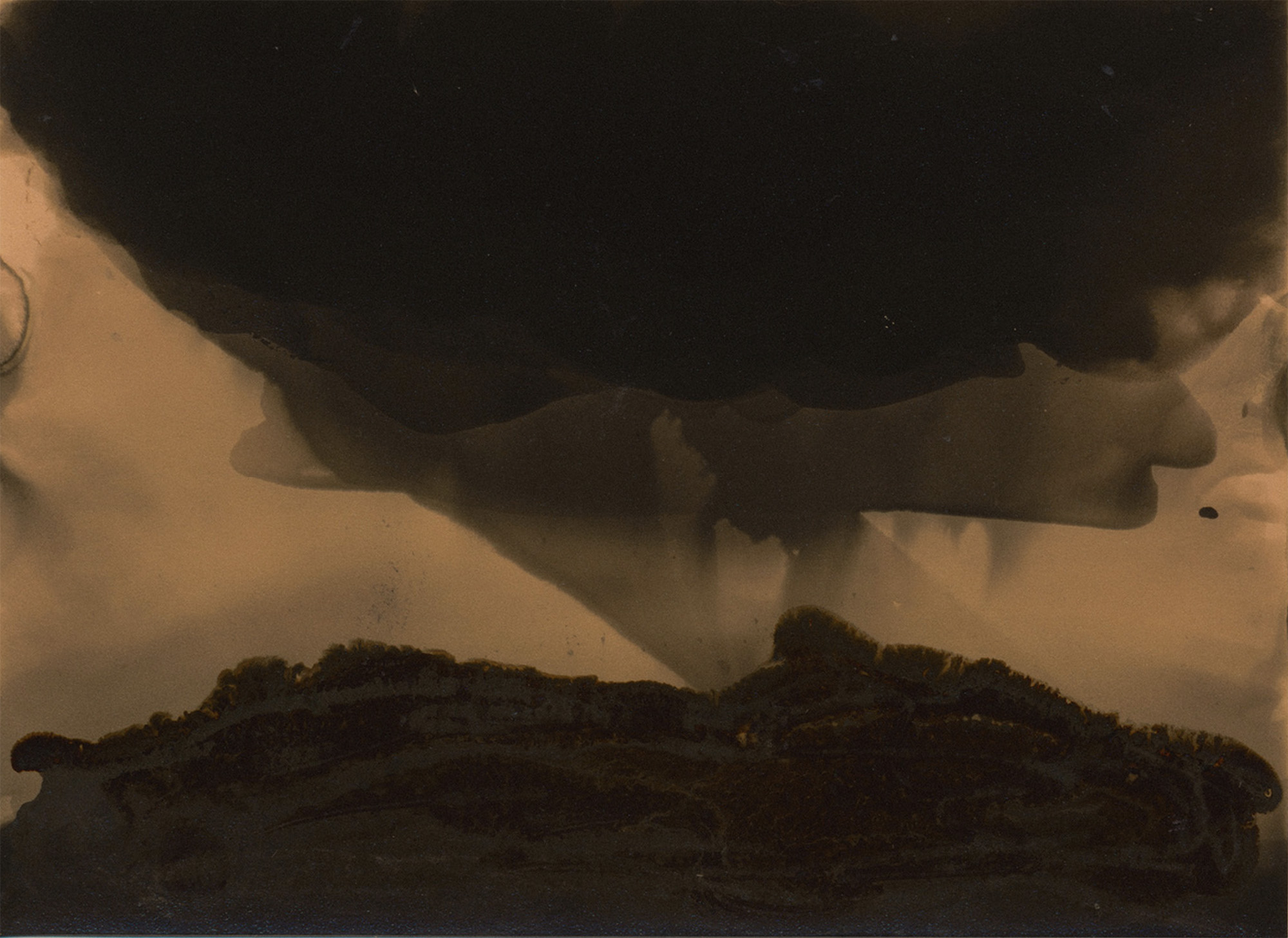
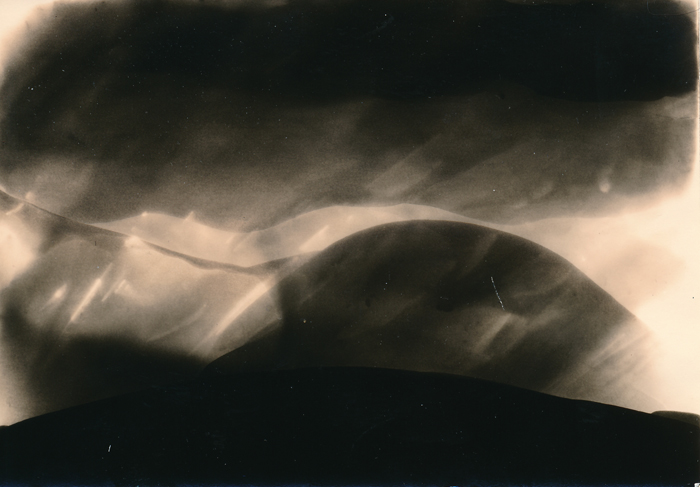
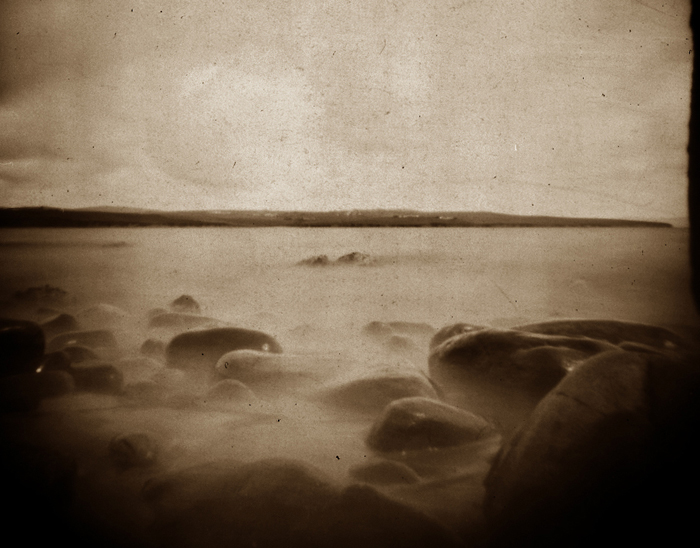
The resurgence of analogue photography reflects the photographer’s desire to return to the origin of the medium, even as we become more deeply connected to technological processes. Pinhole photography relies simply on an enclosed box and a hole for the light to enter. David Hockney believes that it might have been this approach that allowed for the great leap forward in accurately recording the human figure during the Renaissance. Vera Lutter and Abelardo Morell both use the camera obscura on an extreme scale to capture entire landscapes. Martine Marie-Anne Chartrand and Ingrid Budge use pinhole techniques on a much smaller scale, often relying on sustainable materials and hand built cameras.
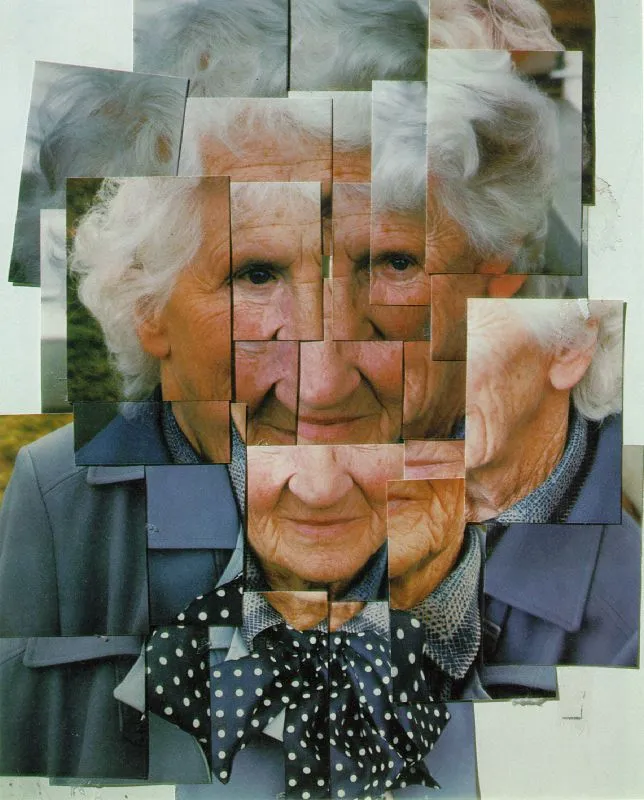
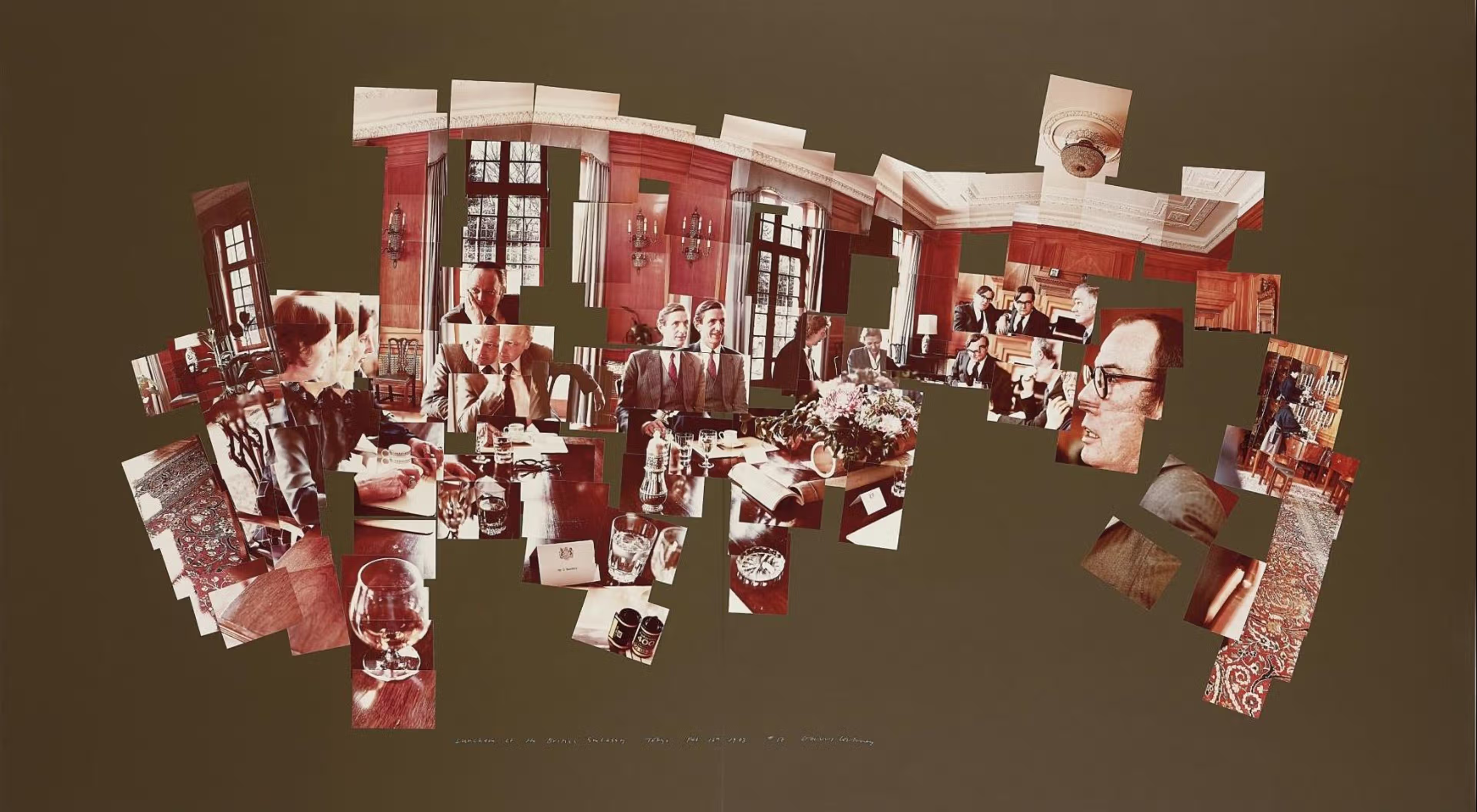
David Hockney: In his joiners, Hockney’s engagement with Cubism is clearly evident, reflecting a deliberate integration of fragmentation and multiple perspectives into a cohesive visual experience. This technique allowed him to weave together distinct snapshots into a unified image that challenges and expands the viewer’s perception. By adopting Cubist principles, Hockney’s joiners break the constraints of space, offering a dynamic and enriched representation of scenes that revisit Cubism’s holistic approach to its subjects.
David Hockney
Learn more about Cubism here and other movements such as Dadaism, Futurism and Surrealism and other avant-garde art movements in the early 20th century.
Abelardo Morell, Camera Obscura Image of Santa Croce in Office, Florence, Italy, 2000. (Source: https://www.getty.edu/art/collection/object/109HNM)
Artist Abelardo Morell reimagines scenery by turning entire rooms into camera obscuras — effectively merging interior and exterior spaces — and then photographing the results. He discusses how he developed this peculiar practice over time, and how he has found fulfillment infusing everyday environments with new enchantment.
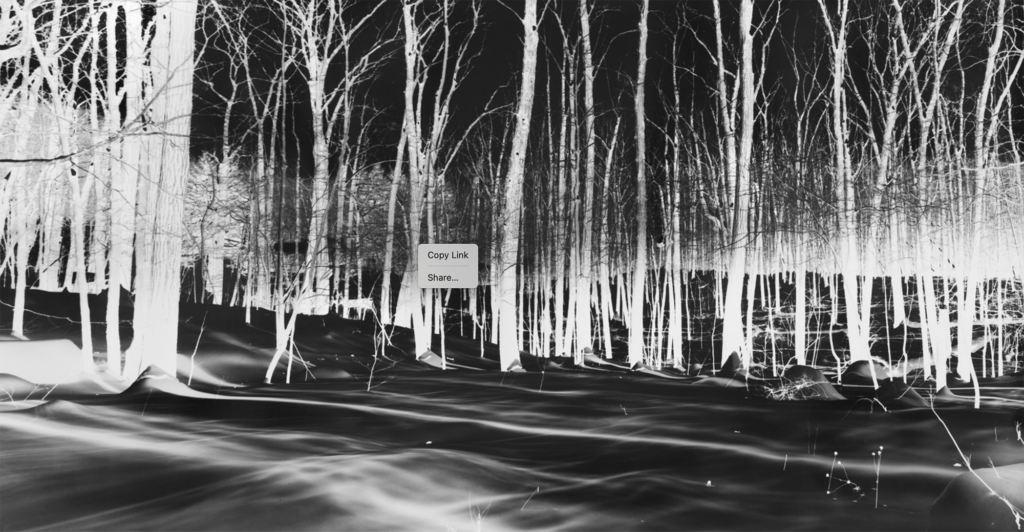
Vera Lutter: Using the architecture of the camera obscura as her photographic mechanism, Lutter becomes the transcriber of outer architectures, facing buildings and industrial sites. Interested in places which reference particular historical moments or which have adopted an iconic stature, she transforms rooms which look upon her pending subjects into cameras, often inhabiting them during the length of each exposure. Her images often reference movement over the hours or sometimes weeks of each exposure’s duration; in so doing she speaks to the transitory nature of the built environment itself. The photographs display the microcosms of sites that are built and become altered over a course of time.
Lutter considers the original transcription of each place, which is created within the camera obscura, as its ultimate representation. She chooses this, rather than using the rendered negative as an intermediate to an ultimate positive. Her only amendment is to right each image, flipping it from its original, inverted recording. The images give a visceral sense of what it is to see the way a camera does.
Vera Lutter
Vera Lutter
Martine Marie-Anne Chartrand
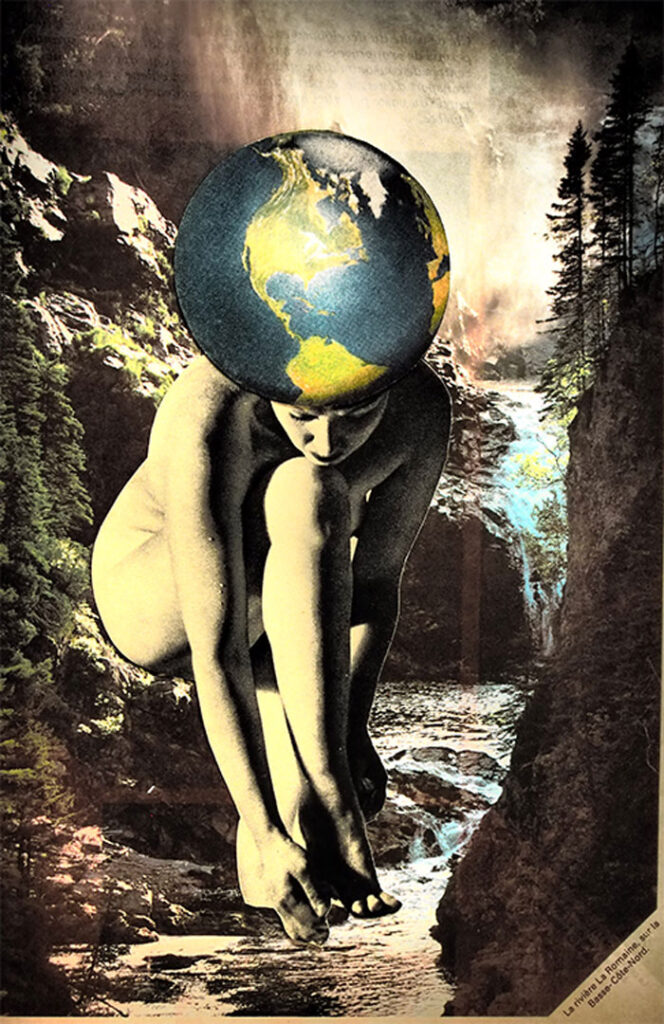
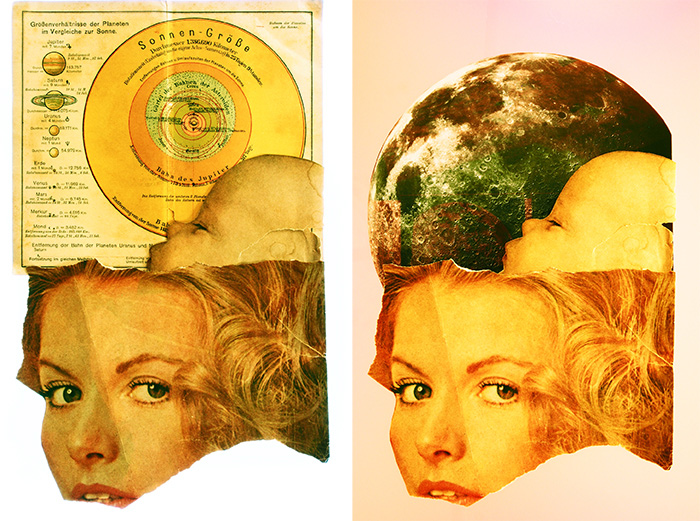
For me art is a process of discovery, expression, understanding and the healing of human emotions. I have the need to assemble, cut paper, arrange objects to better represent my thoughts. I do so, because like life, not everything is black or white, there are often many nuances of grey and I represent this by the manipulation of images.
When I am not using my camera, I will be cutting paper. My collage work offers me the opportunity of complete liberties. These works happen spontaneously in different manners. To honor these reflections and thoughts, I associate no defined subject matter and it is an ongoing singular process with an open ended body of work. It is more like a collage diary, I like to call “Drôle de ménagerie”. It is where science meets religion, where animals meld into humans and are put in situations that humans put themselves and vice versa. It is where news meets fiction and the absurd collides with reality. It is also where I protest. All of the above mentioned becomes a visual cacophony, which resembles how it sometimes feels to live in the 21st century.
Martine Marie-Anne Chartrand
Martine Marie-Anne Chartrand
Ingrid Budge: from Orkney in Scotland, discovered alternative processes in the 80’s and is now working in lumen, cyanotype, wet-plate, chemigrams, pinholes and more. Explore more here on alternative photography.com
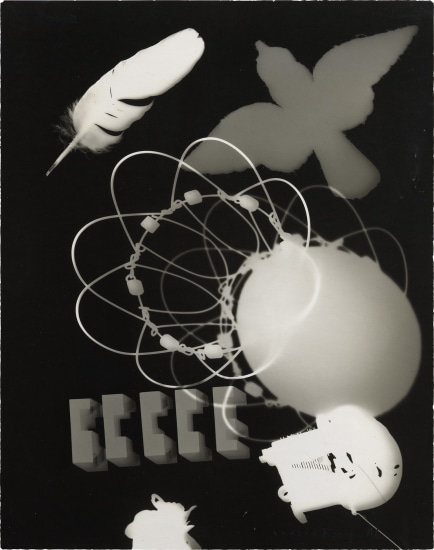
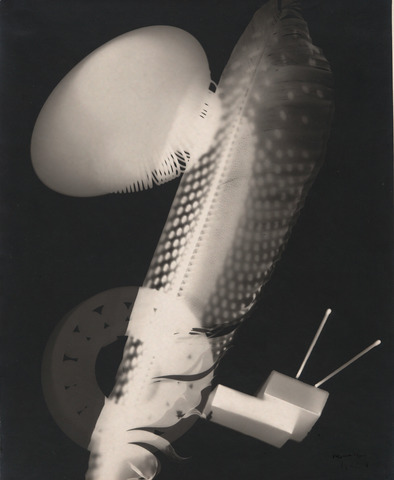
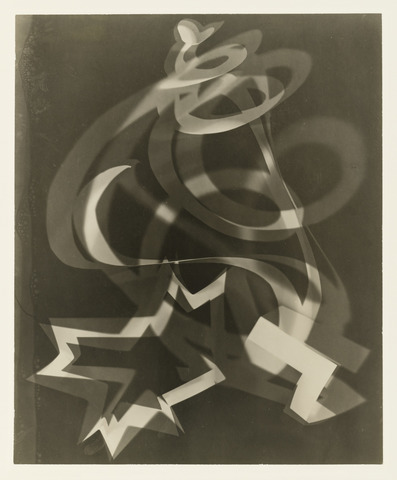
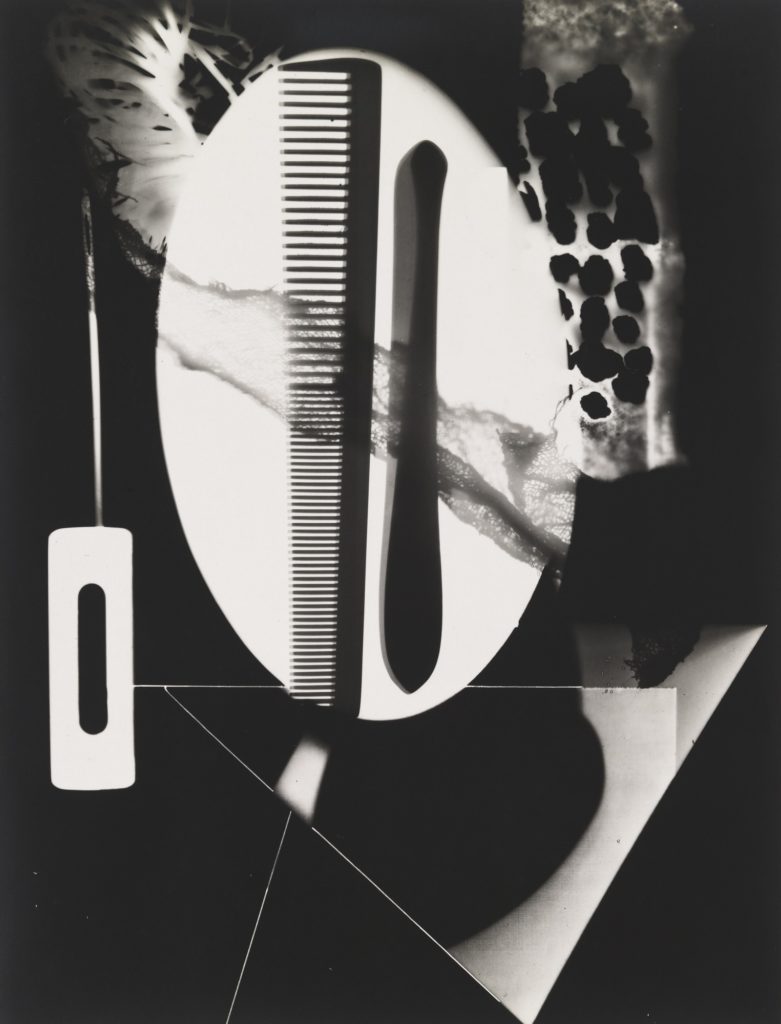
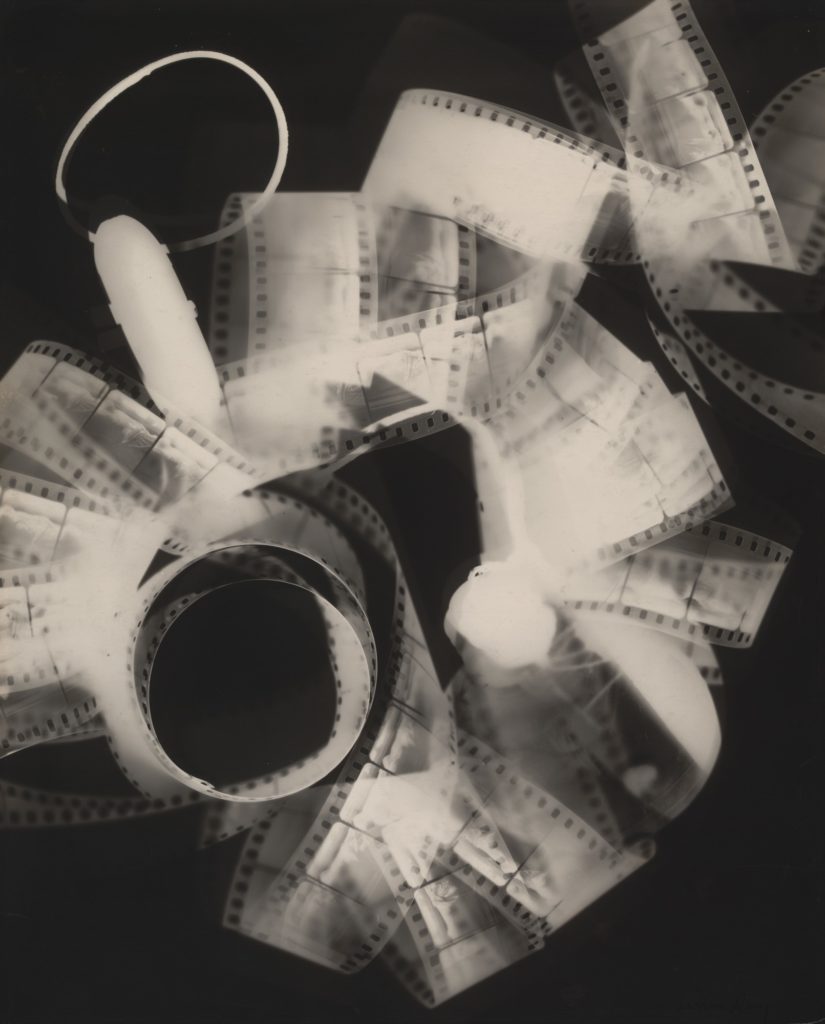
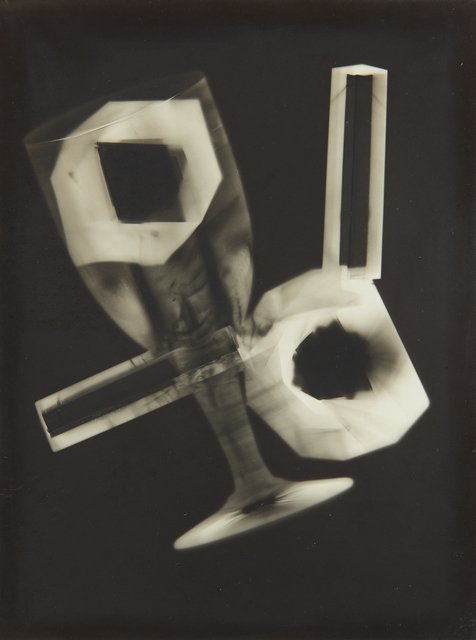
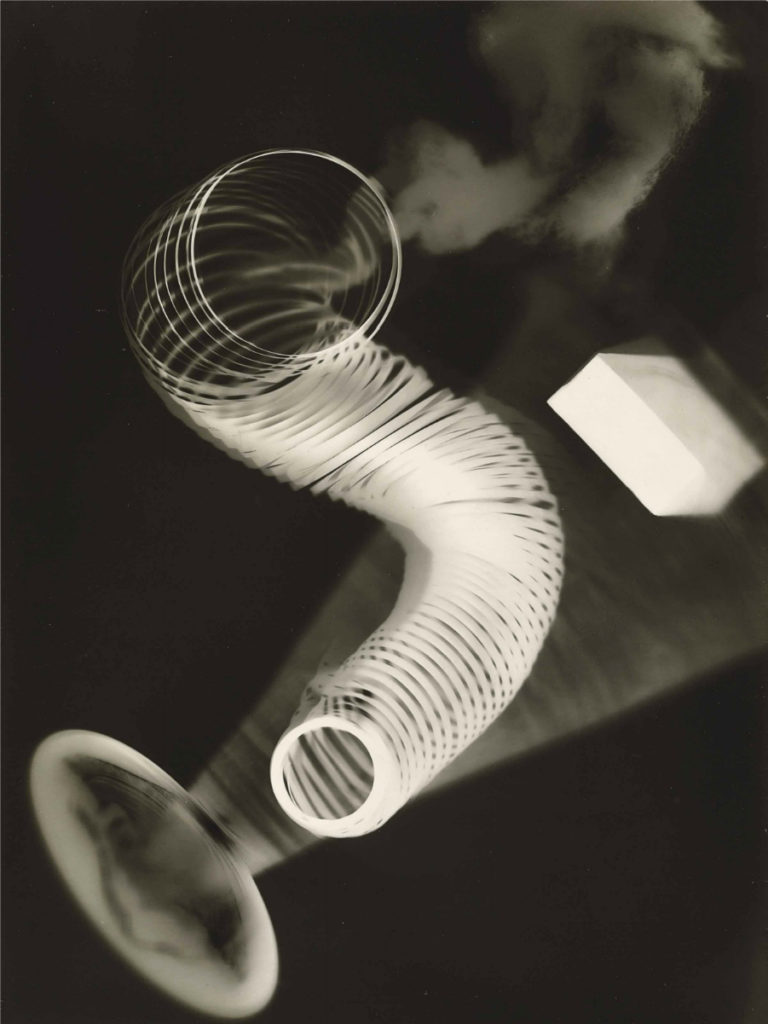
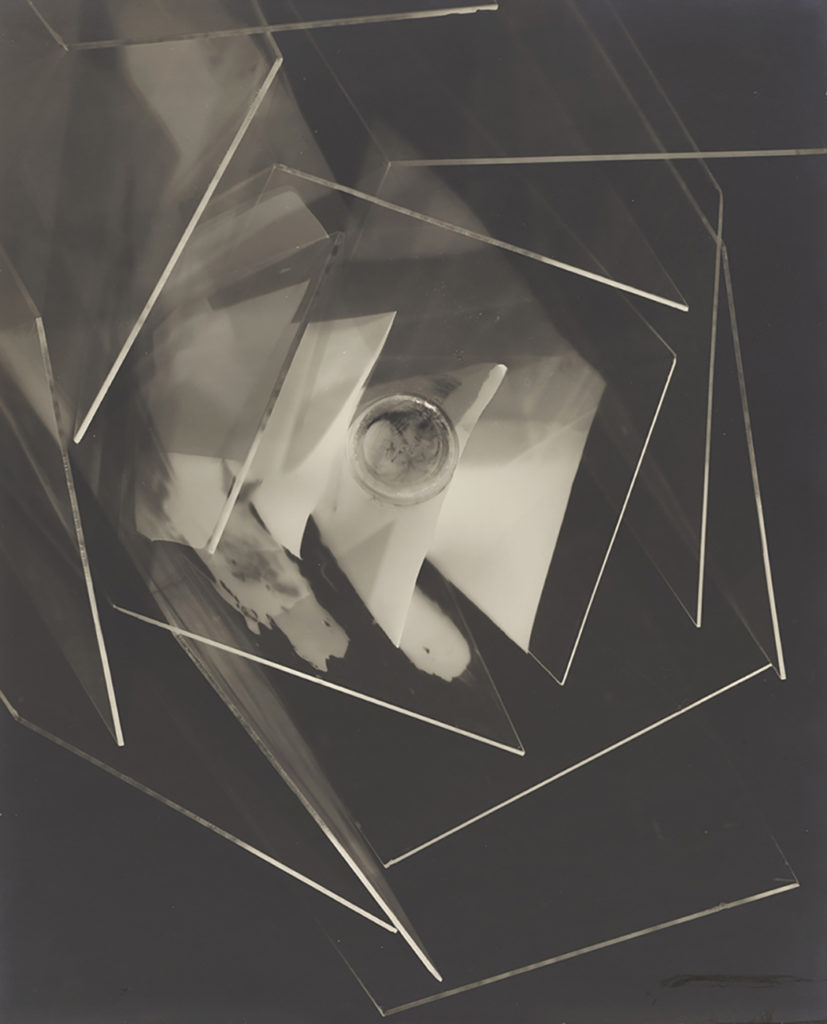
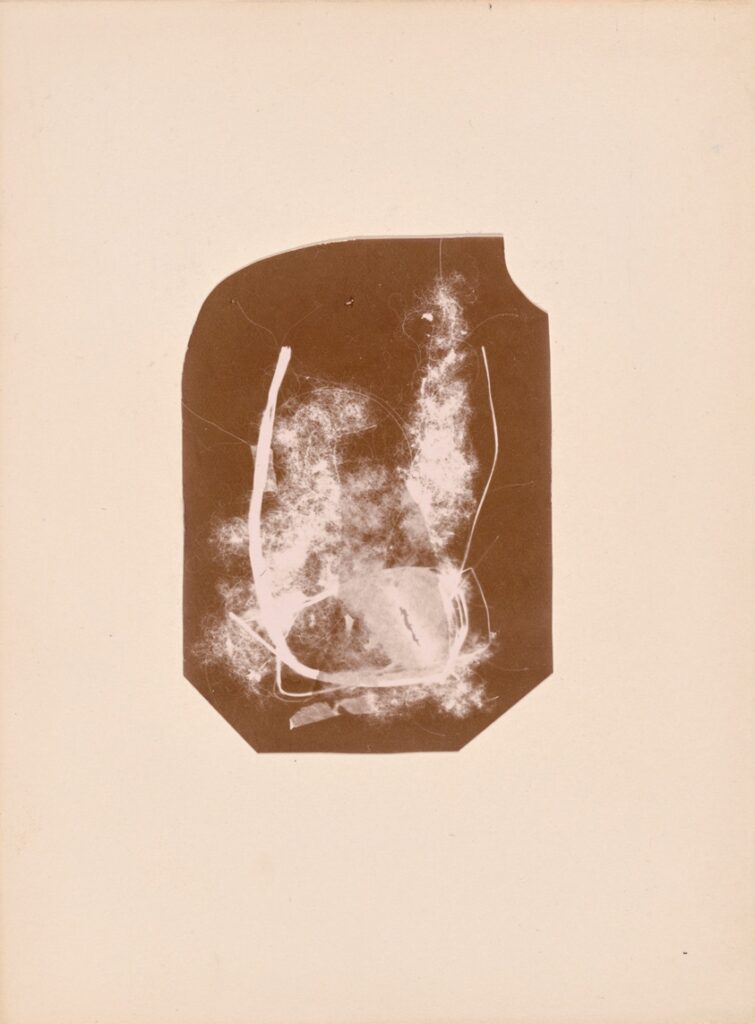
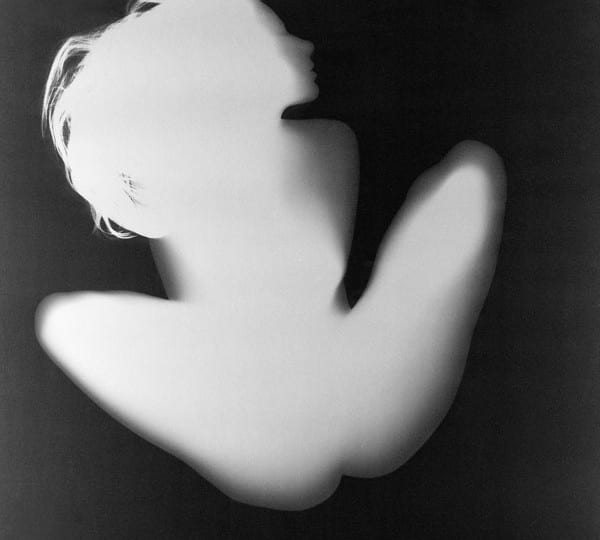
The advent of camera-less photography marked a revolutionary departure from traditional image-making techniques. Photographers from across the world have unified their creative exploration of using light-sensitive materials in a physical way.
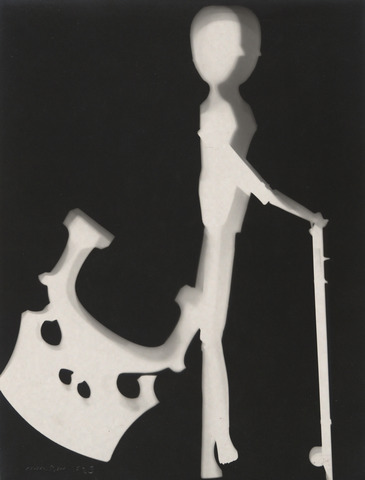
Artists, such as Man Ray, Christian Schad and László Moholy-Nagy, pioneered this avant-garde approach. Moholy-Nagy, associated with the Bauhaus movement, embraced photograms as a means to merge art and technology.
I paint what cannot be photographed, that which comes from the imagination or from dreams, or from an unconscious drive. I photograph the things that I do not wish to paint, the things which already have an existence.
Man Ray and his Rayographs.
Christian Schad and his Scadograhie.
It was László Moholy-Nagy who coined the term ‘photograms”
Pierre Cordier I Have A Dream, 2013 chemigram
More recently, photographers, such as Pierre Cordier, Barbara and Zafer Baran, Floris Neusüss, Susan Derges, Garry Fabian Miller and Helen Chadwick, have all adopted camera-less techniques to create light-sensitive imagery, inspired by the original pioneers Anna Atkins and William Henry Fox Talbot.
Floris Neusüss
Barbara and Zafer Baran
Susan Derges
Garry Fabian MillerHelen Chadwick, The Labours IV 1986
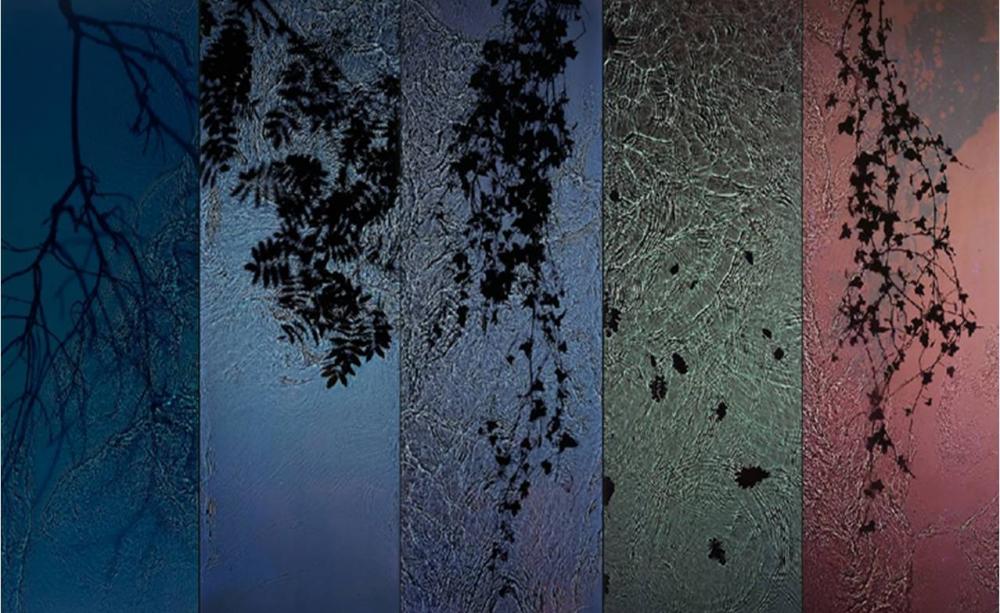
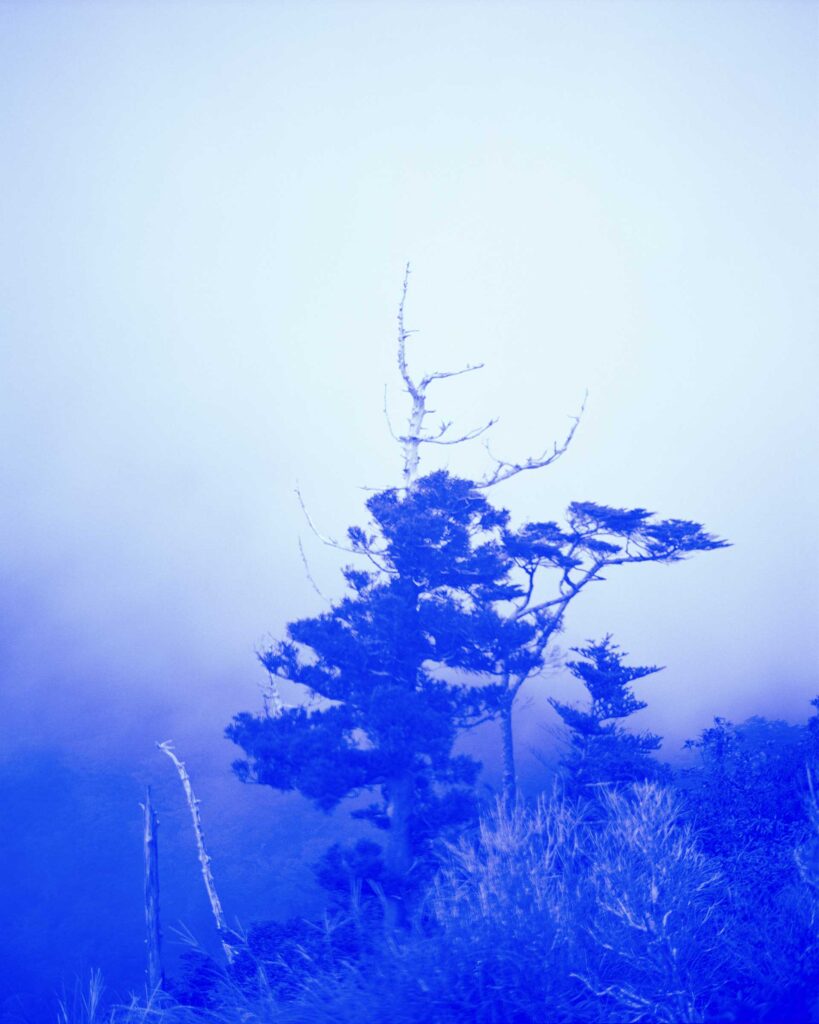
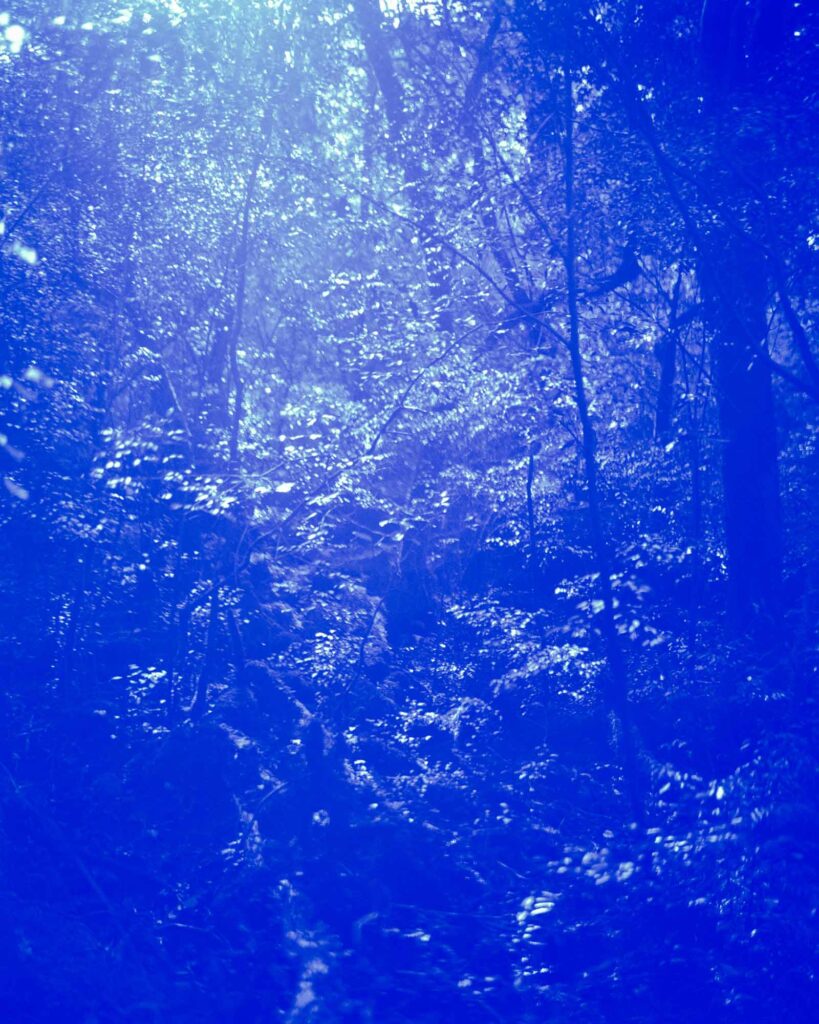
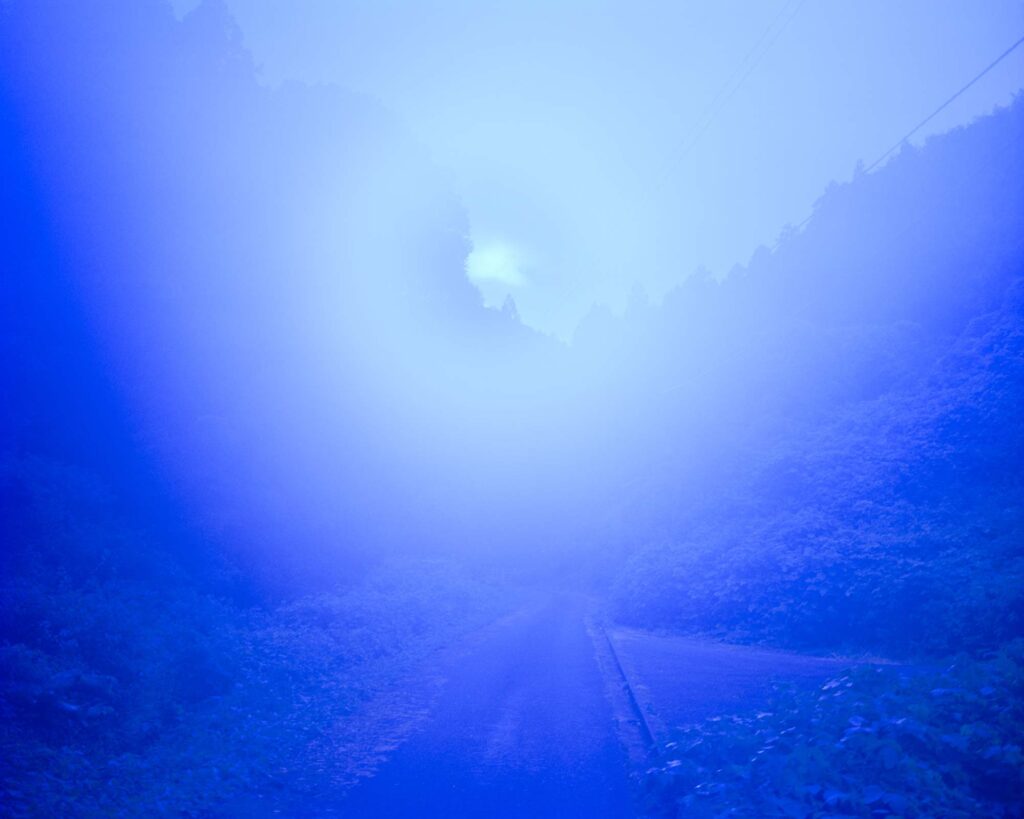
Aomori: “It is peculiar how forests have such an affect on us,” observes Jersey-born photographer Alexander Mourant of his latest project Aomori, which was shot in Japan’s ancestral forests. “As temporal dimensions crumble, objectivity leaves us. We are found in a still, oneiric state, contemplating our own accumulation of experience.”
“Aomori, meaning ‘blue forest’ in Japanese, is a synthesis of two existential ideas – the forest and the nature of blue,” explains Mourant. “Together they create a place of high intensity, a place which questions our relationship to time, colour and self.”
“Aomori addresses the most intangible colour, blue,” Mourant says. “For an artist, an intimate investigation of one individual subject can lead to limitless fields on intertwining narratives and unseen connections. There is so much in the colour blue.”
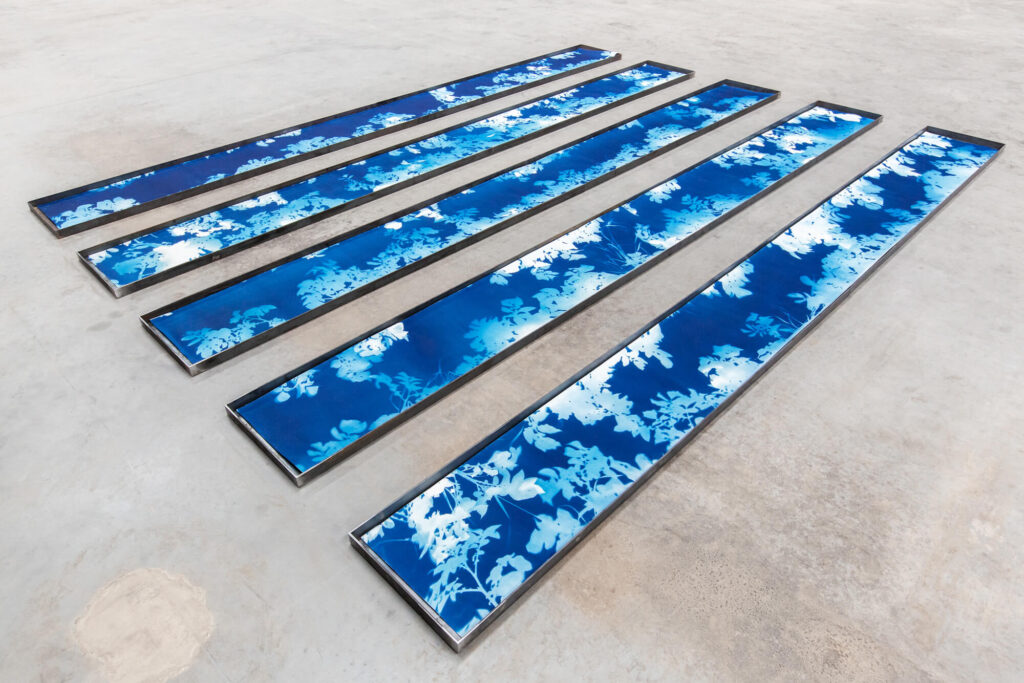
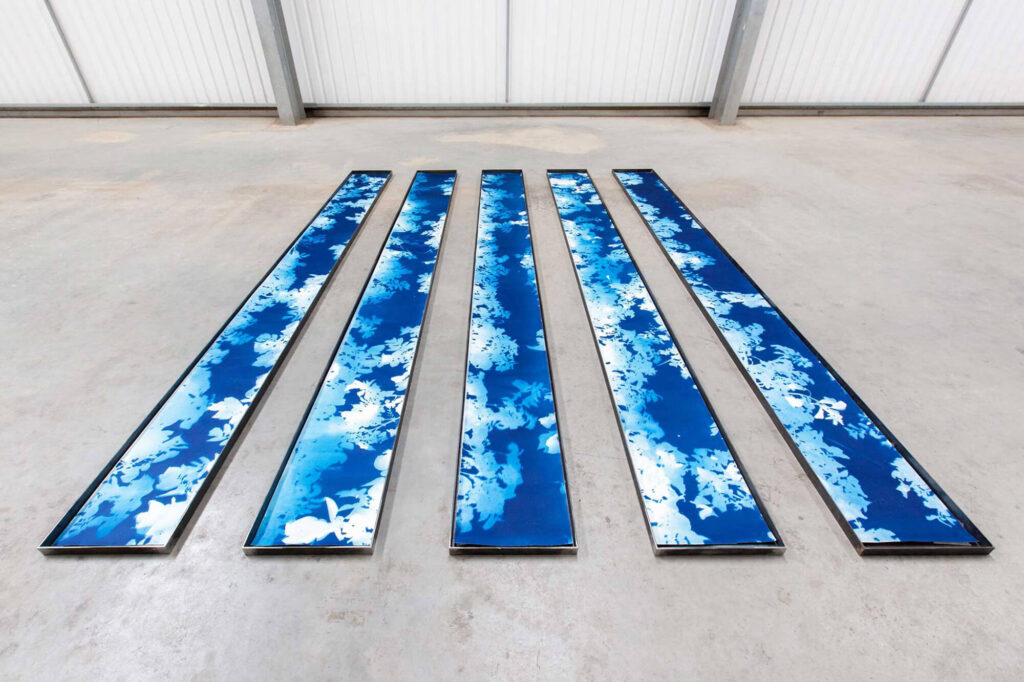
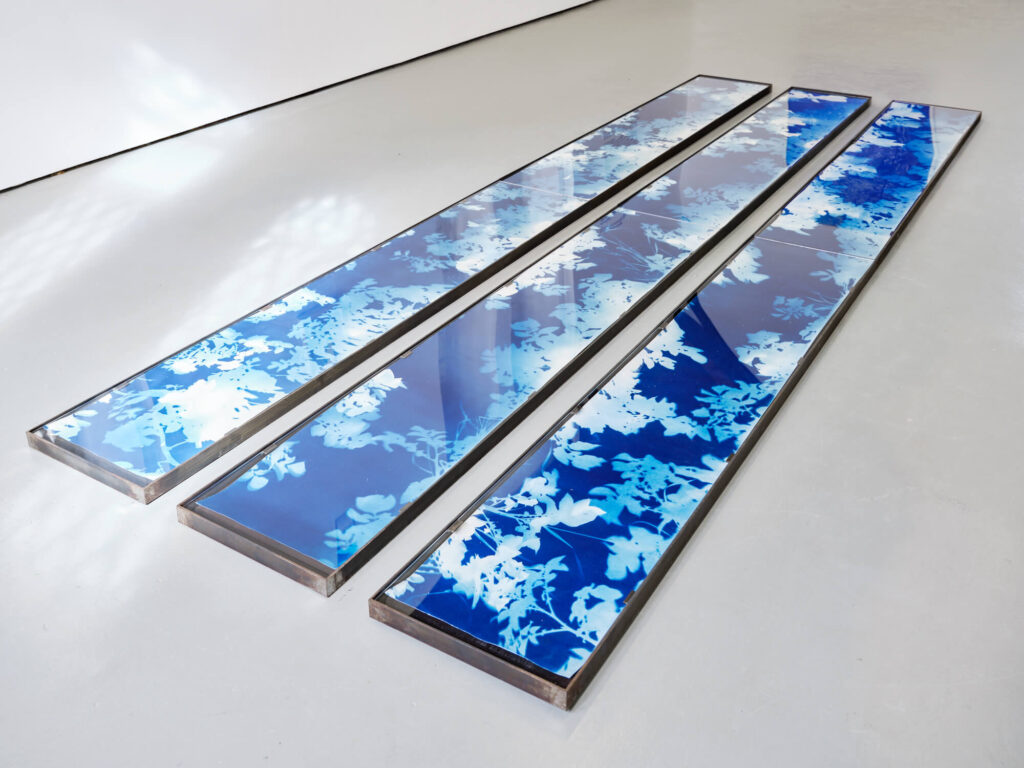
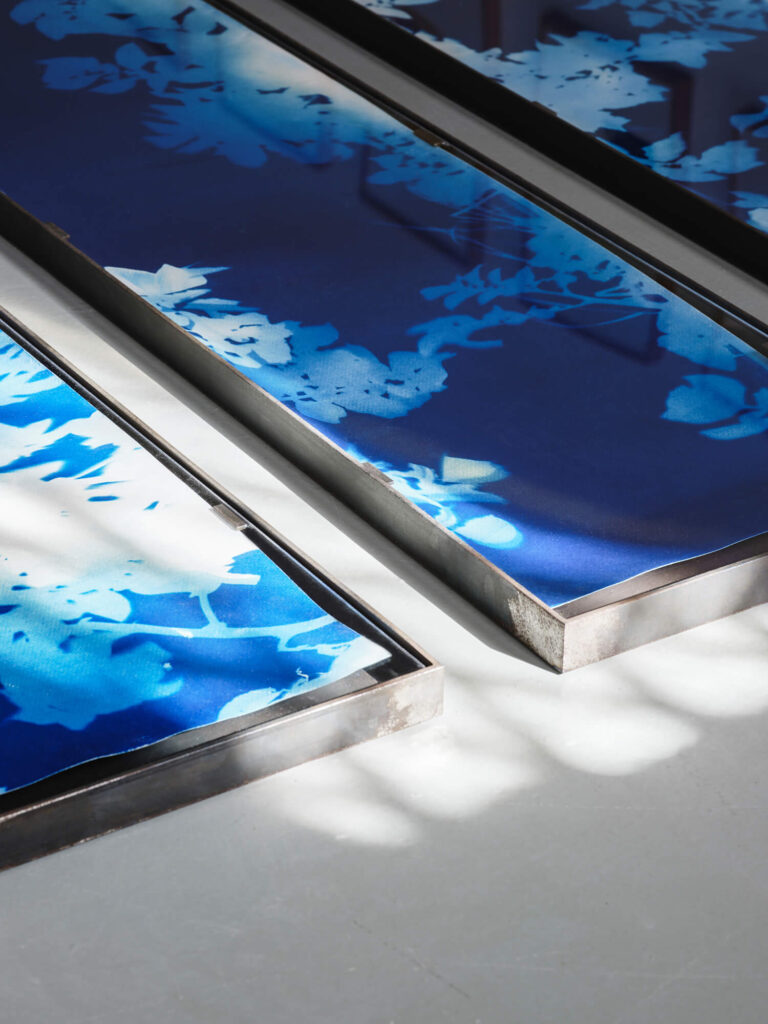
Five Sketches Running for Two Hundred and Ten Seconds or Five Furrows, 2020
Dimensions: 5: 398cm x 39cm prints 5: 400cm x 40cm x 5cm steel trays Artwork scale: 400cm x 260cm
Cyanotype, photogram, watercolour paper Unique
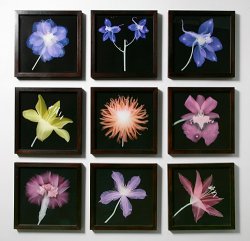
Anna Atkins was an English botanist and photographer. She is often considered the first person to publish a book illustrated with photographic images, British Algae. Photographs of British Algae was published in fascicles beginning in 1843 and is a landmark in the history of photography. Using specimens she collected herself or received from other amateur scientists, Atkins made the plates by placing wet algae directly on light-sensitized paper and exposing the paper to sunlight. Her nineteenth-century cyanotypes used light exposure and a simple chemical process to create impressively detailed blueprints of botanical specimens.
See how contemporary artist, Tom Pope has responded to Anna Atkins plant studies and work with cyanotypes, uncovering her family links with plantation economy in the Caribbean and slave ownership during British colonial history in his ongoing research and performative work, Almost Nothing But Blue Ground
Karl Blossfeldt: Art Forms of Nature
Wolfgang Tillmans is a German photographer. His artistic work is based on an irrepressible curiosity, intensive preparatory research and continual engagement with the technical and aesthetic potential of the medium of photography. His visual language is characterized by a close observation that opens up a deeply humane approach to our surroundings. Familiarity and empathy, friendship, community and closeness can be seen and felt in his pictures.
STARTING POINT 3:PHOTOGRAPHY & FORMATS > pg 27 < Variations for the format of an image < The square format < Panoramics, diptychs, triptychs < Grids, contact-sheets < Sequencing, narrative
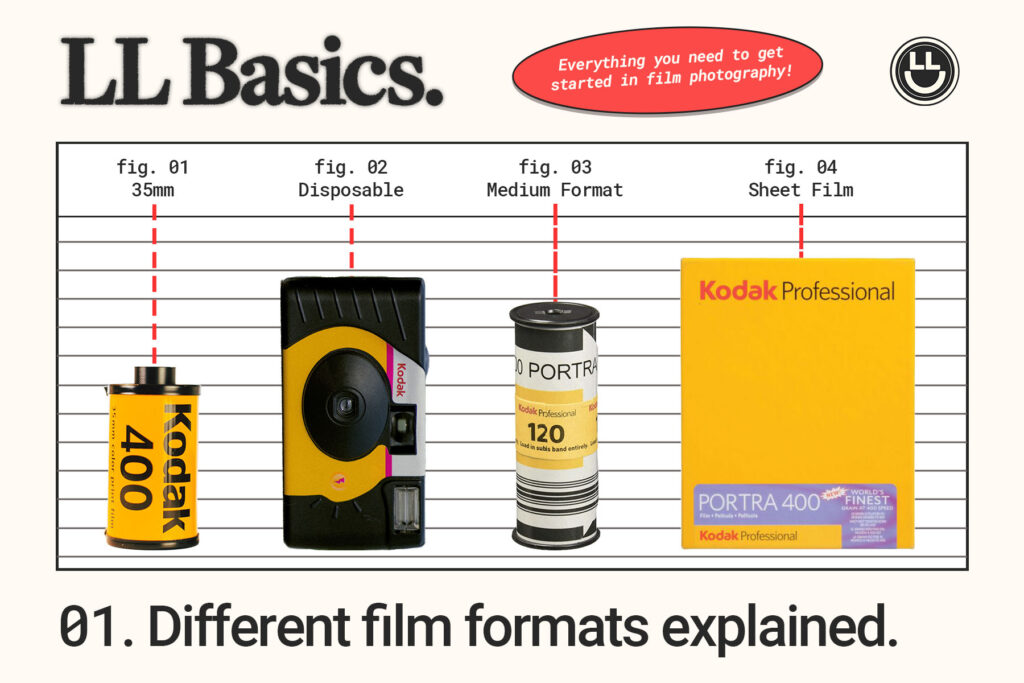
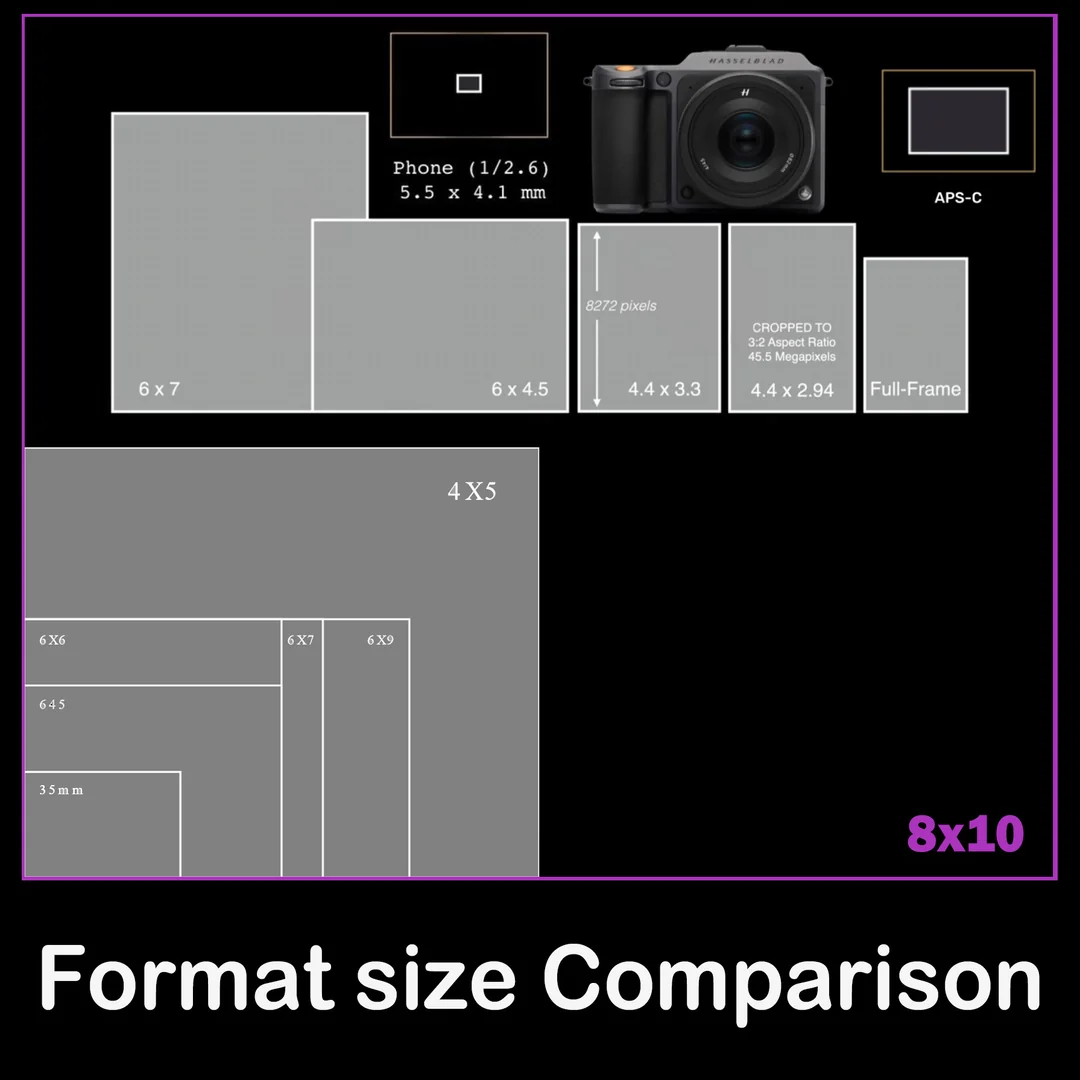
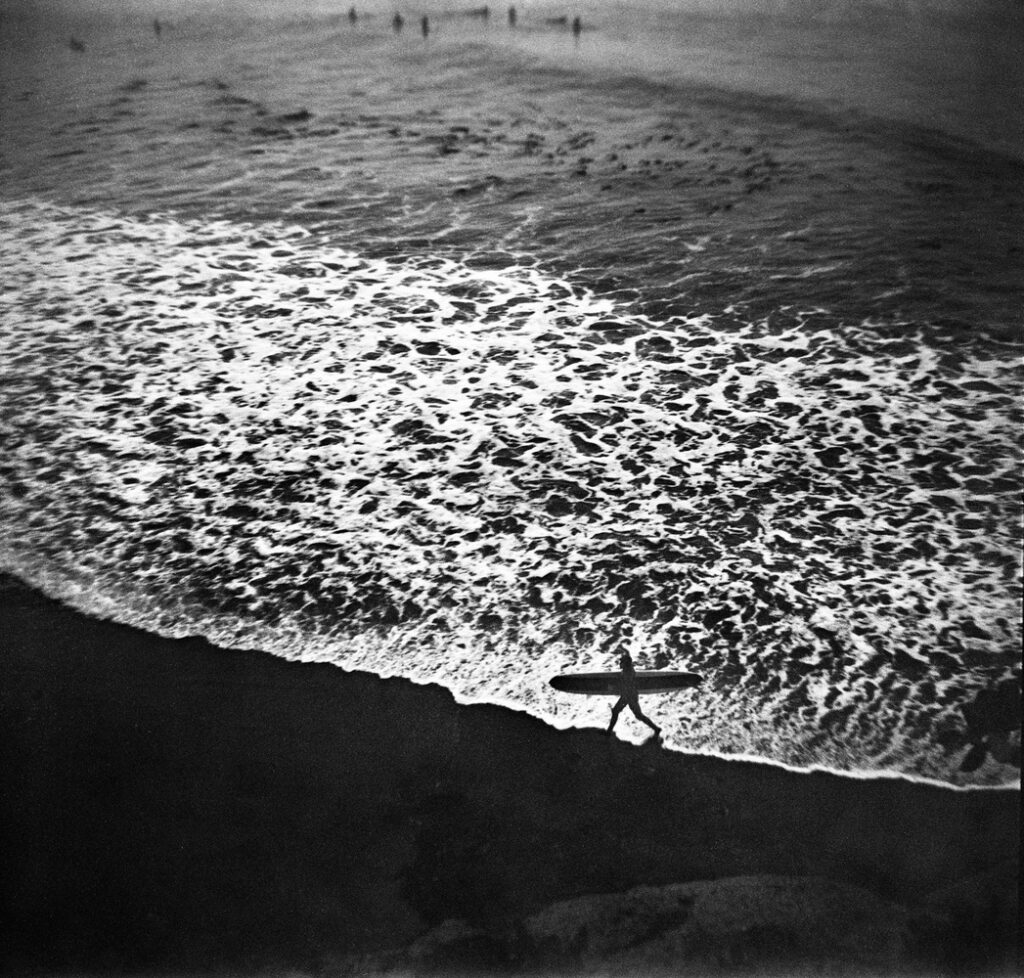
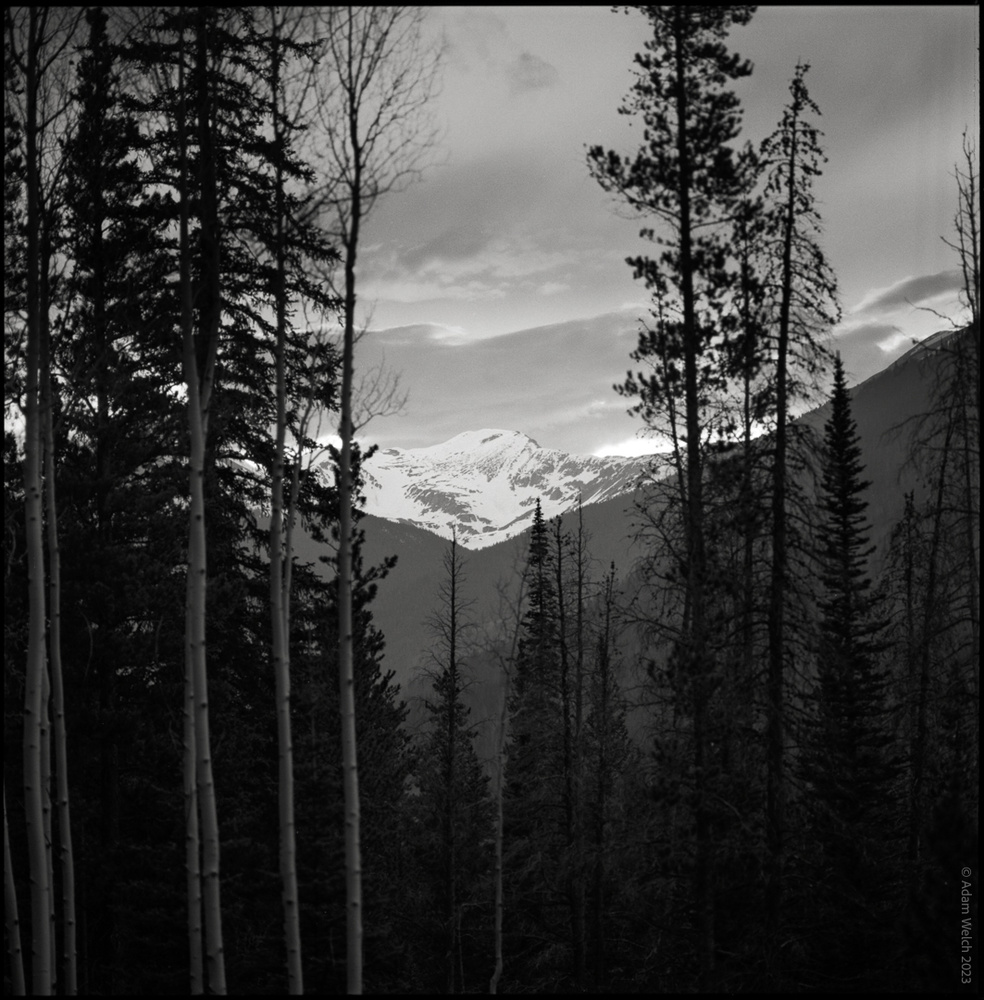
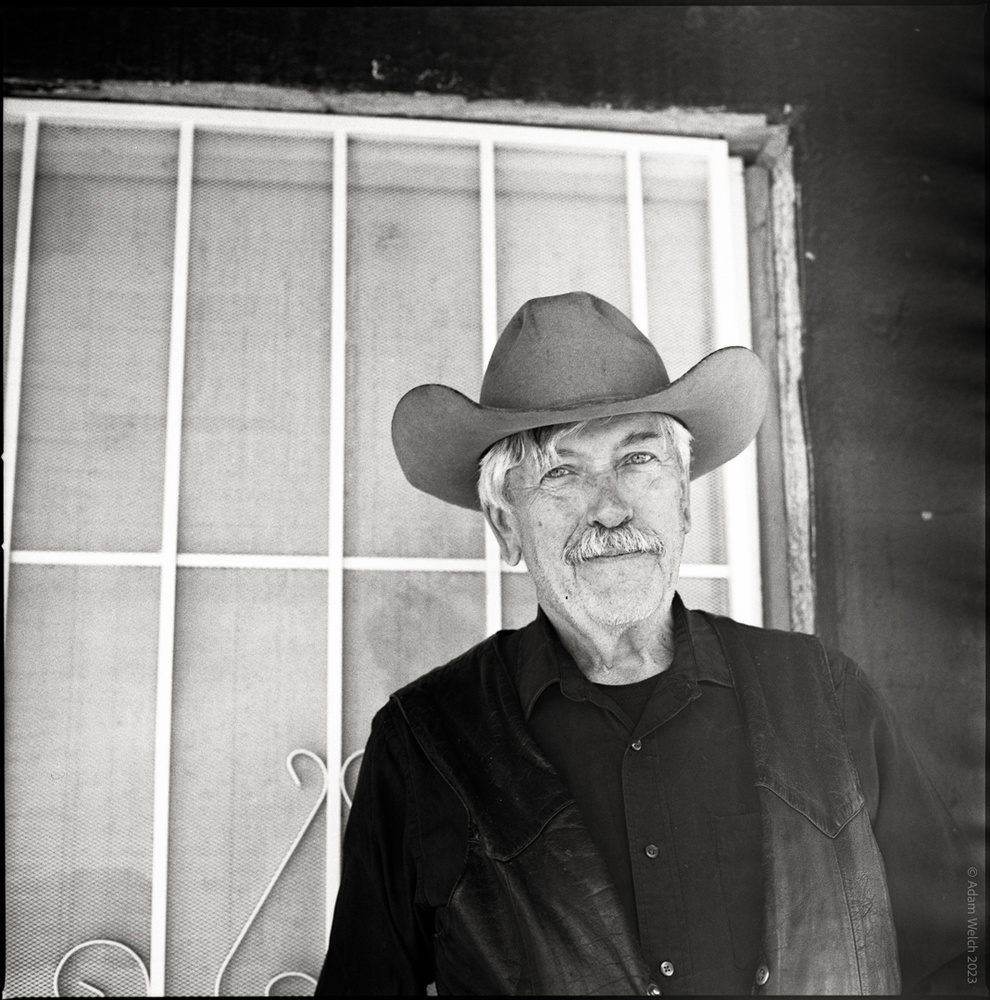
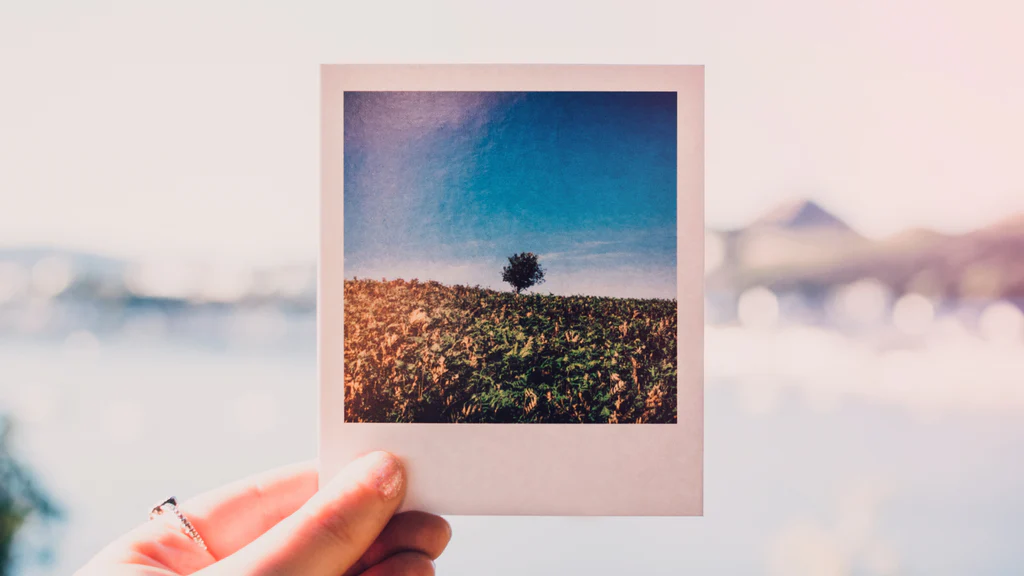
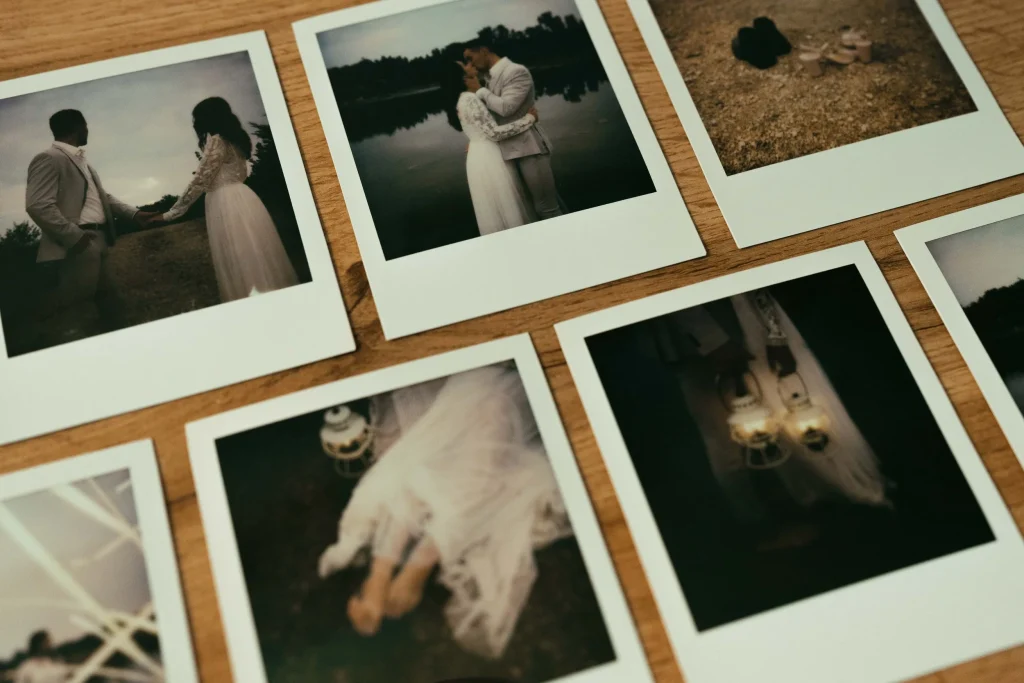
The potential variations for the format of an image lie at the heart of the creative process. The square has a long history in photography. It was the most practical format for the popular 120 film and helped instil a balance to the image, often removing a dominant weight to a composition. The square remained popular throughout the development of the polaroid and is now the most natural format for digital platforms such as Instagram and apps, such as Hipstamatic. Using the square format can reinvent existing photographs as its natural balance means there is no distinction between the portrait and the landscape. Different formats such as panoramas, diptychs and triptychs create different emphases. These can force photographers to abandon the rule of thirds, making them reconsider their content, approach and composition. These possibilities encourage a new way of looking.
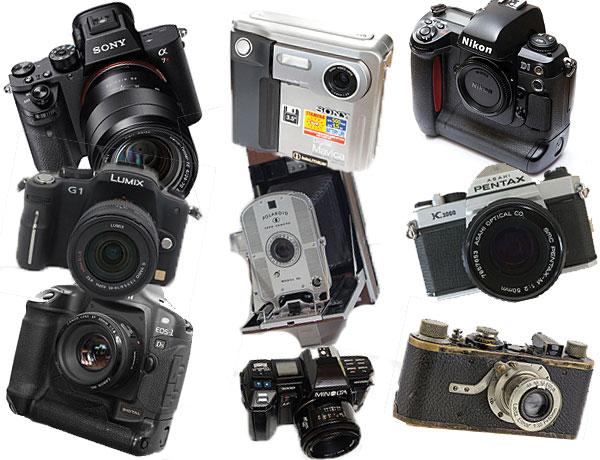
Cameras and film formats
This article here is your guide through the diverse landscape of film formats available today. From the best-selling 35mm to the large format films, and many different instant films, each format offers its own set of advantages and artistic possibilities
Here are two photo-books shot using a square format.
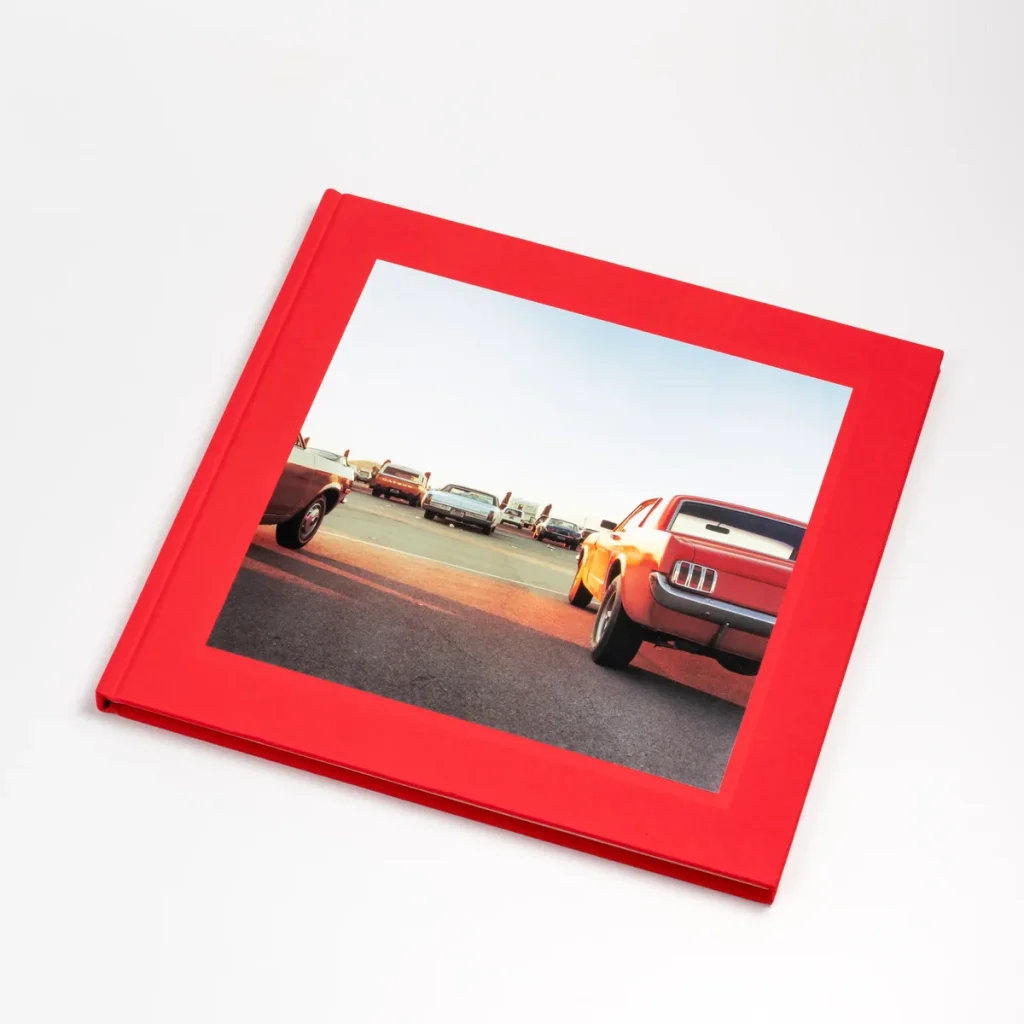
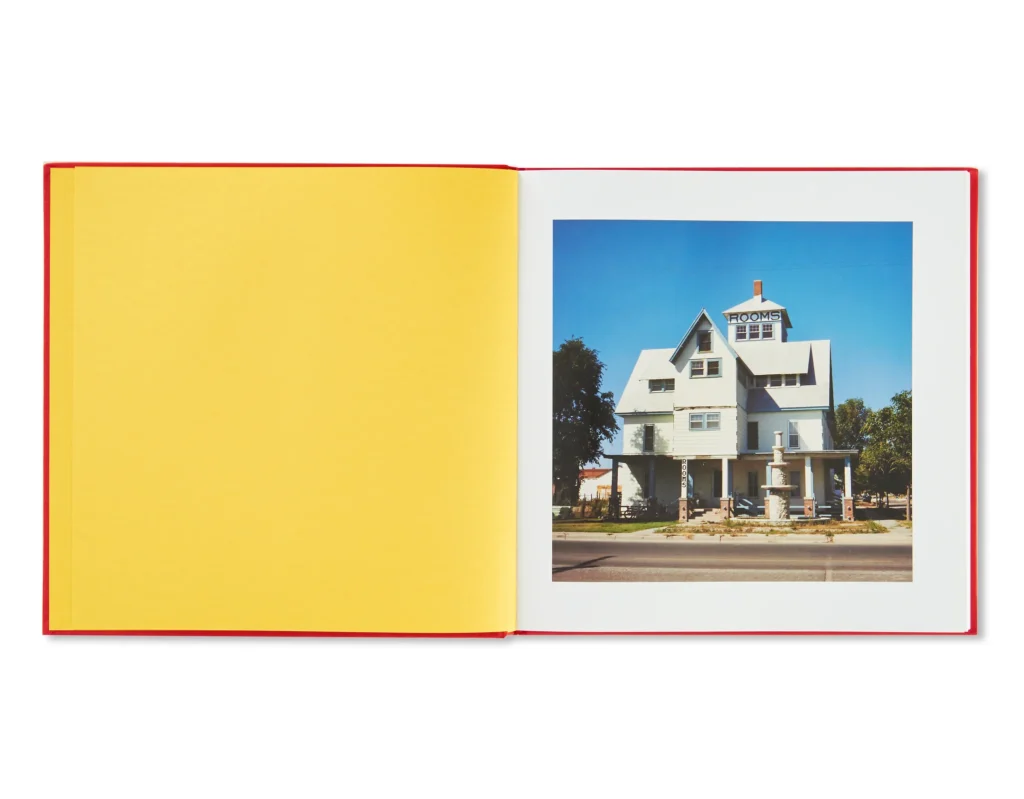
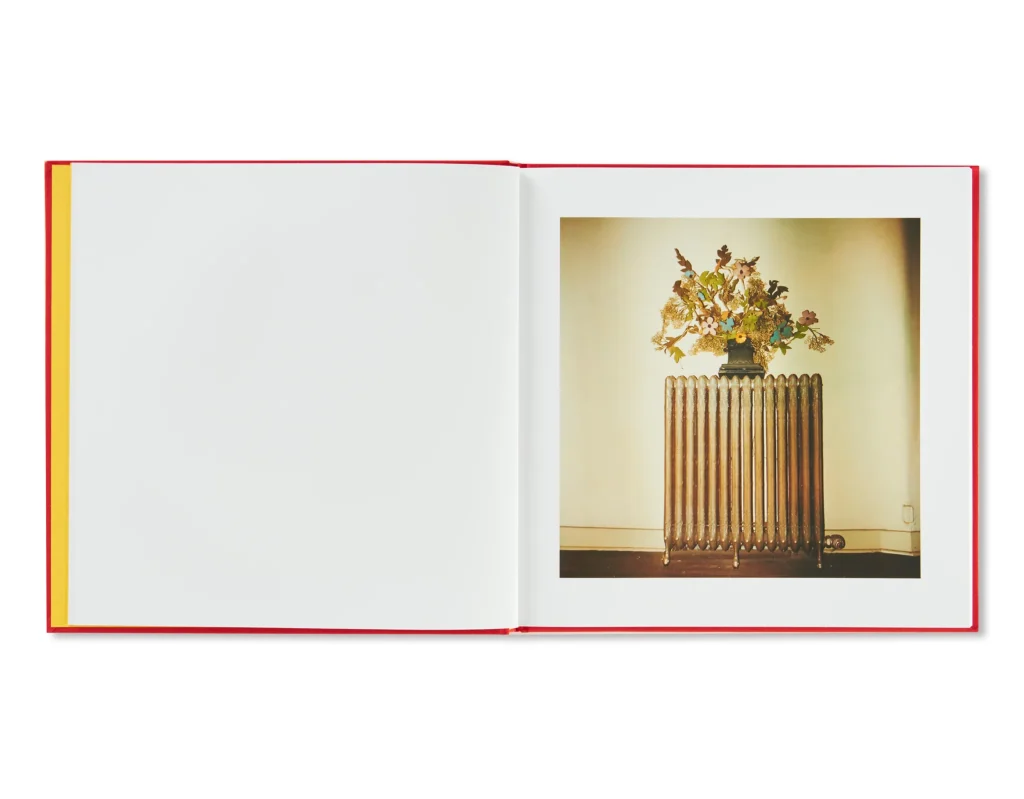
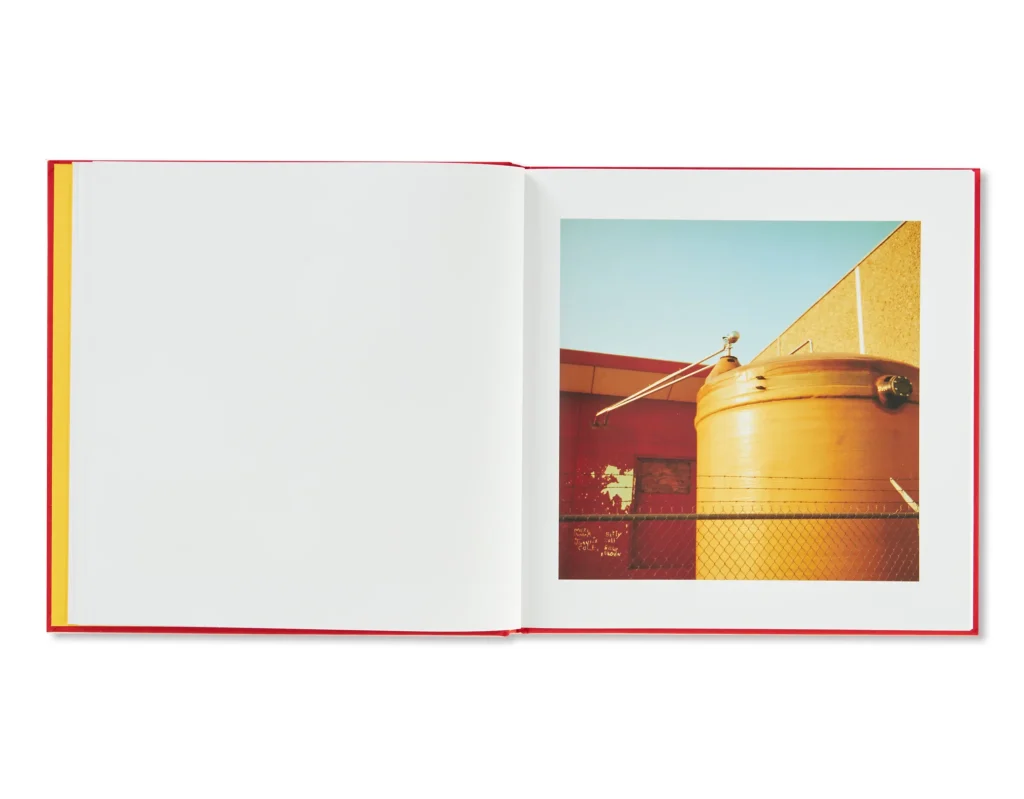
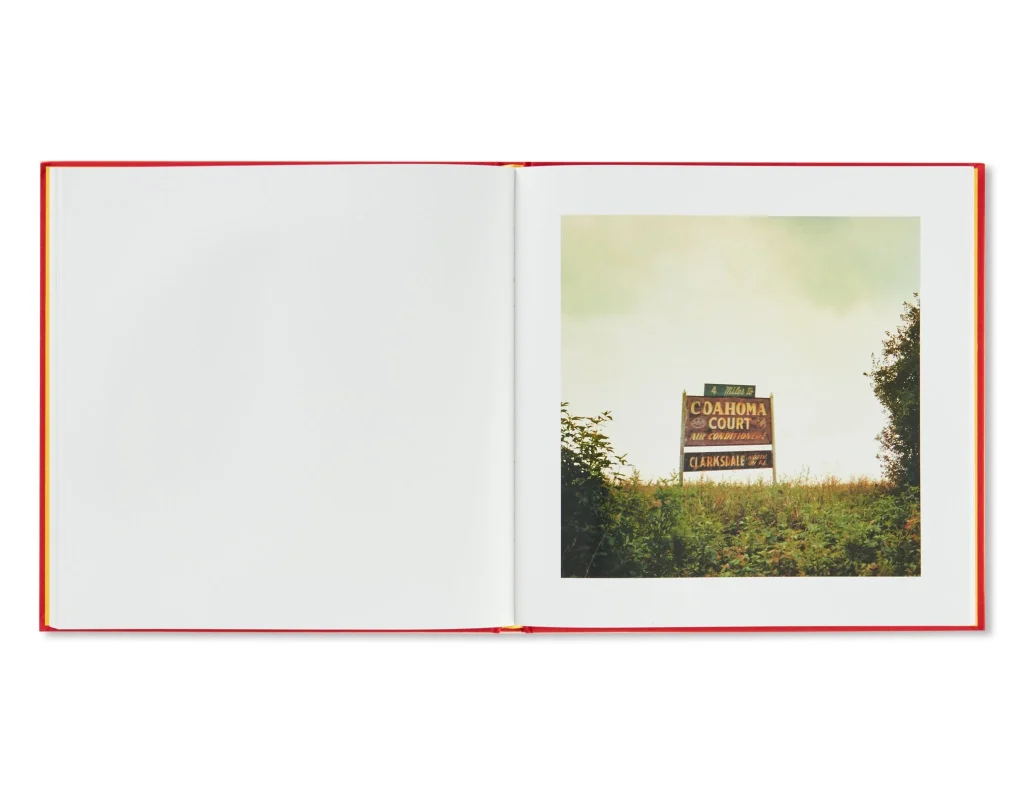
William Eggelston: 2 1/4 Earthy marigold hues on a wall of corrugated iron encompass the centre of William Eggleston’s frame, its uniform surface completely obscuring any prospect of a traditional pictorial horizon. In the centre sits a creamy yellow coupé, its matte finish blending perfectly with the wall behind. Tranquil and serene, this unstirring moment of quiet urbanity broadly sums up the tone found across William Eggleston’s 2 ¼ series.
Taken in the year following his seminal show Color Photography by William Eggleston at The Museum of Modern Art, New York in 1976, 2 ¼ is a body of work which falls slightly outside of William Eggleston’s usual oeuvre. Showing now for the first time at London’s David Zwirner Gallery these works offer an intimate take on small town 70s’ America. Relinquishing his usual 35mm rangefinder and instead opting to shoot with the slower medium format, the photographs appear unusually staid. Eggleston’s strength lies in the fictionalising of his immediate surroundings and he has the unique ability to see things beyond how they first appear. In this series there is a particularly striking sense of quietness as the photographer’s itinerant gaze wanders from a boarded-up café to an empty parking lot. Composing his frame intuitively, he is the master of finding beauty in scenes of such ordinariness. Each photograph appears not as a Cartier-Bresson-esque moment of precise timing but rather more painterly, as though he had waited there for hours. Read more of the review here
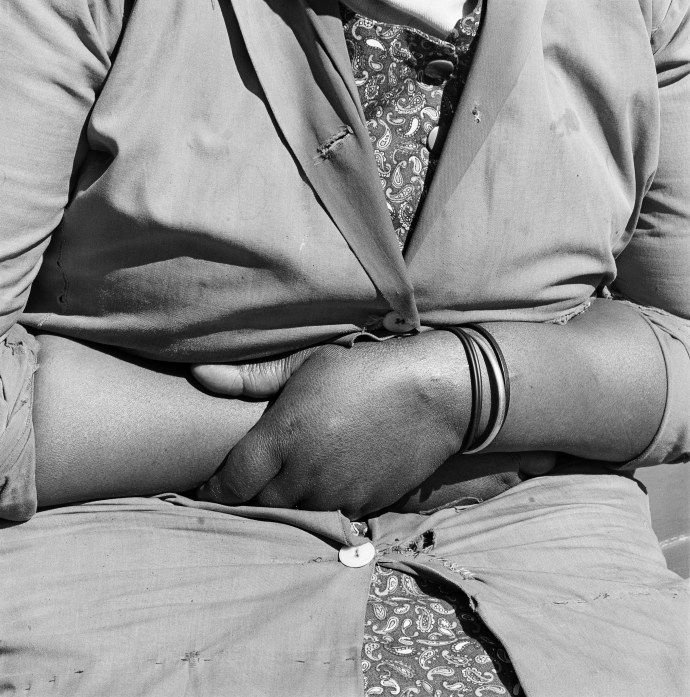
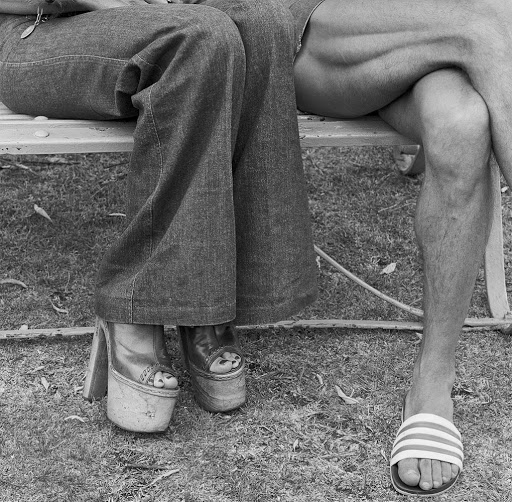
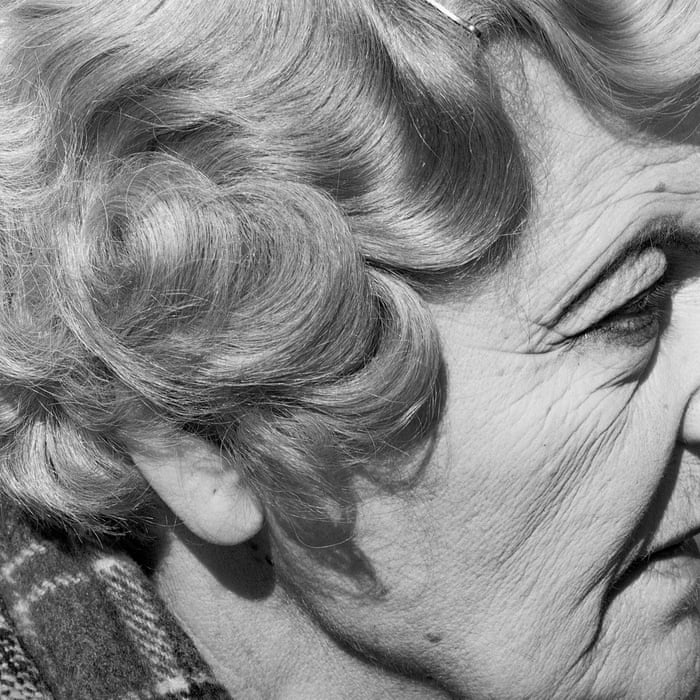
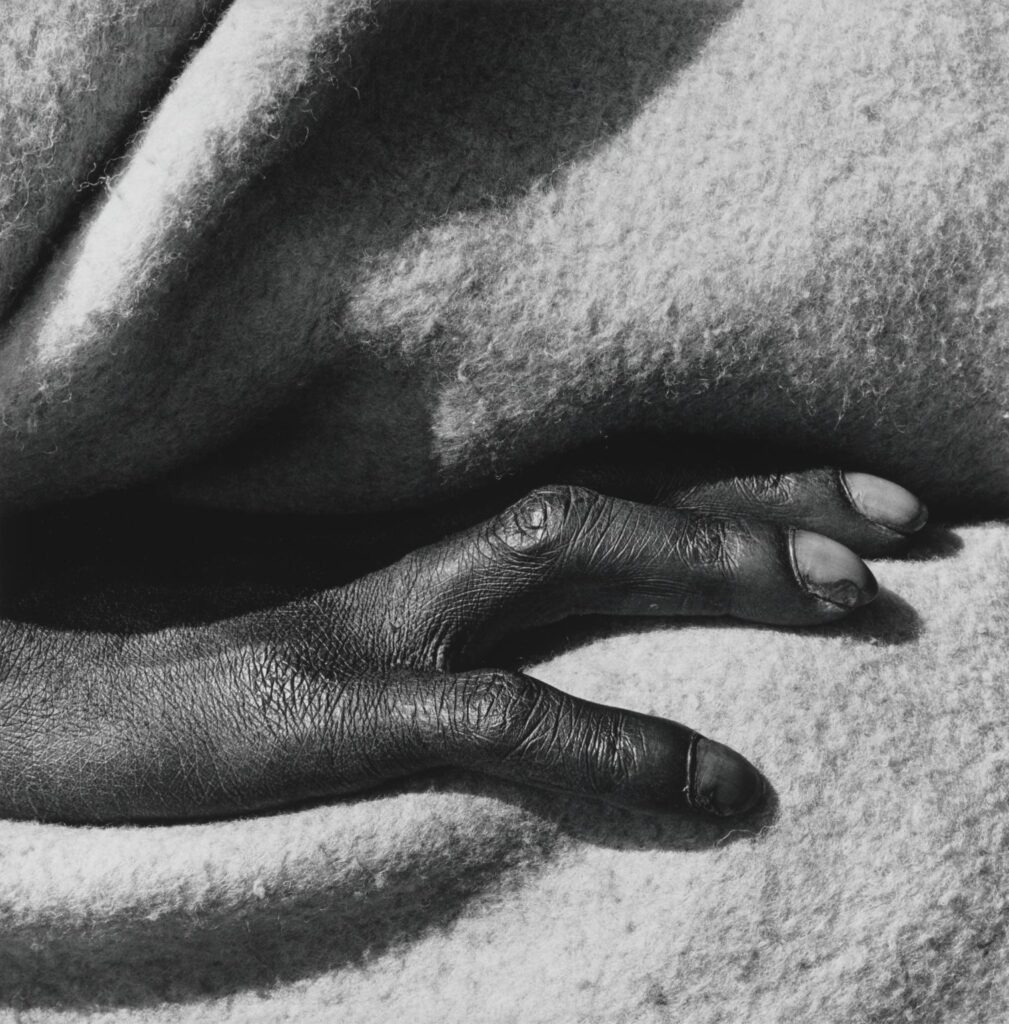
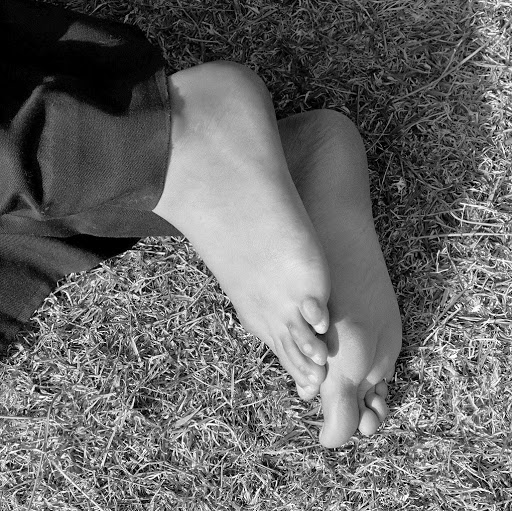
David Goldblatt: Particulars: Following a series of portraits of his compatriots made in the early 1970s, photographer David Goldblatt, for a very short and intense period of time, naturally turned to focusing on peoples’ particulars and individual body languages “as affirmations or embodiments of their selves.” Goldblatt’s affinity was no accident: Working at his father’s men’s outfitting store in the 1950s, his awareness of posture, gesture and proportion—technical as it was—formed early and would accompany him throughout his life.
In this series using a square format we see hands resting on laps, crossed legs, the curved backs of sleepers on a lawn at midday, their fingers and feet relaxed, pausing from their usual occupations. This deeply contemplative work is framed by Ingrid de Kok’s poetry.
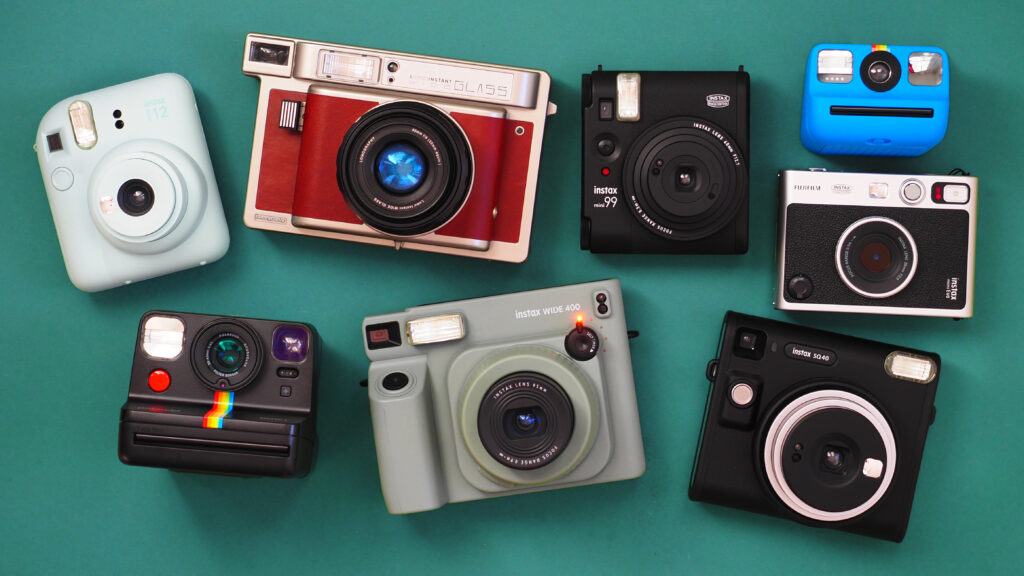
Polaroids and instant cameras
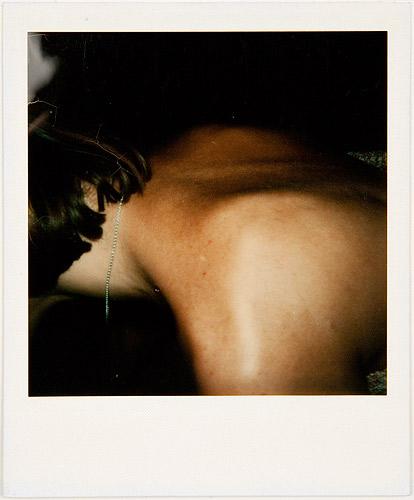
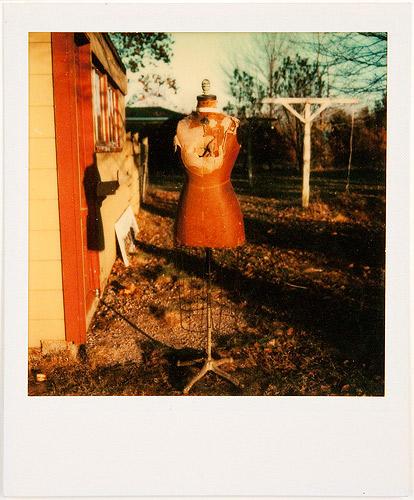
The Polaroid process revolutionized photography in the 1960s. Those who have used Polaroid cameras often recall the distinctive smell of the developing emulsion and the magic of watching an image materialize instantly. Depending on the camera model, some prints developed automatically, while others required the application of a chemical coating to fix the image. In this sense, Polaroids can be seen as a precursor to today’s digital photography – not in technical terms, but because of their immediate accessibility.
Polaroids are generally regarded as unique prints. This pioneering technology attracted enthusiastic users worldwide and in nearly all photographic genres – landscape, still life, portraits, fashion, and nude photography. Explore more here on polaroid.com and read about instant cameras here.
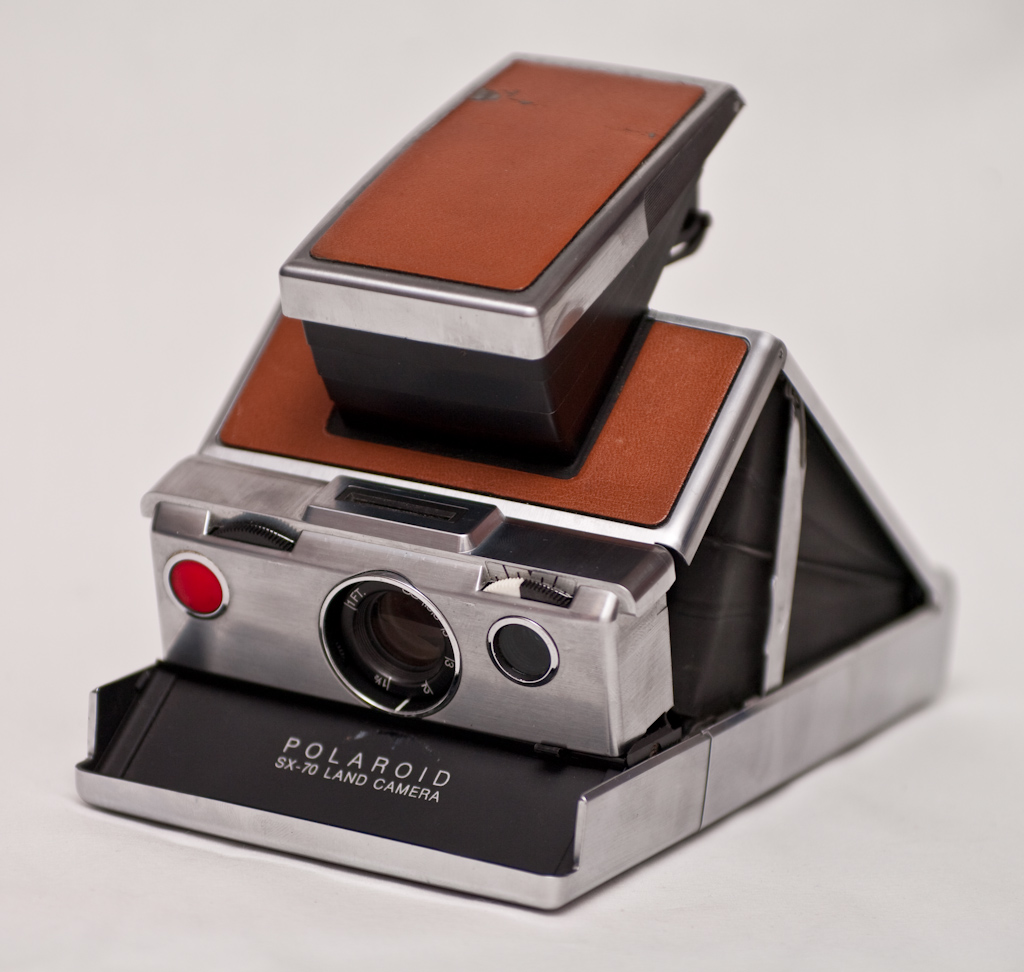
The iconic Polaroid SX-70 camera
Watch video: Brief history of… Polaroids A Brief History of Polaroids is a fast-paced, fun look at how instant photography changed the way we capture the world. From early chemical experiments and 20 minute exposures, to the invention of the iconic Polaroid camera by Edwin Land. Discover how this retro tech revolutionised art, fashion, and everyday life, and why it’s still going strong in the age of digital selfies. Watch now!
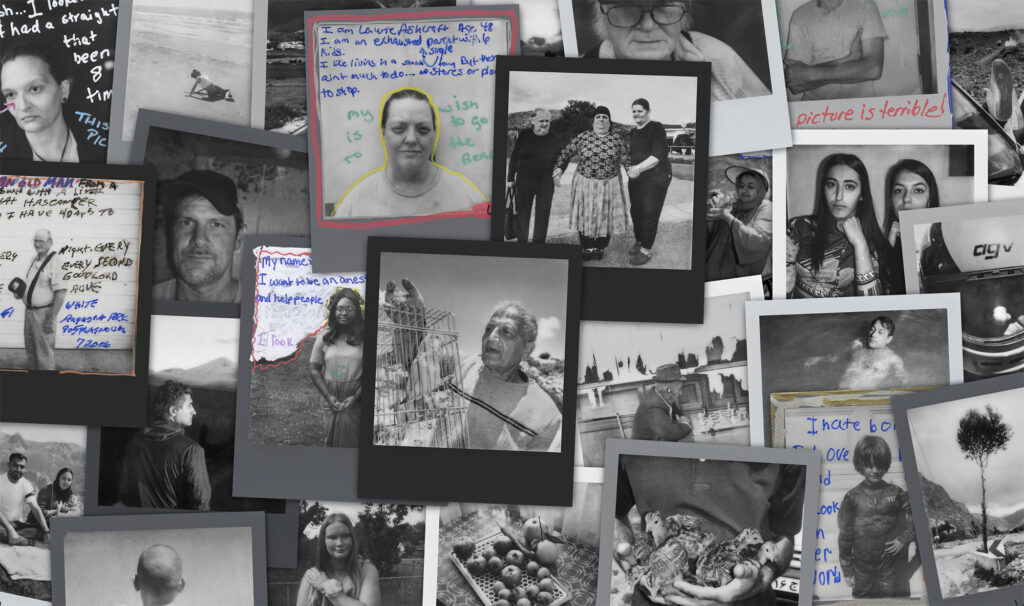
Here Magnum photographer, Jim Goldberg explains how to create polaroids with impact – see link here
Screenshot
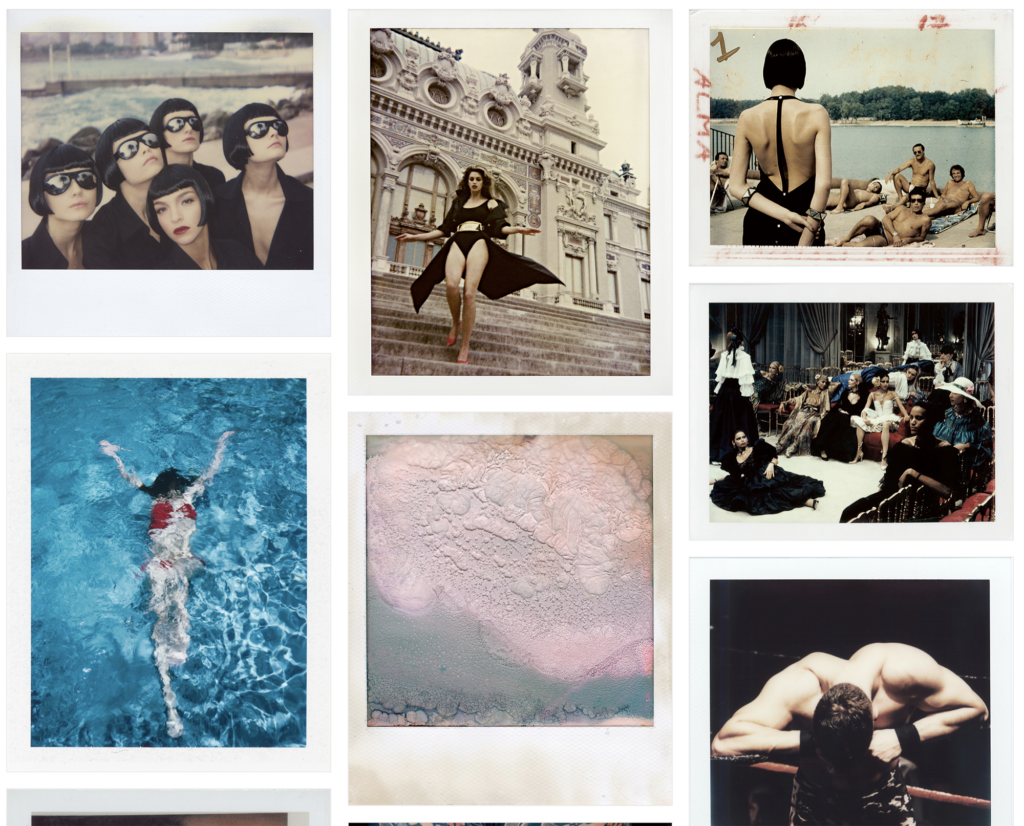
Helmuth Newton: On March 6, 2025, the Helmut Newton Foundation in Berlin opened its new group exhibition, Polaroids, as part of EMOP Berlin 2025. This showcase features works by fashion photographer Helmut Newton alongside numerous other photographers. Explore more here
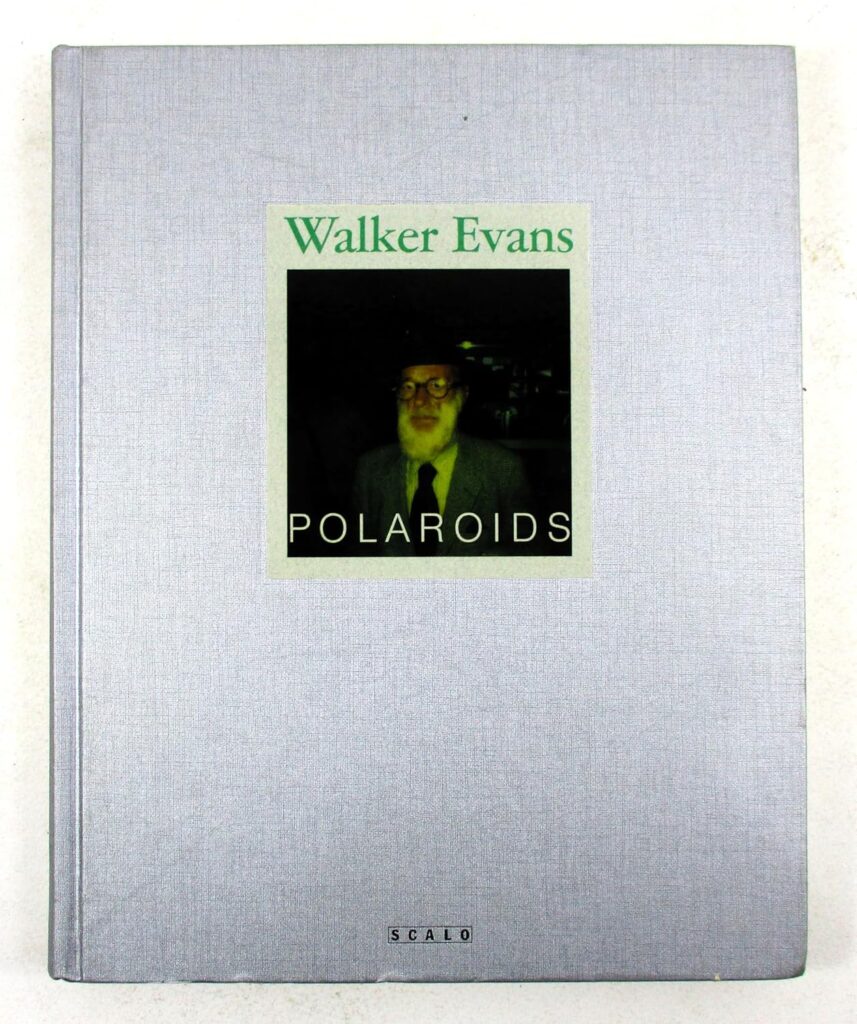
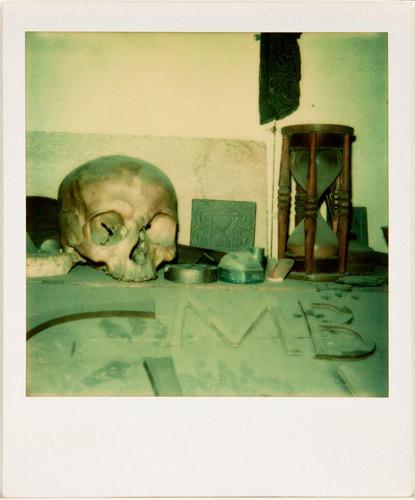
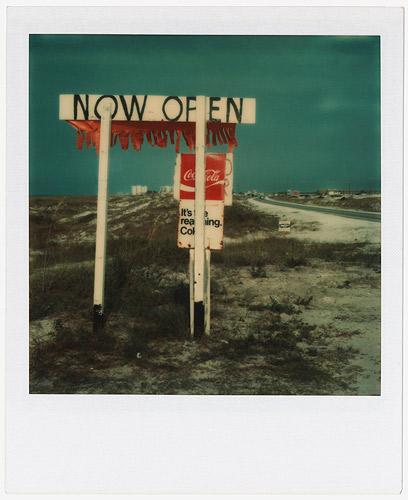
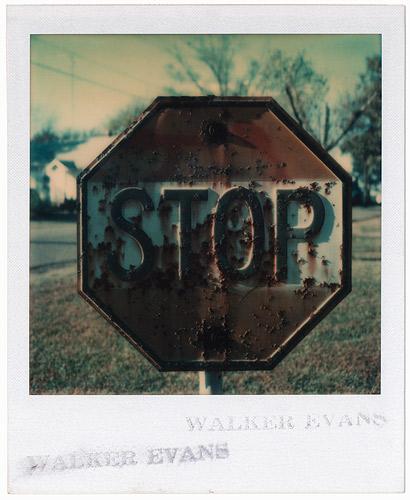
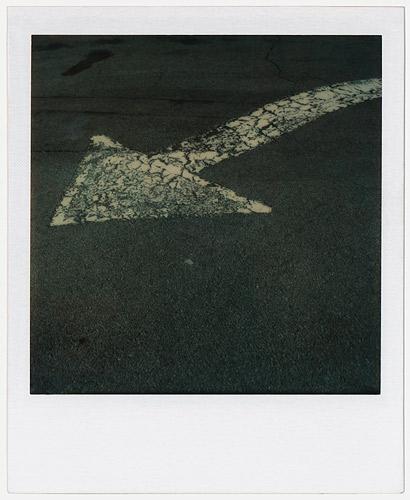
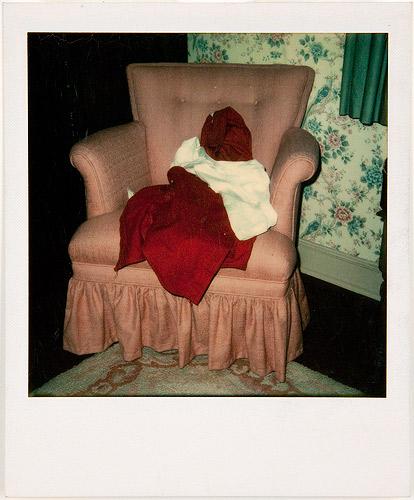
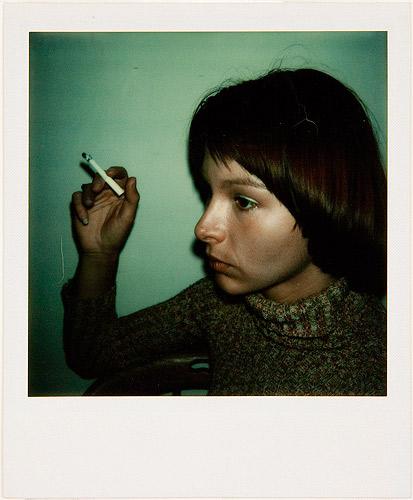
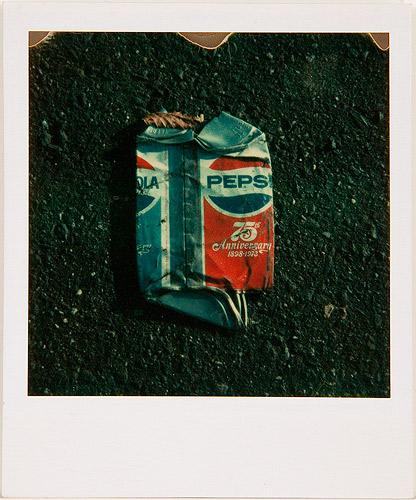
Walker Evans: Polaroids: In 1973 Walker Evans began to work with the innovative Polaroid SX-70 camera and was given an unlimited supply of film from its manufacturer. The virtues of this camera, introduced in 1972, perfectly fit Evans’s search for a concise yet poetic vision of his world: its instant prints were for the infirm seventy-year-old photographer what scissors and cut paper were for the aging Matisse. The unique SX-70 prints are the artist’s last photographs, the culmination of half a century of work in photography. With this new camera, Evans returned to some of his key motifs -signs, posters, and their ultimate reduction, the letter itself. “Nobody should touch a Polaroid until he’s over sixty,” Evans once said. It was only, he implied, after years of work and struggle and experimentation, years of developing one’s judgment and vision, that the instrument could be pushed to its full, revelatory potential. Using the SX-70, and leaving aside the intricacies of photographic technique, Evans stripped photography to its bare essentials: seeing and choosing. The 300 images in this book, almost all of them unpublished, were selected from a total of approximately 2500 Polaroids that Evans left behind when he died in 1975.
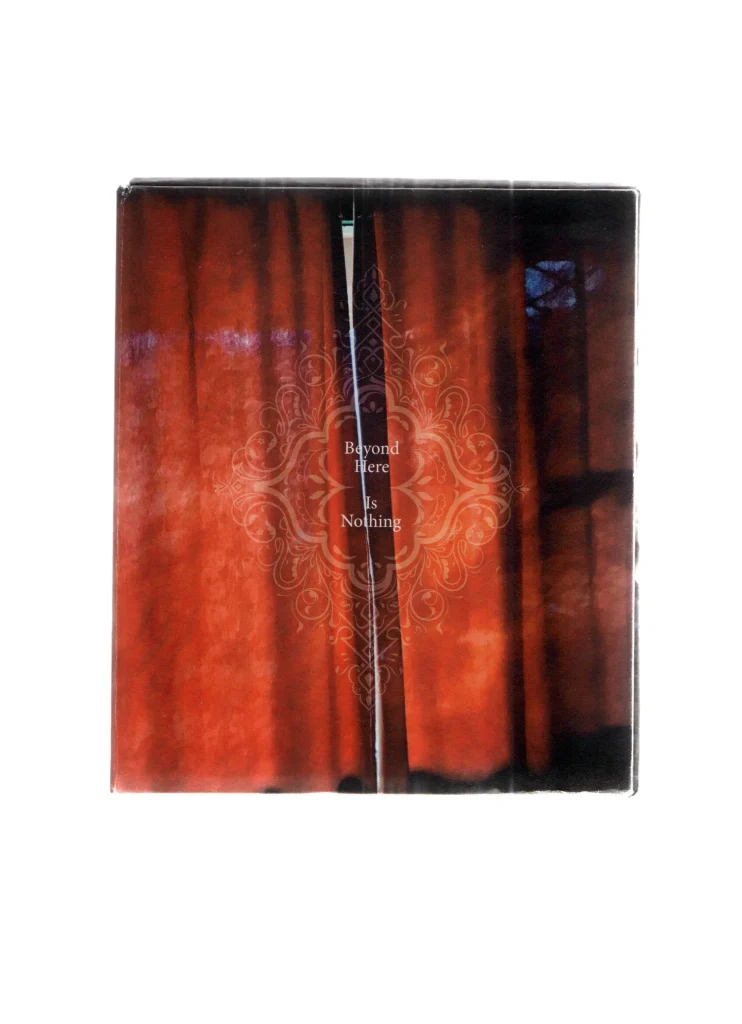
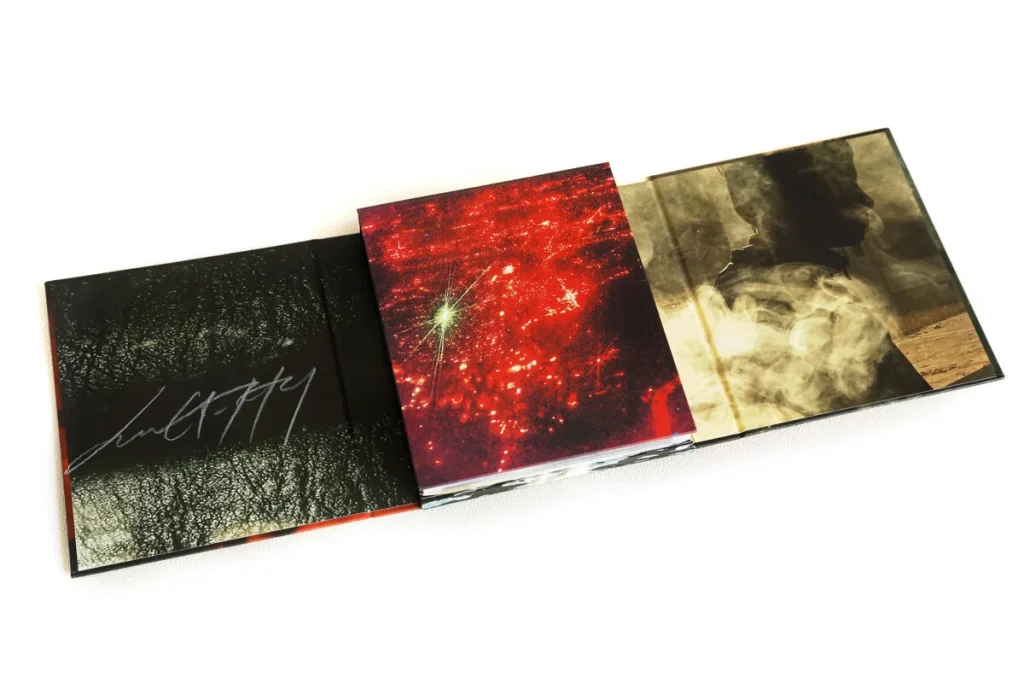
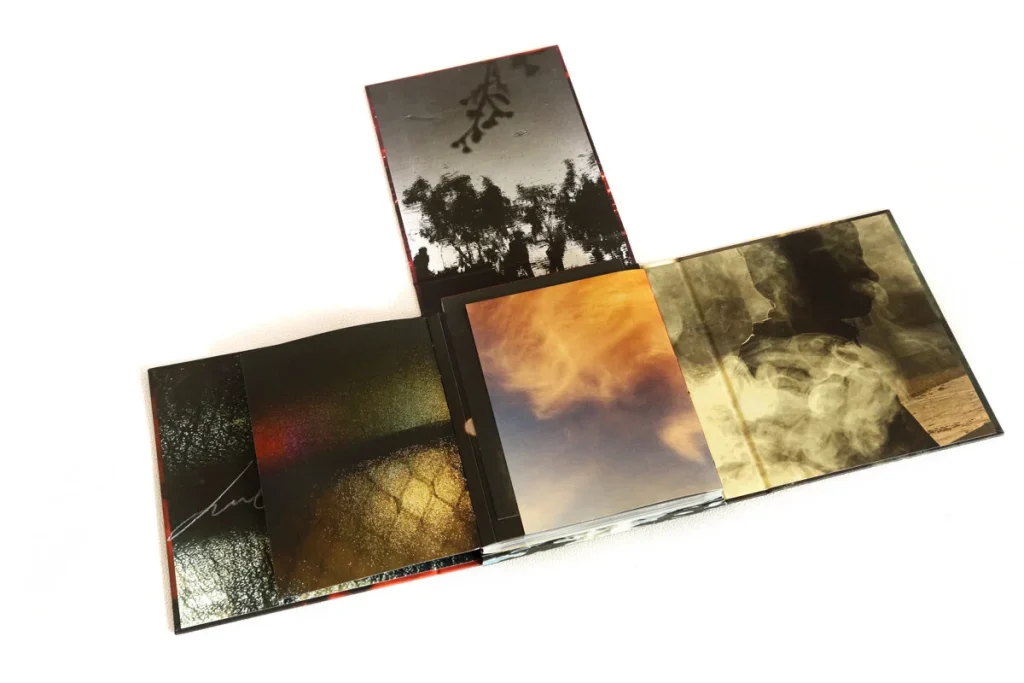
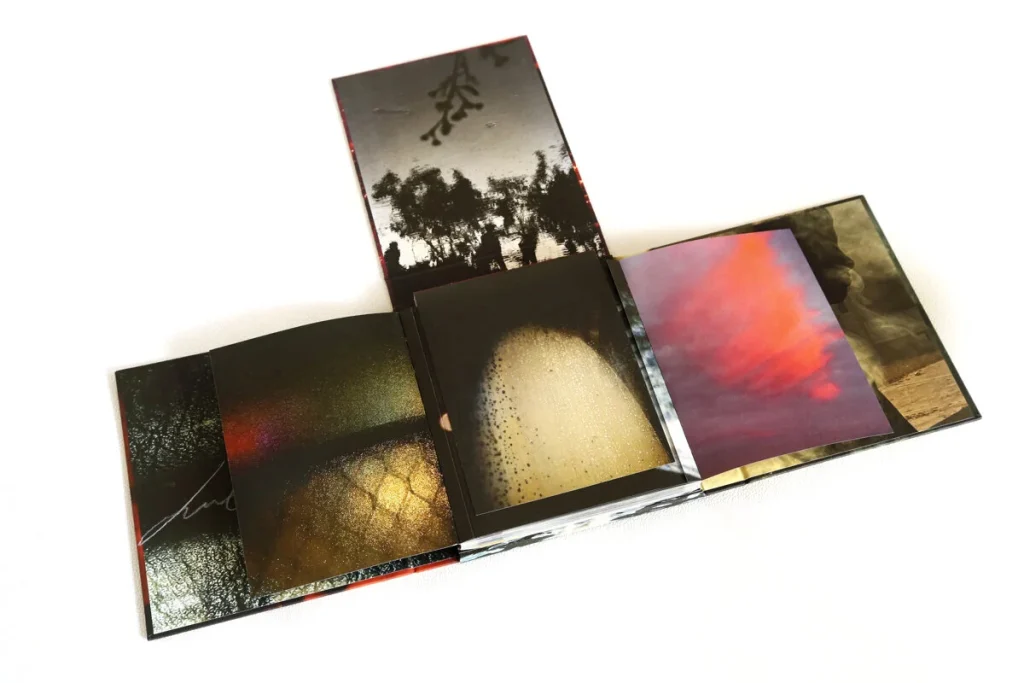
Laura El-Tantawy: Although polaroids are still available and still used by some artists, instant photography has been usurped by the smartphone with cameras. For a contemporary use of a square and instant format see Photobook, Beyond Here Is Nothing by Laura El-Tantawy.
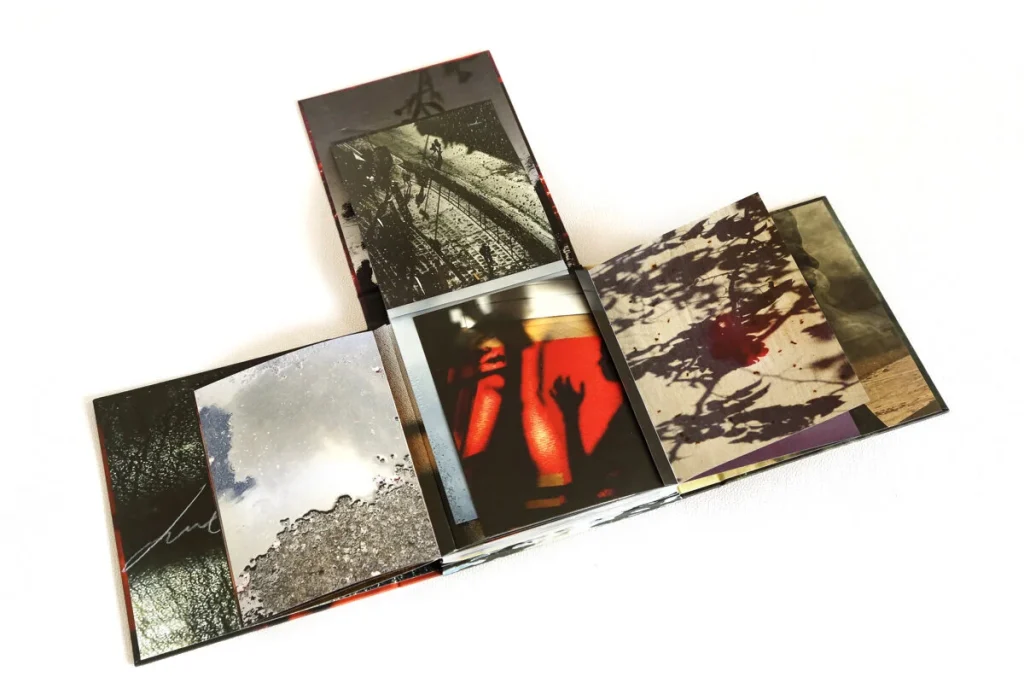
Beyond Here Is Nothing is a photo-book object meditating on home. A place of belonging, a tranquil state of mind; a nostalgic memory or an imaginary destination – home is a perpetual possibility El-Tantawy is journeying to reach. Her personal experience growing up in contrasting cultures is the window to an intimate and emotive visual exploration of the unsettling feeling of rootlessness, the mental burden of loneliness and the constant search for belonging in unfamiliar places. Drifting between the physical and the whimsical, the book reveals itself through layers of images and words. A mirror of dispositions. A living object harmonising with time. Explore more here.
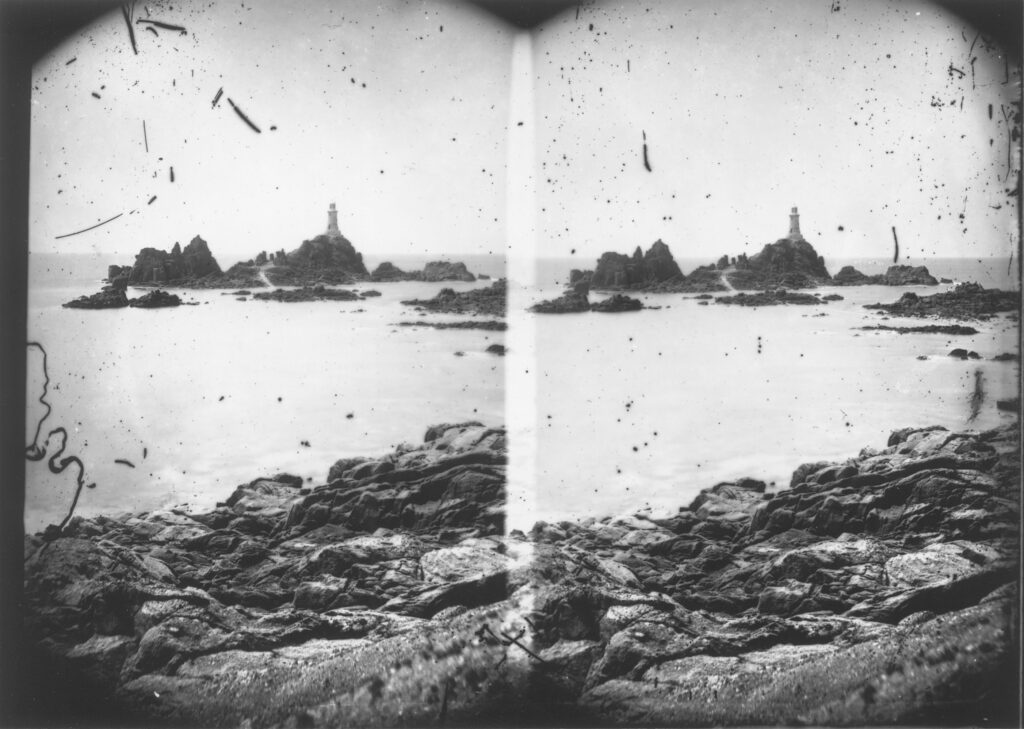
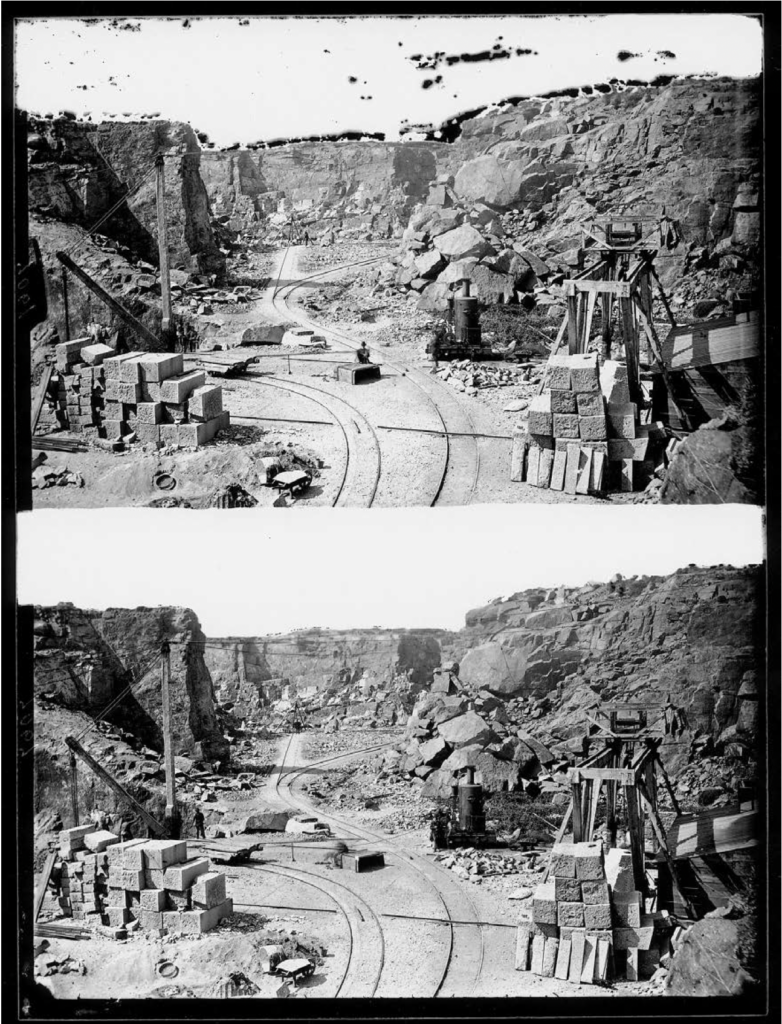
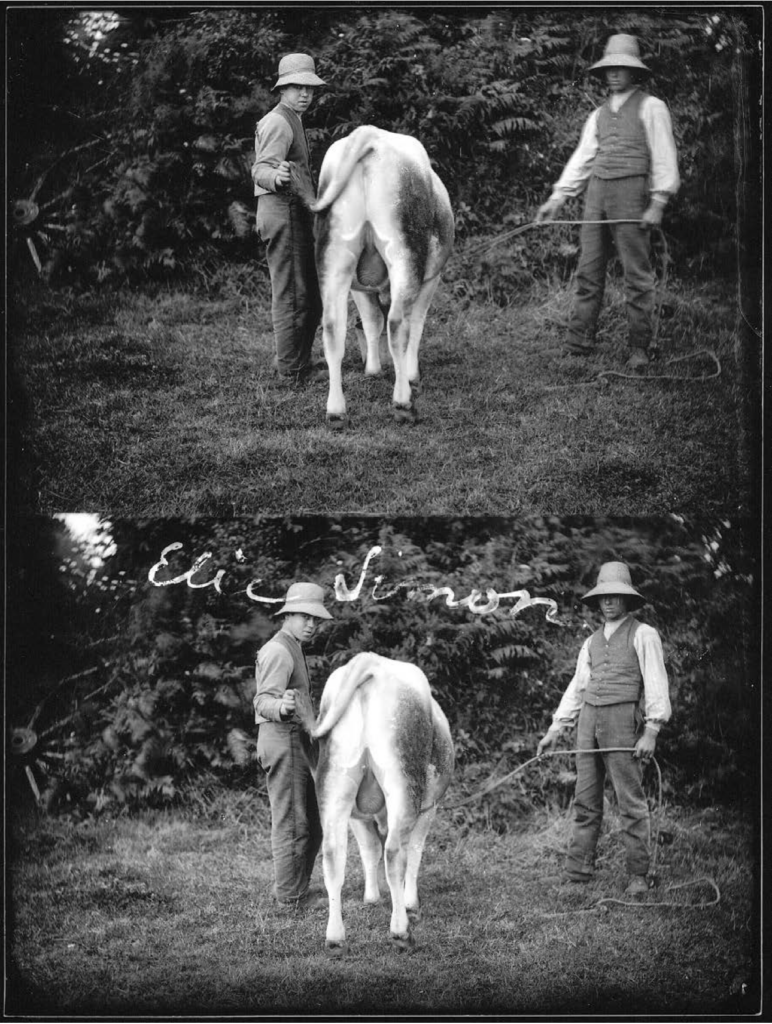
ARCHIVES > STEREOSCOPIC VIEWS
Ernest Baudoux, Stereoscopic views
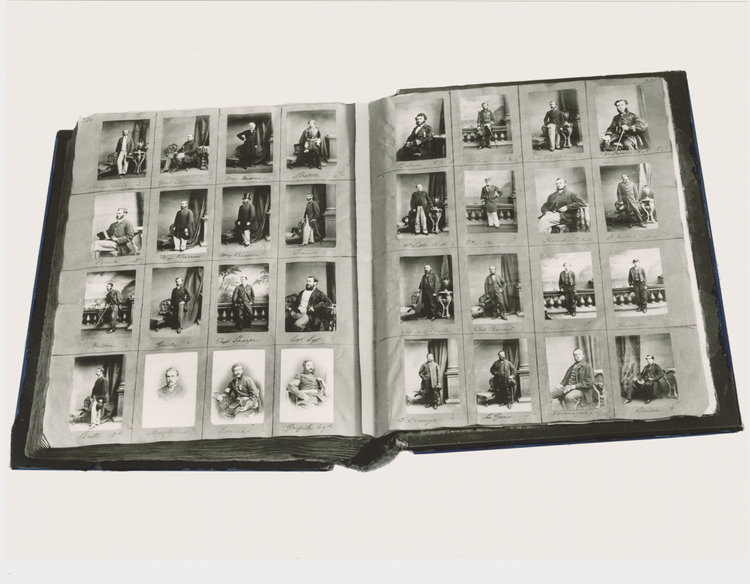
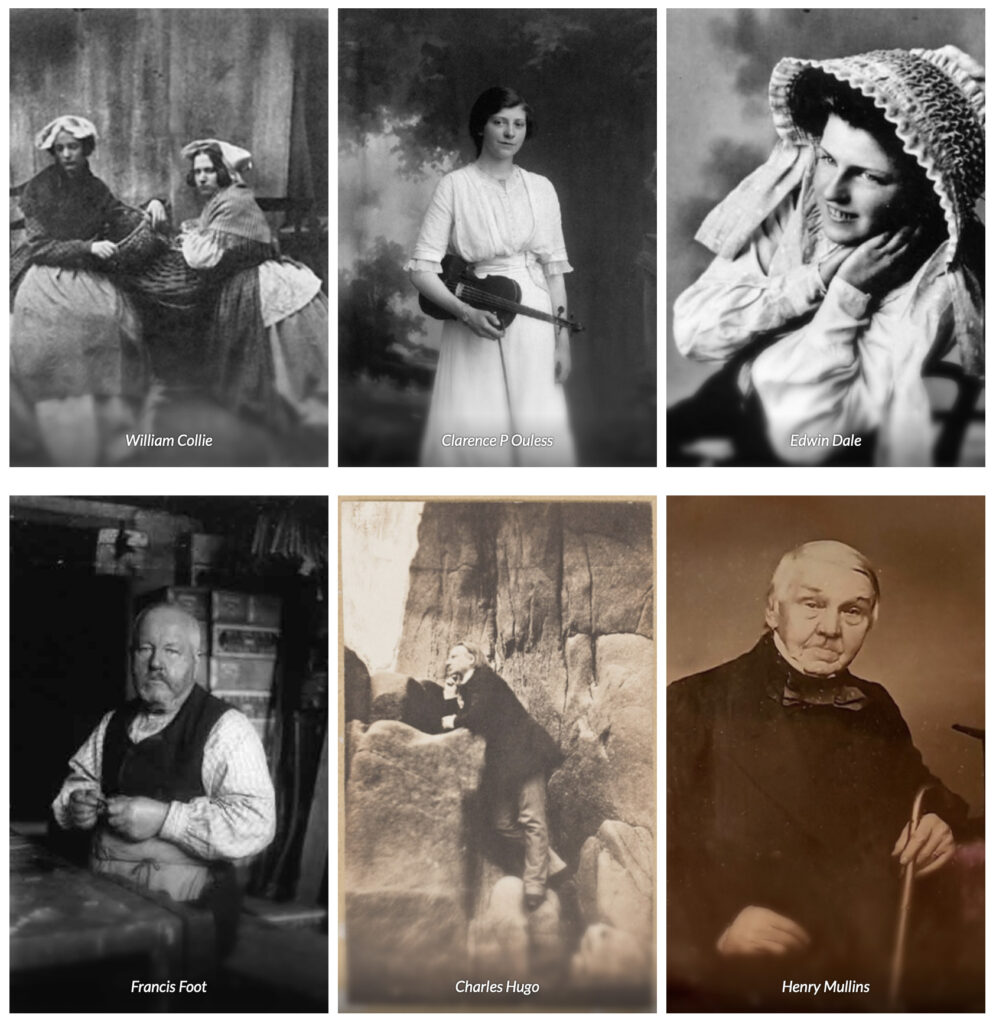
Henry Mullins is one of the most prolific photographers represented in the Societe Jersiase Photo-Archive, producing over 9,000 portraits of islanders from 1852 to 1873 at a time when the population was around 55.000. The record we have of his work comes through his albums, in which he placed his clients in a social hierarchy. The arrangement of Mullins’ portraits of ‘who’s who’ in 19th century Jersey are highly politicised.
Henry Mullins Album showing his arrangements of portraits presented as cartes de visite
Henry Mullins started working at 230 Regent Street in London in the 1840s and moved to Jersey in July 1848, setting up a studio known as the Royal Saloon, at 7 Royal Square. Here he would photograph Jersey political elite (The Bailiff, Lt Governor, Jurats, Deputies etc), mercantile families (Robin, Janvrin, Hemery, Nicolle ect.) military officers and professional classes (advocates, bankers, clergy, doctors etc).
His portrait were printed on a carte de visite as a small albumen print, (the first commercial photographic print produced using egg whites to bind the photographic chemicals to the paper) which was a thin paper photograph mounted on a thicker paper card. The size of a carte de visite is 54.0 × 89 mm normally mounted on a card sized 64 × 100 mm. In Mullins case he mounted his carted de visite into an album. Because of the small size and relatively affordable reproducibility cartes de visite were commonly traded among friends and visitors in the 1860s. Albums for the collection and display of cards became a common fixture in Victorian parlors. The immense popularity of these car.
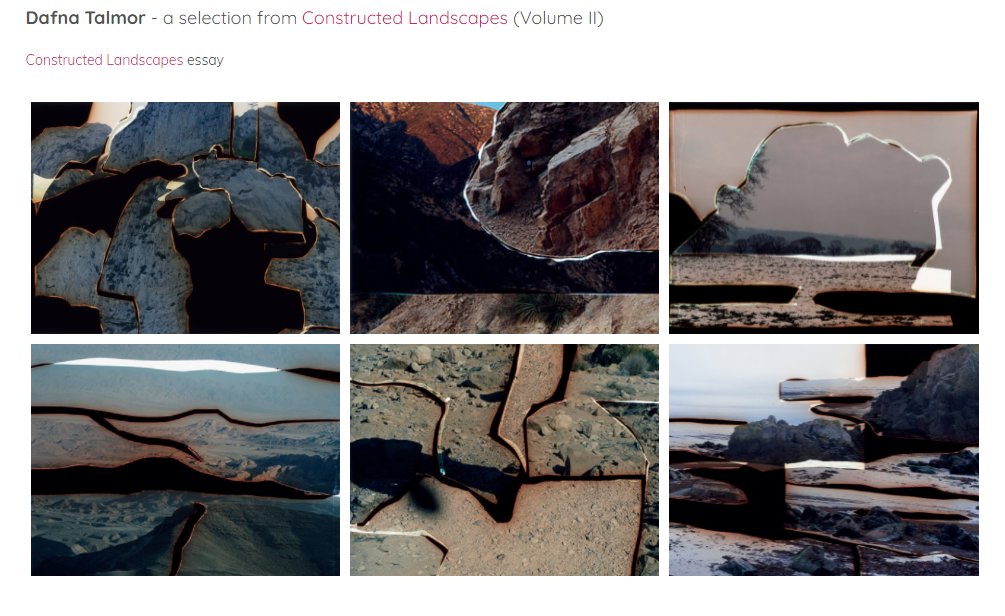
Explore some of the ideas here in Constructed Landscape by Photopedagogy, and/ or revisit ideas and photographic tasks from Anthropocene project in Yr 12
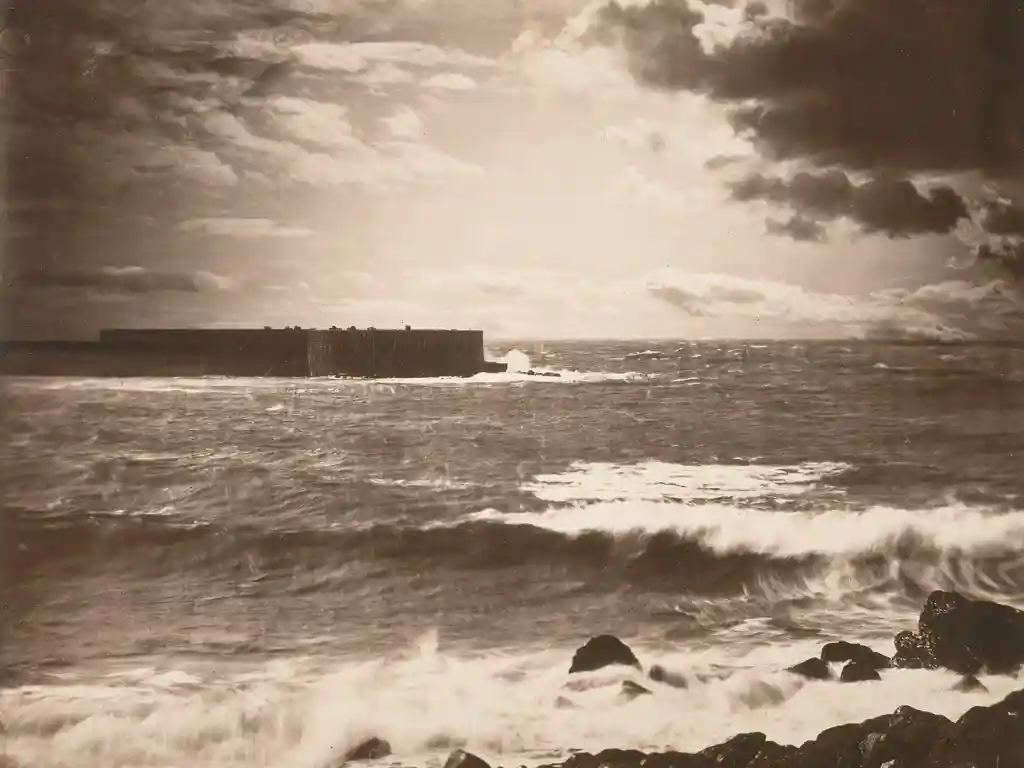
‘The Great Wave’, the most dramatic of his seascapes, combines Le Gray’s technical mastery with expressive grandeur […] At the horizon, the clouds are cut off where they meet the sea. This indicates the join between two separate negatives […]Most photographers found it impossible to achieve proper exposure for both landscape and sky in a single picture. This usually meant sacrificing the sky, which was then over-exposed. Le Gray’s innovation was to print some of the seascapes from two separate negatives – one exposed for the sea, the other for the sky – on a single sheet of paper.
This ongoing body of work consists of staged landscapes made of collaged and montaged colour negatives shot across different locations, merged and transformed through the act of slicing and splicing […] ‘Constructed Landscapes’ references early Pictorialist processes of combination printing as well as Modernist experiments with film […] the work also engages with contemporary discourses on manipulation, the analogue/digital divide and the effects these have on photography’s status.
The Great Wave … sunlight breaks through the clouds above the waves at Sète, France, 1856–59 Illustration: Gustave le Gray
Dafna Talmor: This ongoing body of work consists of staged landscapes made of collaged and montaged colour negatives shot across different locations that include Israel, Venezuela, the UK and USA. Initially taken as mere keepsakes, landscapes are merged and transformed through the act of slicing and splicing. The resulting photographs are a conflation, ‘real’ yet virtual and imaginary. This conflation aims to transform a specific place – initially loaded with personal meaning, memories and connotations – into a space that has been emptied of subjectivity and becomes universal.
In dialogue with the history of photography, Constructed Landscapes references early Pictorialist tendencies of combination printing as well as Modernist experimental techniques such as montage, collage and multiple exposures. While distinctly holding historical references, the work also engages with contemporary discourses on manipulation, the analogue/digital divide and the effects these have on photography’s status and veracity. Through this work, I am interested in creating a space that defies specificity, refers to the transient, and metaphorically blurs space, memory and time.
Tanja Deman is a Croation artists who was Archisle’s International Photographer-in-Residence in Jersey in 2017. Her art is inspired by her interest in the perception of space, physical and emotional connection to a place and her relationship to nature. Her works, incorporating photography, collage, video and public art, are evocative meditations on urban space and landscape. Observing recently built legacy or natural sites her work investigates the sociology of space and reflects dynamics hidden under the surface of both the built and natural environment.
Tanja Deman Fernweh
Fernweh series explores the concept of a modernist city through its extreme relations to the landscape. The images are placed on a blurred line between a past which reminds us of a future and a future which looks like a past. Scenes are referring to the modernist ideas and aspiration of a man conquering the natural wild land and subordinating it to the rational order, and the consequences of those aspirations, which switched into the longing for an escape from urban environments.
Tanja Deman Collected Narratives
Michael Marten: Sea Change Excellent use of diptych and triptych and exploring low vs high tides to see how it changes a landscape scene
Mark Power: The Shipping Forecats Intangible and mysterious, familiar yet obscure, the shipping forecast is broadcast four times daily on BBC Radio 4. For those at, or about to put to sea, the forecast may mean the difference between life and death. In The Shipping Forecast, Mark Power documents the 31 sea areas covered by the forecast,
DIPTRYCHS/ TRIPTYCHS/ JUXTAPOSTION/ PAIRING
Rinko Kawauchi: Photography is a way of seeking out what normally goes unnoticed. At first sight Rinko Kawauchi’s photographs of soap bubbles may seem ordinary. However, the combination of narrow depth of field, compositional rhythm, and the sense that there is a portal through the bubble to another place hints at spiritual possibilities, linking to her belief in Shinto philosophy.
In 2001, Rinko Kawauchi published three astonishing photobooks simultaneously—Utatane, Hanabi, andHanako—establishing herself as one of the most innovative newcomers to contemporary photography. Other notable monographs include Aila (2004), The Eyes, the Ear (2005), and Semear (2007). Now, ten years after her precipitous entry onto the international stage, Aperture has published Illuminance, the first volume of Kawauchi’s work to be published outside of Japan. Kawauchi’s work has frequently been lauded for its nuanced palette and offhand compositional mastery, as well as its ability to incite wonder via careful attention to tiny gestures and the incidental details of her everyday environment. In Illuminance, Kawauchi continues her exploration of the extraordinary in the mundane, drawn to the fundamental cycles of life and the seemingly inadvertent, fractal-like organization of the natural world into formal patterns.
Nancy Honey used the format of groups of three photographs linked by colour in her book Woman to Woman. Explore her work here
In this body of work I set out to define and separate the various strands that make up my sense of my own femininity. How does sexuality manifest itself in me and what is the difference between what I feel and the ubiquitous stereotypical mass cultural images that surround me? How conditioned are my responses? Nancy Honey.
Luke Fowler
Luke Fowler
Using two frame film / diptychs and juxtaposing images to alter the perception of your environment…Link Here !!!
See also the work by Americans, William Christenberry and Ed Ruscha’s photographic works on types e.g. Twentysix Gasoline Stations (1964). Every building on the Sunset Strip (1966). Or Idris Khan‘s appropriation of Bechers’ images.
Ed Ruscha, 26 Gasoline Stations
Ed Ruscha: Every building on the Sunset Strip
William Christenberry
German artists, Wolfgang Tillmans’ is also a prolific photobook maker and has made many (40+). One of his most celebrated is Concorde which was published by Walther König, Cologne. The photographs were taken at a number of sites in and around London, including close to the perimeter fence at Heathrow airport. consists of images of the Concorde flying over Tillmann’s home in west London. Study his series here at Tate Modern which has also been exhibited in various museums as an installation.
Michael Wolf, Hongkong books
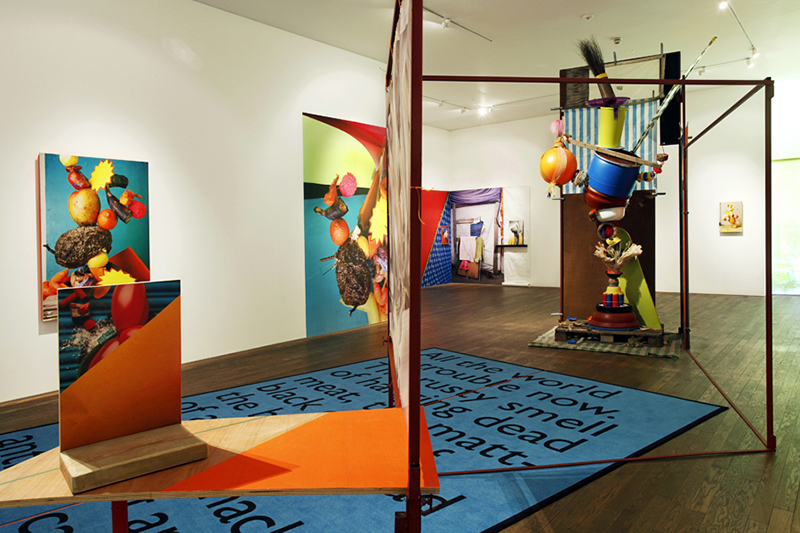
Lorenzo Venturi: Dalston Anatomy
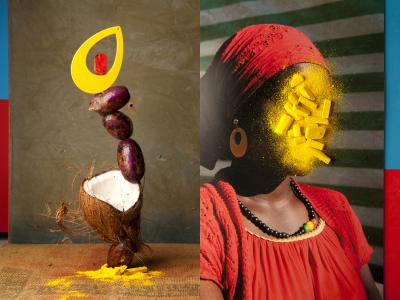
Lorenzo Vitturi’s vibrant still lifes capture the threatened spirit of Dalston’s Ridley Road Market. Vitturi – who lives locally – feels compelled to capture its distinctive nature before it is gentrified beyond recognition. Vitturi arranges found objects and photographs them against backdrops of discarded market materials, in dynamic compositions. These are combined with street scenes and portraits of local characters to create a unique portrait of a soon to be extinct way of life.
His installation at the Gallery draws on the temporary structures of the market using raw materials, sculptural forms and photographs to explore ideas about creation, consumption and preservation.
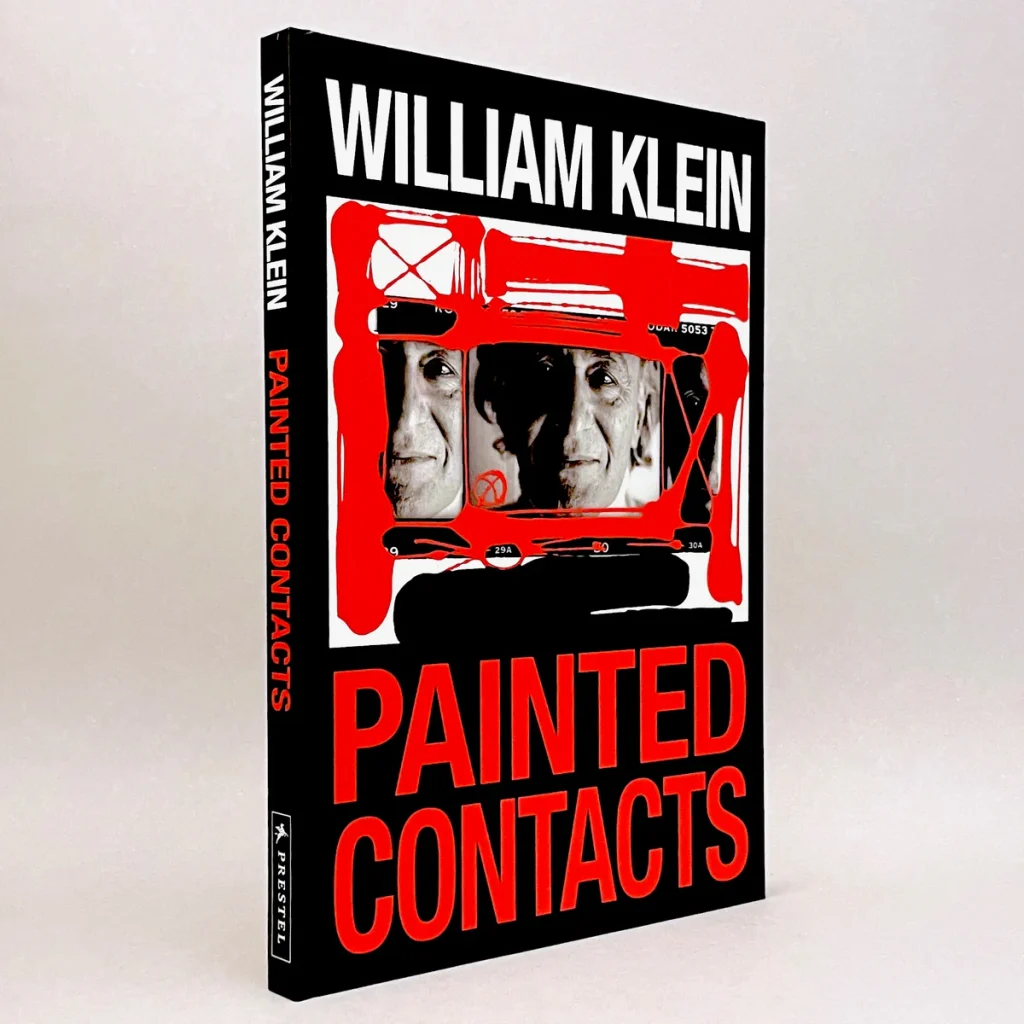
“No image-maker has fed on the energy and chance of the urban scene with quite the same appetite as William Klein,” David Campany in his recent book On Photographs.
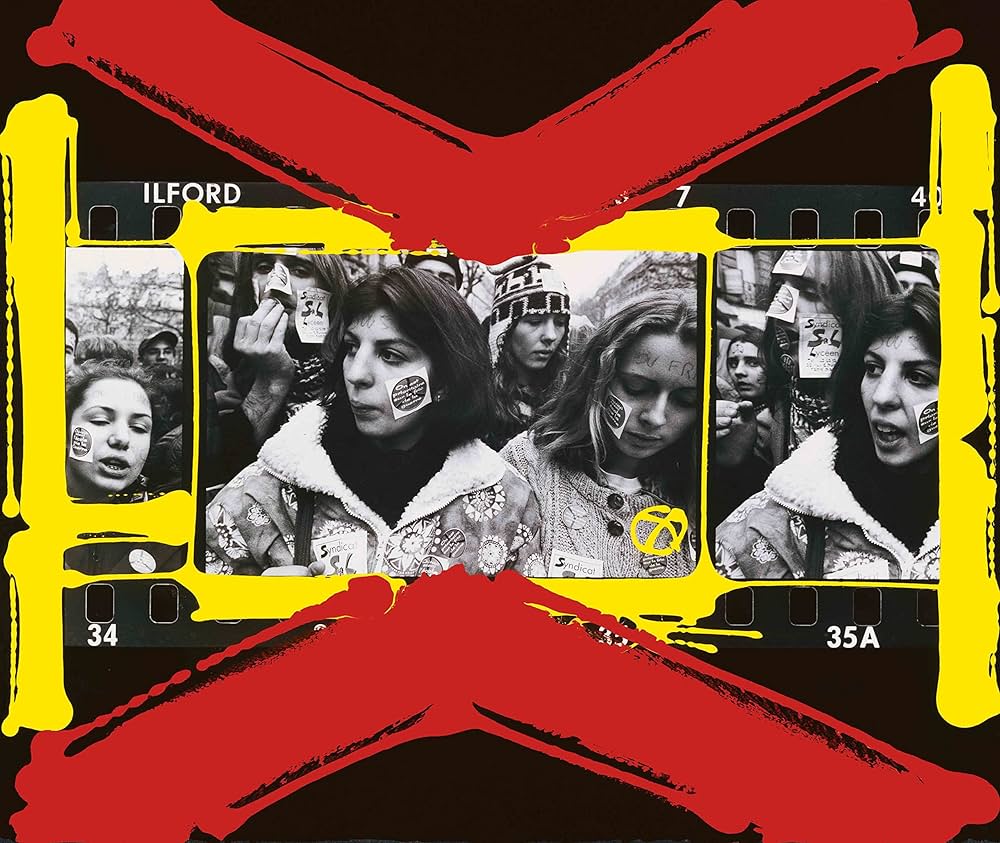
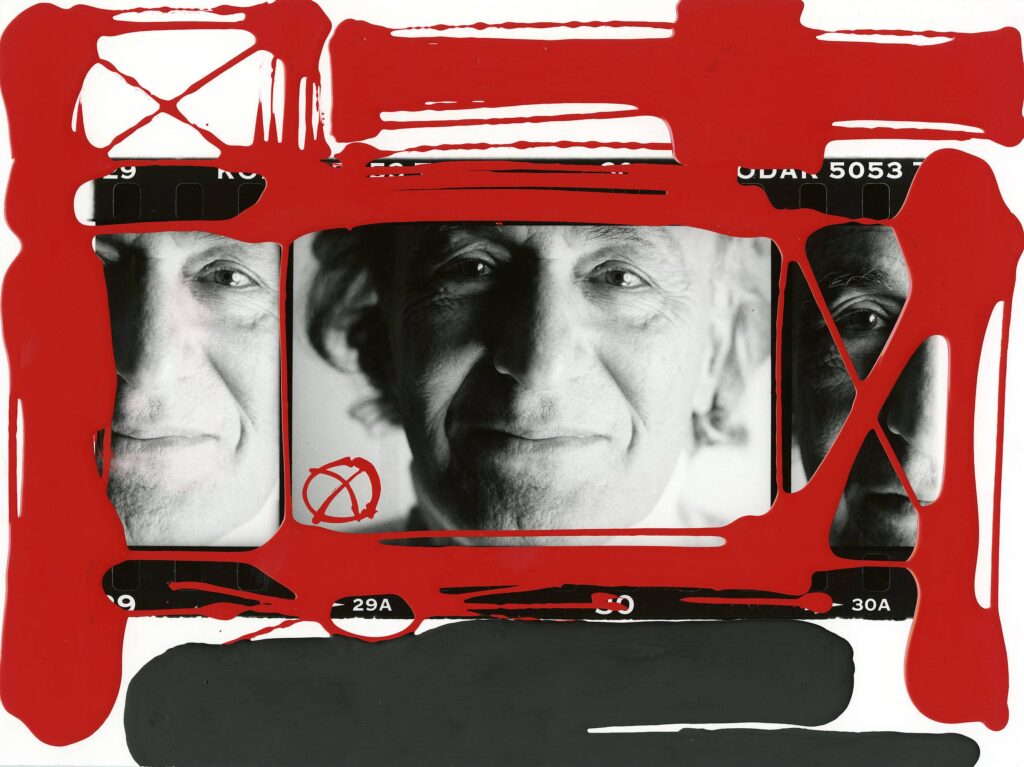
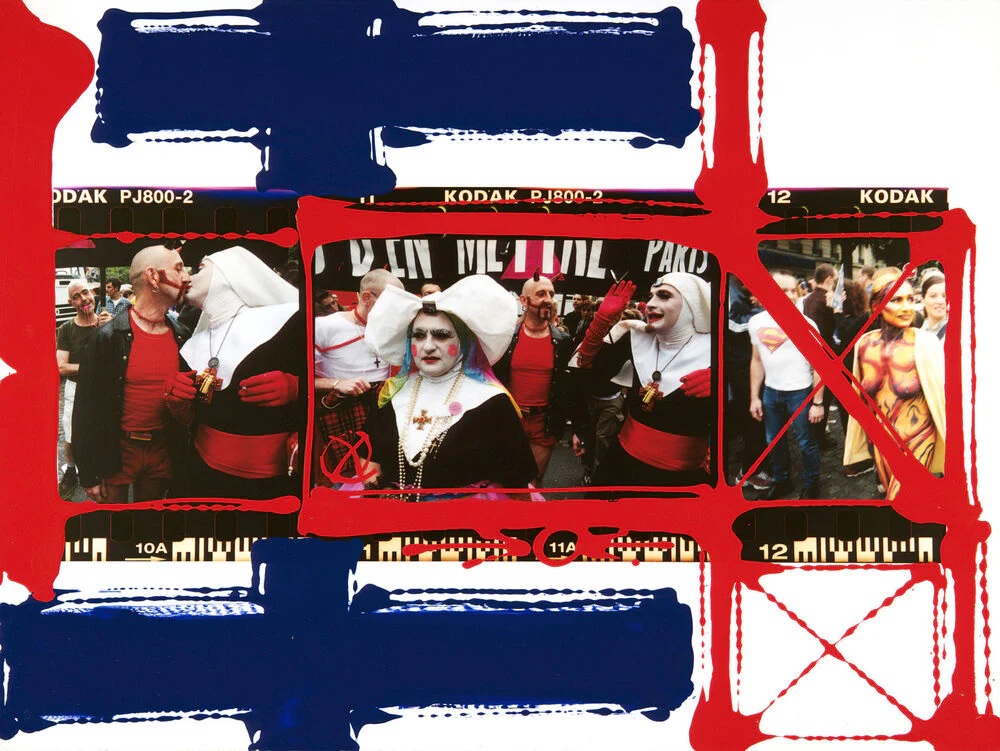
In Painted Contacts (published by Delpire Éditeur on October 15), Klein upends the notion of archives as fixed and inviolable. He playfully defiles them with bright colors and graphic reframing that refocuses the viewer’s gaze, making the reupholstered contact sheet a new art form in and of itself.
During the late 1980s, Klein was commissioned to do a series of short films on photography. In a post-script to Painted Contacts, he explained his idea was to “have a camera track along a strip of contacts, stopping at the chosen image with the commentary of the photographer explaining why for him that frame was ‘successful’… As the camera moved you’d see the misses, the nothing photos and then the hit.” This approach—no… no… no… not yet… YES!—created a remarkable feeling of anticipation, in the viewer and even in Klein himself. “As the frames rolled by, a certain excitement would develop and if you knew my work you could guess what was coming and a suspense would build up,” he noted. “The red grease pencil marks started to appear and the camera would slow down and stop.”
Contact-sheets – showing a variety of similar shots, exploring different ways of framing
Ernesto GUEVARA (Che), Argentinian politician, Minister of industry (1961-1965) during an exclusive interview in his office.
Magnum contact-sheets
Niall McDiarmid: Crossing Paths, Town to Town, Via Vauxhall
PHOTOGRAPHY AND COLOUR > SHAPES > GEOMETRY
Following on from William Kleins’s Painted Contacts and Niall McDiarmid’s street portraits colour as a focus could be explored further in the urban environment.
Sigfried Hansen: Hold the Line Street photography exists as a genre in incredibly many facets and manifestations. It is always about the right time to release the shutter, at a moment that captures and accurately reflects what is fleeting and coincidental. For Siegfried Hansen, street photography is not so much in the nature of reportage and documentation. What he is interested in is graphic elements, shapes, interwoven lines and structures that, when harmoniously related to oneanother, yield an abstract image. Whereas in the photographs of such prominent role models as Henri Cartier-Bresson and André Kertész people play a major role, in the works of this Hamburg photographer faces and people are only suggested and are at best only dimly visible. No more is shown than is needed to create an interesting and balanced combination of people and objects.
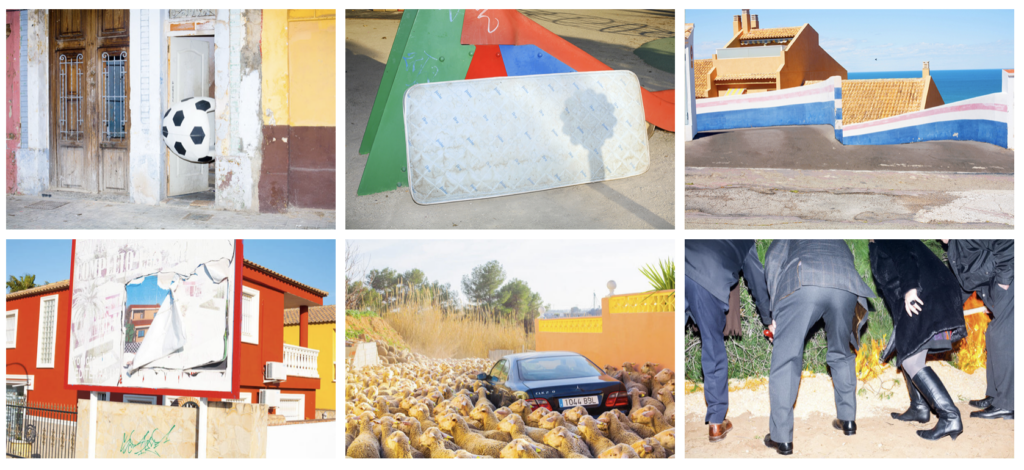
Ricardo Cases:el porque de las naranjas At first sight, reality appears chaotic and anarchic. If events have any kind of logic to them, it lies well hidden behind an overlay of banality so thick as to make it invisible. And yet, at certain exceptional moments, life slackens and reveals itself. The automaton allows its innards be glimpsed, and its mechanism becomes momentarily evident as the logic of chaos.
In his new work, El porqué de la naranjas, Spanish photographer Ricardo Cases does not document the surface symptoms of reality, but instead renders the non-visible, the mechanistic. In his immediate surroundings – the fertile region of Levante in Spain – the photographer reveals ephemeral moments that might otherwise go unnoticed. Out on the streets he sets out to make visible the laws that regulate the universe, hunting down the elementary participles in the same vein as a nuclear physicist attempting to identify the Higgs particle. Cases uses the landscape as a laboratory, a place where these mechanisms can manifest themselves freely. The work is not a portrait of Levante itself, but of the spirit of Levante, and thus of the spirit of Spain as a whole.
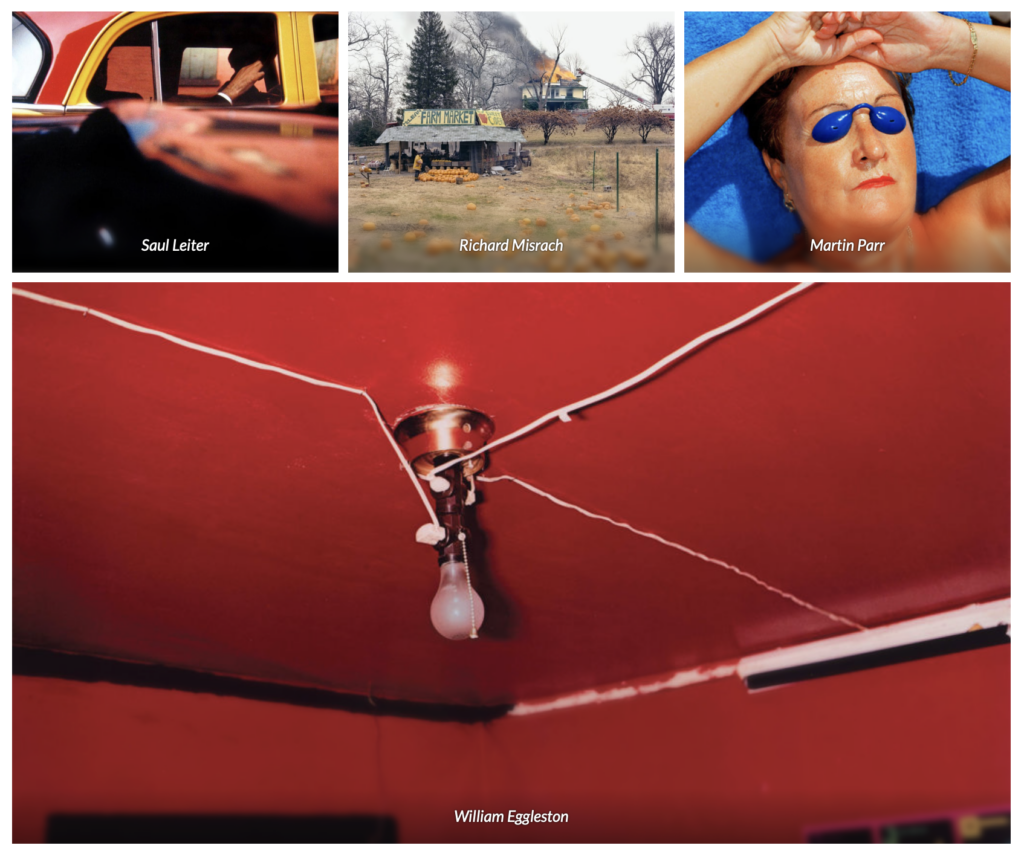
Historical context: In the 1948 Danish photographer Keld Helmer Petersen published his ground breaking photobook 122 Colour Photographs. A decade later Saul Leiter roamed New York streets and made iconic colour photographs often exploring reflective surfaces. Later in the 1970s William Eggleston in Memphis and Stephen Shore on numerous roadtrips across America made colour photographs that were to influence a whole new generation of photographers, such as Joel Sternfeld, Richard Misrach and Martin Parr, one of UK’s most celebrated colour photographers exploring British culture.
Keld Helmer Petersen: 122 Colour Photographs
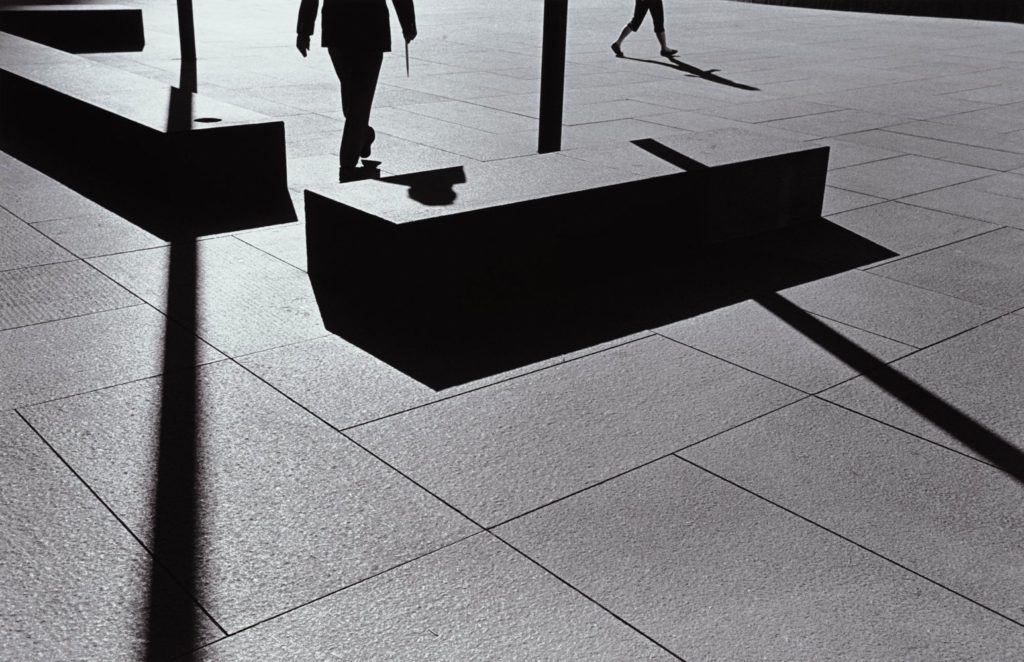
Ray K Metzker – graphic monochrome street photography Metzker was born in 1931 in Milwaukee and attended the Institute of Design, Chicago–a renowned school that had a few years earlier been dubbed the New Bauhaus– from 1956 to 1959. He was thus an heir to the avant-garde photography that had developed in Europe in the 1920’s. Early in his career, his work was marked by unusual intensity. Composites, multiple-exposure, superimposition of negatives, juxtapositions of two images, solarization and other formal means were part and parcel of his vocabulary. He was committed to discovering the potential of black and white photography during the shooting and the printing, and has shown consummate skill in each stage of the photographic process. Ray Metzker’s unique and continually evolving mastery of light, shadow, and line transform the ordinary into a realm of pure visual delight
Andy Warhol was a leading figure in the Pop Art movement. Like his contemporaries Roy Lichtenstein and Robert Rauschenberg, Warhol responded to mass-media culture of the 1960s. His silkscreens of cultural and consumer icons—including Marilyn Monroe, Elizabeth Taylor, Campbell’s Soup Cans, and Brillo Boxes—would make him one of the most famous artists of his generation. “The best thing about a picture is that it never changes, even when the people in it do,” he once explained. Born Andrew Warhola on August 6, 1928 in Pittsburgh, PA, he graduated from the Carnegie Institute of Technology in 1949. Moving to New York to pursue a career in commercial illustration, the young artist worked for magazine such as Vogue and Glamour. Though Warhol was a gay man, he kept much of his private life a secret, occasionally referencing his sexuality through art. This is perhaps most evident in his drawings of male nudes from the 1950s, and later in his film Sleep (1963), which portrays the poet John Giorno nude. In 1964, Warhol rented a studio loft on East 47th street in Midtown Manhattan which was later known as The Factory. The artist used The Factory as a hub for movie stars, models, and artists, who became fodder for his prints and films. The space also functioned as a performance venue for The Velvet Underground. During the 1980s, Warhol collaborated with several younger artists, including Jean-Michel Basquiat, Francesco Clemente, and Keith Haring. The artist died tragically following complications from routine gall bladder surgery at the age of 58, on February 22, 1987 in New York, NY. After his death, the artist’s estate became The Andy Warhol Foundation and in 1994, a museum dedicated to the artist and his oeuvre opened in his native Pittsburgh. Today, his works are held in the collections of the Art Institute of Chicago, the Whitney Museum of American Art in New York, and the Tate Gallery in London, among others.
Andy Warhol
Robert Rauschenberg
MONTAGES
More recently, Anastasia Samoylova constructs intricate installations from images of nature. Have a look at her Landscape Sublime and read an interview here where she talks about her new work. Check out some of her other work on her website too.
10 questions with Anastasia Samoylova Anastasia answers questions and discusses her project, Floodzone.
Anastasia Samoylova moves between studio practice, observational photography, installation and public art projects. Although her work takes many forms, a central concern is the place images occupy in our understanding and misunderstanding of the world. The epic project FloodZone, photographed in the Southern United States, reworks our expectations of coastal paradise into a psychological portrait of communities faced with rising sea levels.
STARTING POINT 4: PHOTOGRAPHY & TRUTH > pg 28 < False narratives vs ‘the camera never lies’ < Manipulated photography < Generative Artificial Intelligence
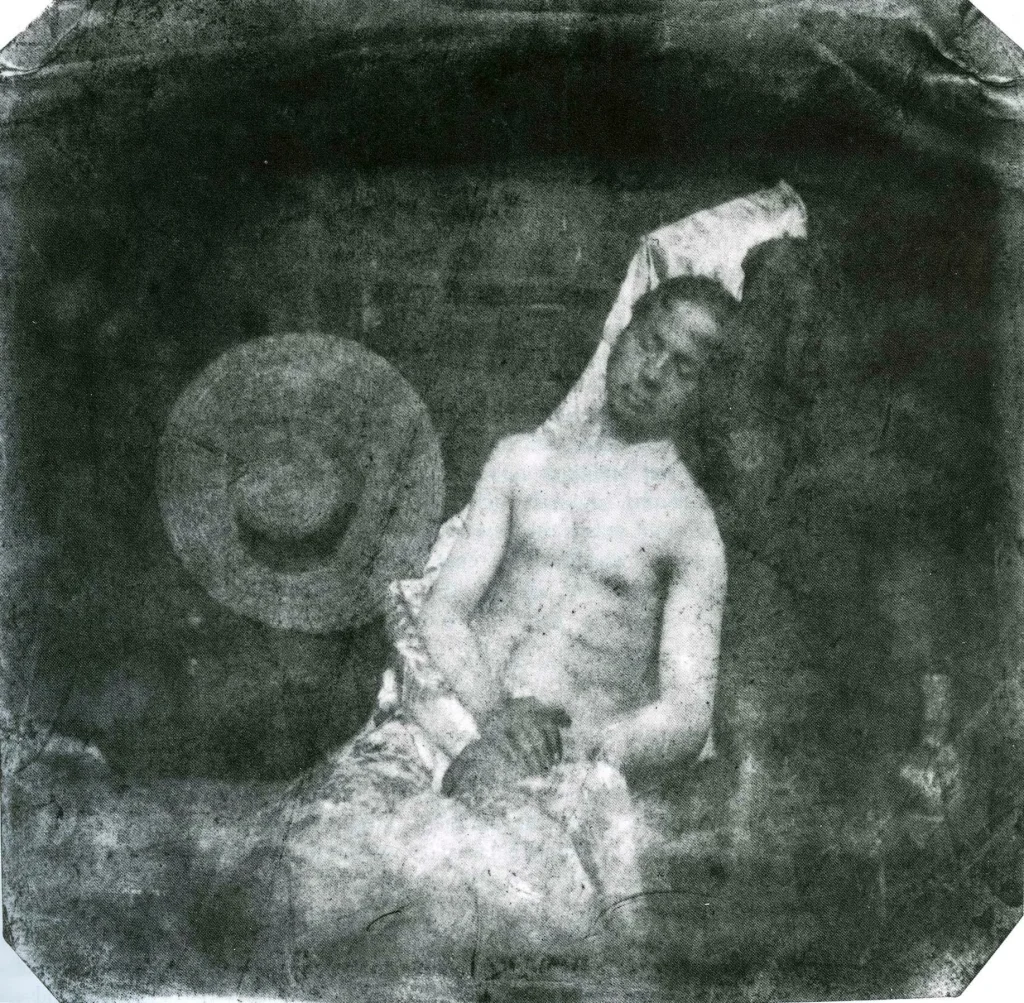
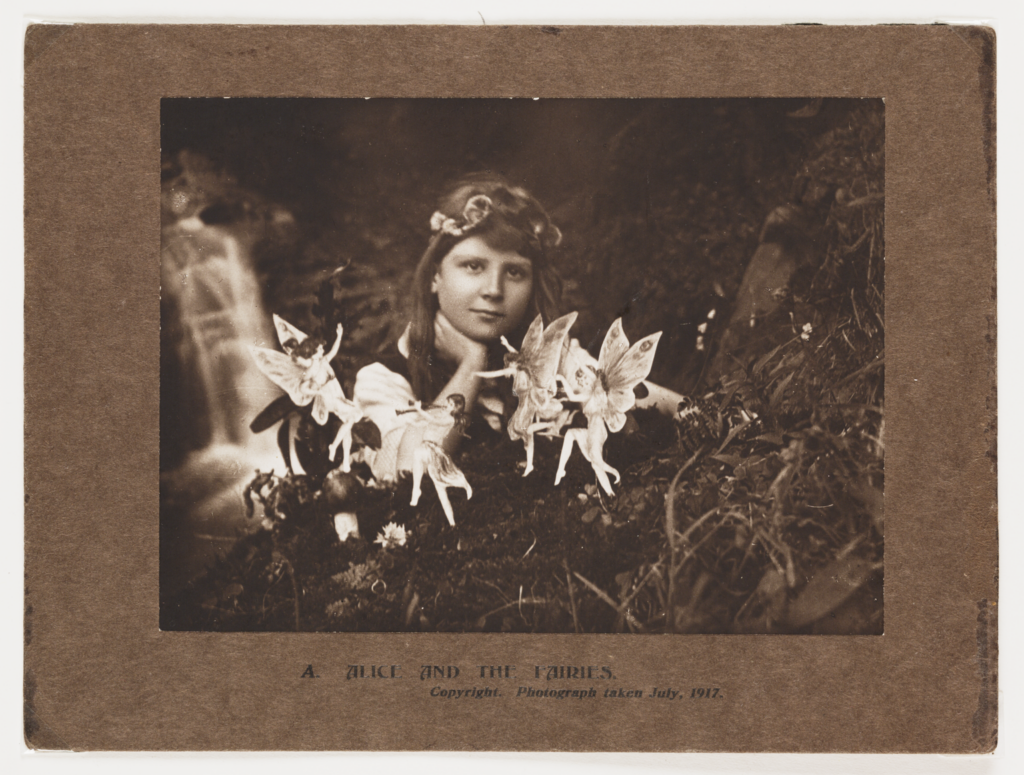
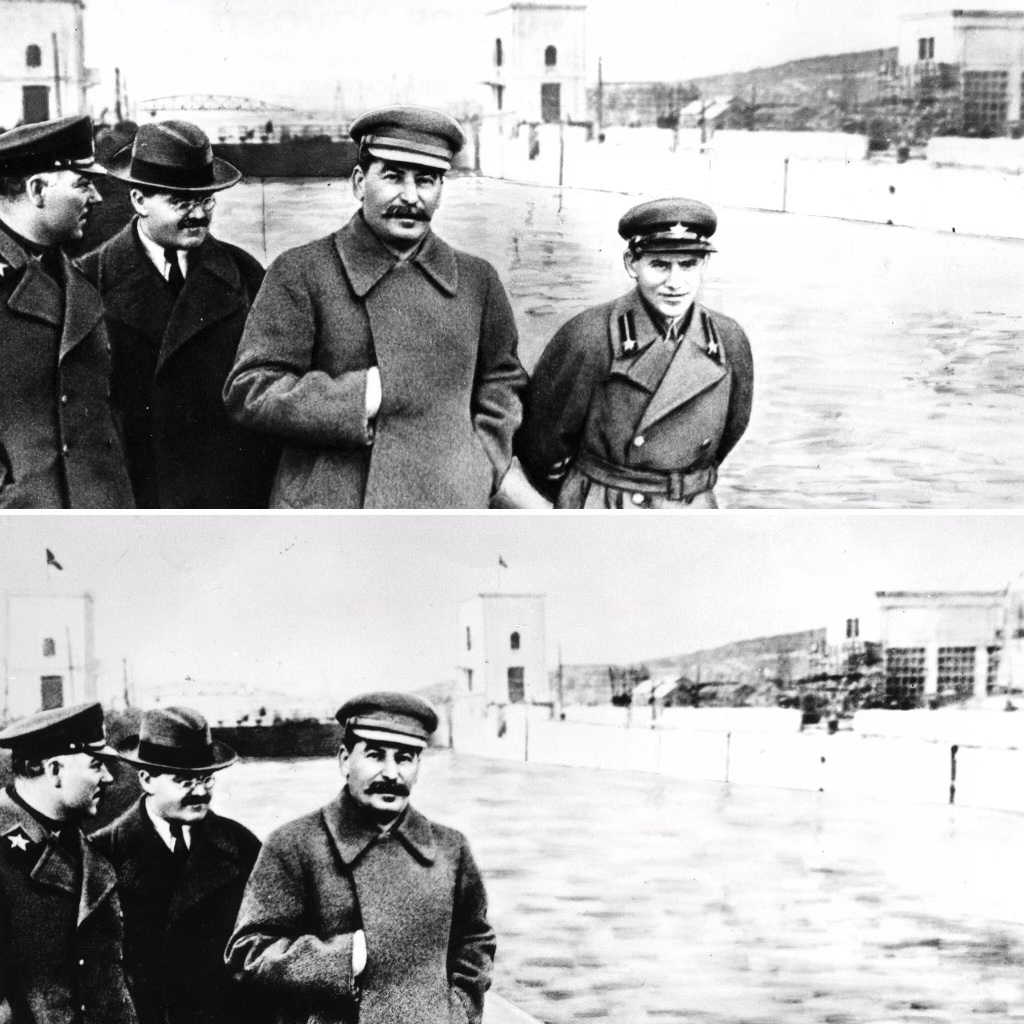
Taken in the early 19th century, View from the Window at Le Gras by Nicéphore Niépce is widely regarded as the world’s first photograph. It accurately documents a rooftop, emphasising the sharp triangular shadows. However, it was not long before photography began to create false narratives, which belies the adage ‘the camera never lies’.Hippolyte Bayard’s Self Portrait as Drowned Man is considered to be the first staged photograph. This paved the way for an endless stream of manipulated photography, from the Cottingley Fairies, to Stalin’s erasure of Yenukidze, right up to the birth of digital image deception, driven by ongoing advancements in artificial intelligence.
The Origins of Photography
To remind yourself of the origin of photography, watch the documentary on ‘Fixing the Shadows’ from BBC Genius of Photography, Episode 1 again.
Revisit the blog post: The Origins of Photography and the essay you wrote in response showing understanding of the origins of photography. Here is a reminder of some the major developments and practices that were covered in the documentary above.
Origins of Photography: Study this Threshold concept 2: Photography is the capturing of light; a camera is optional developed by PhotoPedagogy which includes a number of good examples of early photographic experiments and the camera obscura which preceded photography. It also touches on photography’s relationship with light and reality and delve into photographic theories, such as index and trace as a way of interpreting the meaning of photographs.
Photography did not spring forth from nowhere: in the expanding capitalist culture of the late 18th and 19th centuries, some people were on the look-out for cheap mechanical means for producing images […] photography emerged experimentally from the conjuncture of three factors: i) concerns with amateur drawing and/or techniques for reproducing printed matter, ii) light-sensitive materials; iii) the use of the camera obscura — Steve Edwards, Photography – A Very Short Introduction
Joseph Nicéphore Niépce, French (1765 – 1833)
View from the Window at Le Gras by Nicéphore Niépce in 1826 or 1827
Debates about the origins of photography have raged since the first half of the nineteenth century. The image above left is partly the reason. View from the Window at Le Gras is a heliographic image and arguably the oldest surviving photograph made with a camera. It was created by Nicéphore Niépce in 1826 or 1827 at Saint-Loup-de-Varennes, France. The picture on the right is an enhanced version of the original which shows a view across some rooftops. It is difficult to tell the time of day, the weather or the season. This is because the exposure time for the photograph was over eight hours.
Robert Cornelius, American (1809-1893)
Robert Cornelius’s 1839 photograph of himself. The back reads, “The first light picture ever taken”. The Cornelius portrait is the first known photographic portrait taken in America.
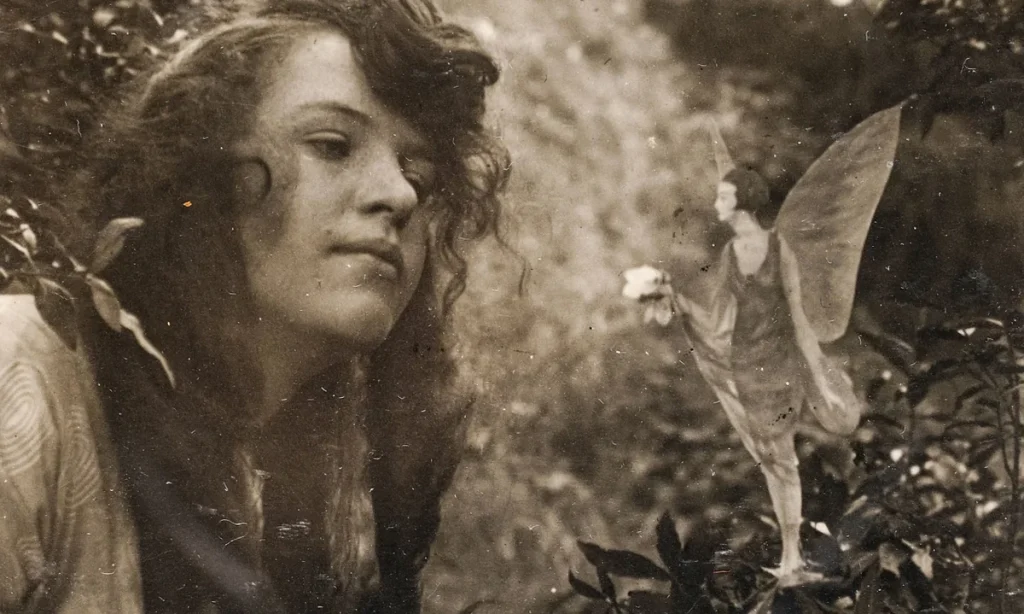
The Cottingley Fairies were a series of five photographs taken between 1917 and 1920 by cousins Elsie Wright and Frances Griffiths in Cottingley, England, which claimed to show fairies and gnomes. The images, staged using paper cutouts and hatpins, famously fooled many, including Sir Arthur Conan Doyle, as evidence of the supernatural. The hoax was not fully confessed until 1983, although the cousins maintained they actually saw fairies
Yury Li-Toroptsov: Fairyland. The Cottingley Fairies was a starting point for Yury Li-Toroptsov, who spend 6 months in Jersey in 2014 as international artist-in-residence and produced Fairyland.
Watch an introduction to the project by Yury Li-Toroptsov
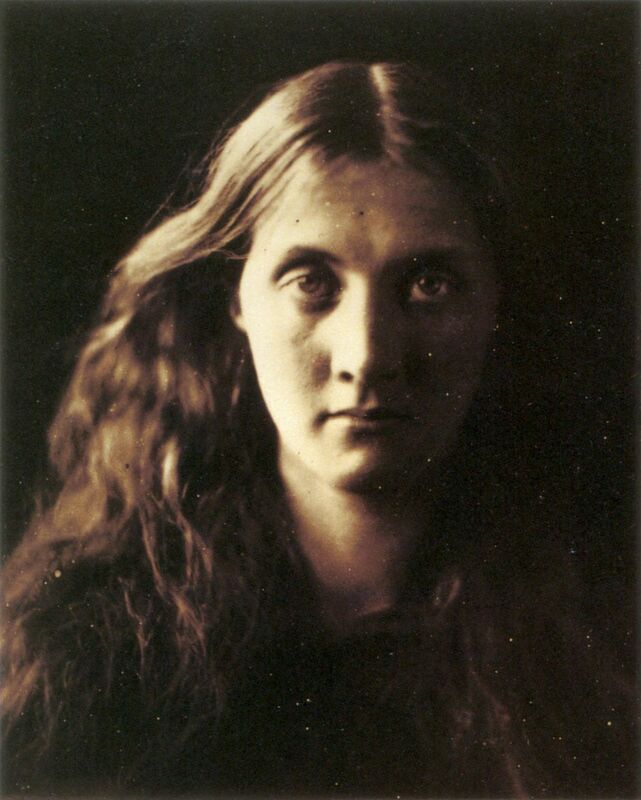
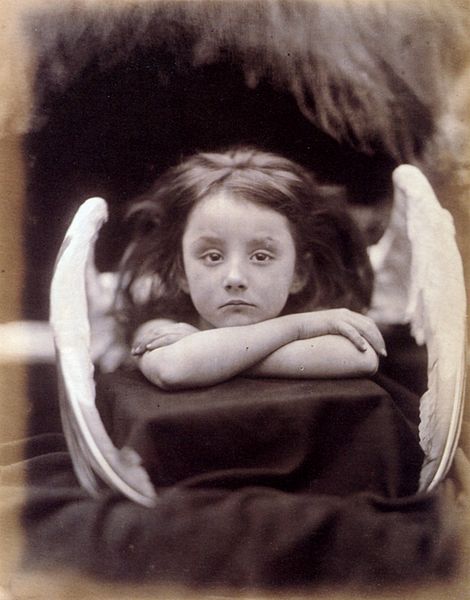
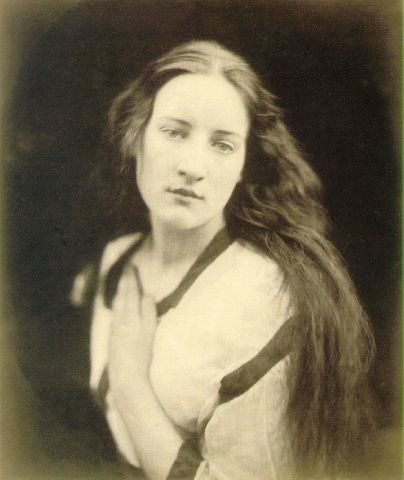
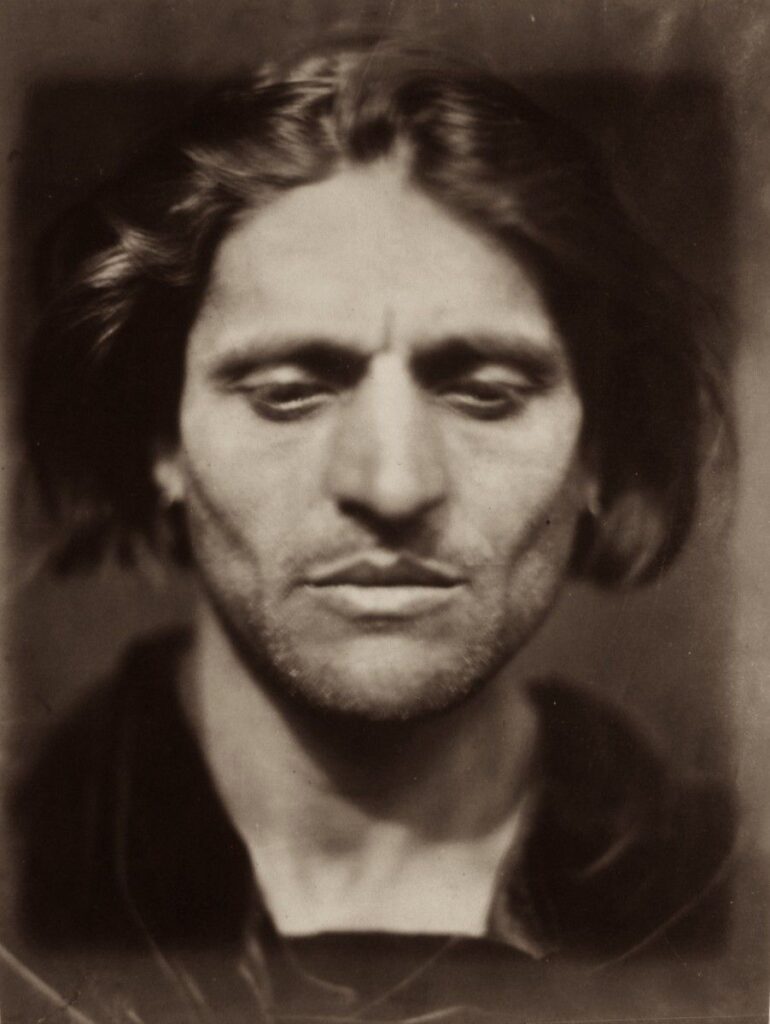
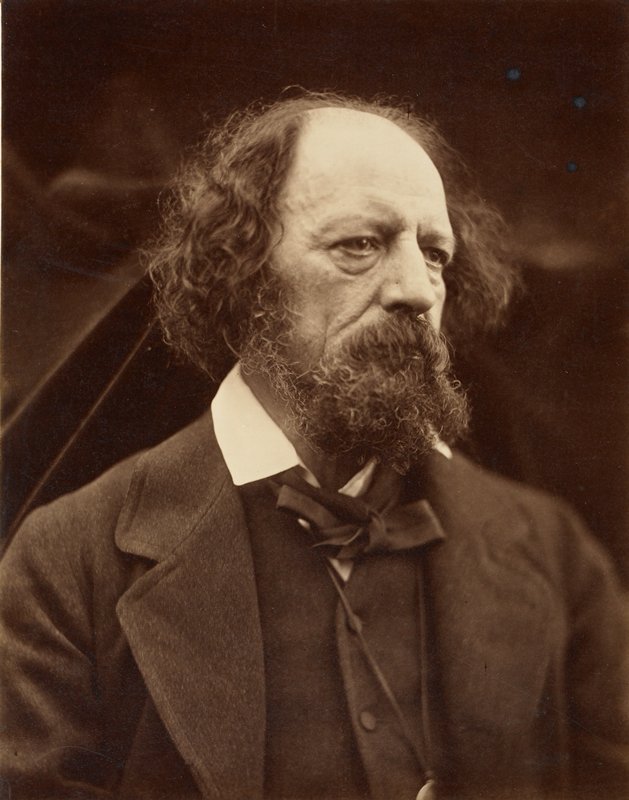
Julia Margaret Cameron, British (1815 – 1879) She is known for her soft-focus close-ups of famous Victorian men and for illustrative images depicting characters from mythology, Christianity, and literature.
Much of her work has connections to pictorialism and even movements such as The Pre-Rapahelites, and often had a dream-like, constructed quality to the images.
Stalin’s erasure of Avel Yenukidze: Now you see him—now you don’t. Compare a photo taken in the 1930s of five Communist Party officials in the USSR and you’ll see Avel Enukidze, photographed next to Soviet premier Vyacheslav Molotov and others. But during Josef Stalin’s Great Purge, the onetime member of the Communist party’s highest governing body was deemed an enemy of the state and executed by firing squad.
Then, he disappeared from Soviet photographs, too, his existence blotted out by a retouched suit on another official from the original photo.
Enukidze’s erasure was the product of a real conspiracy to change public perception in the USSR during Joseph Stalin’s dictatorship. Stalin’s commitment to censorship and photo doctoring was so strong that, at the height of the Soviet Union’s international power, he rewrote history using photo alteration. The stakes weren’t just historical: Each erasure meant a swing of Stalin’s loyalties, and most disappeared subjects also disappeared (or were killed) in real life, too. Read more here.
PHOTOGRAPHY & TRUTH
Explore this blog post: Truth in Photography where you can find other examples of images (both historical and contemporary) that ‘lied’, or was ‘altered’. Also read this text, Is it Real? by Susan Bright from Photography Decoded. London: Octopus Publishing Group Ltd.
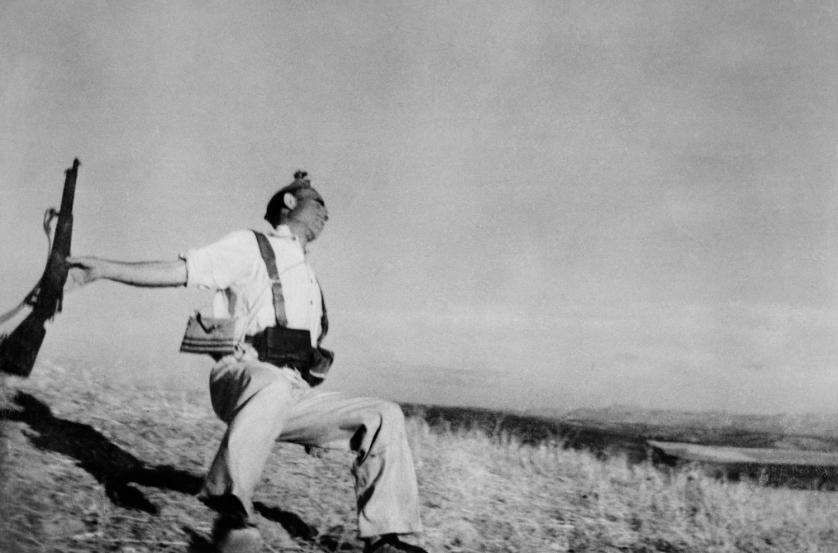
Can a photograph lie?
Robert Capa, Death of a Loyalist Soldier, 1936
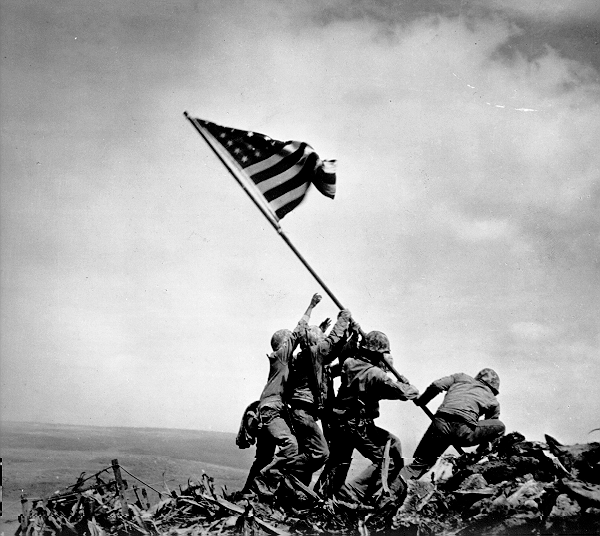
Are all photographs reliable?
Joe Rosenthal, Raising the Flag on Iwo Jima, February 23, 1945
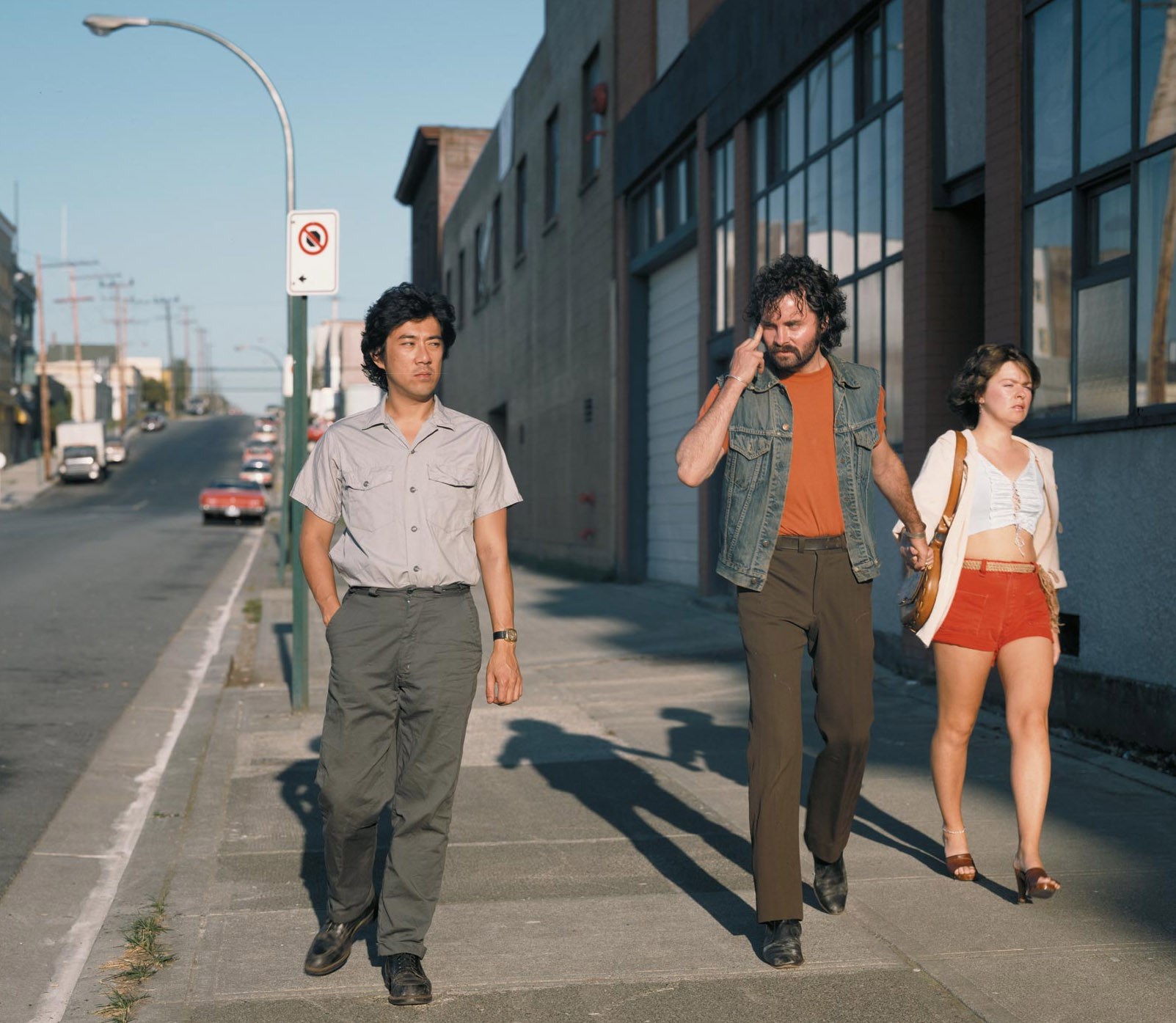
A photograph is a certain delivery of facts?
Jeff Wall, Mimic, 1982
Claims of truth that most people take for granted?
Tom Hunter, Woman Reading a Possession Order, 1997, after Johannes Vermeer (1632-1675) A Girl Reading a Letter by an Open Window, 1647-49
You often hear a photographer saying: ‘the camera was there and recorded what I saw’.
A common phrase is to ‘shed light on a situation’ meaning to find out the truth.
‘A picture tells a 1000 words‘, is another aphorism that imply images are more reliable.
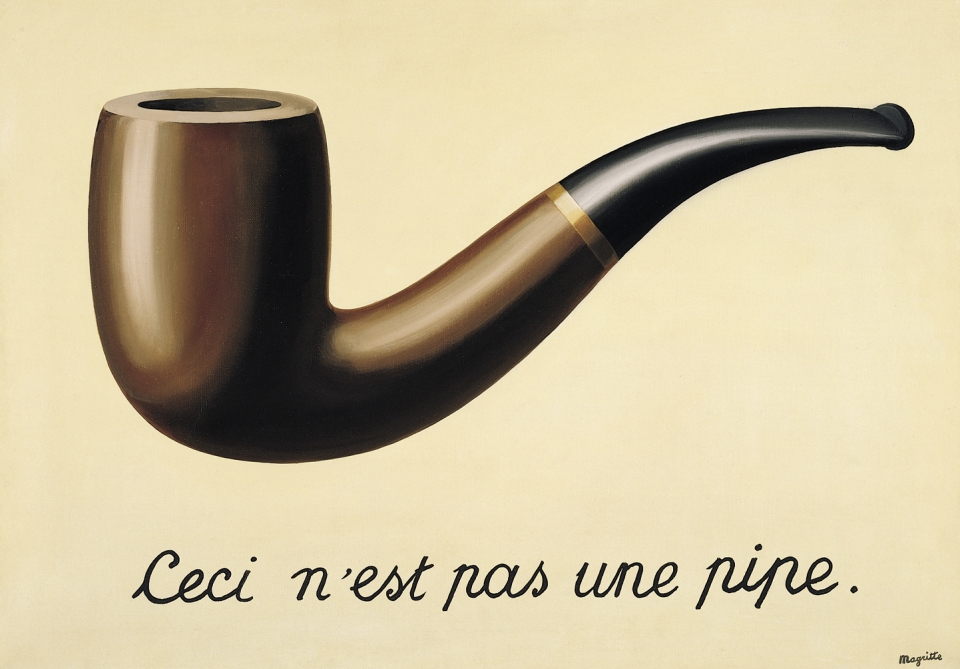
Picasso famously said: ‘We all know that art is not truth. Art is a lie that makes us realise truth.’
Magritte’s painting La Trahison des Images in which he painted a picture of a pipe with the words ‘Ceci n’est pas une pipe’ (This is not a pipe) goes some way towards an explanation.
GENERATIVE AI
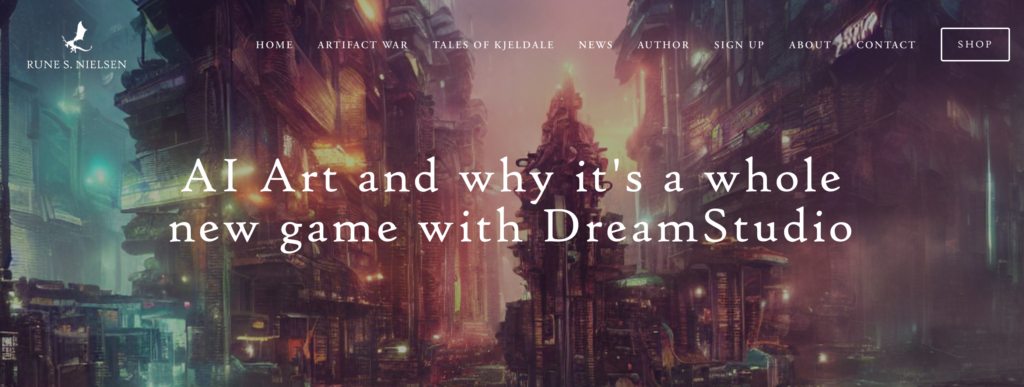
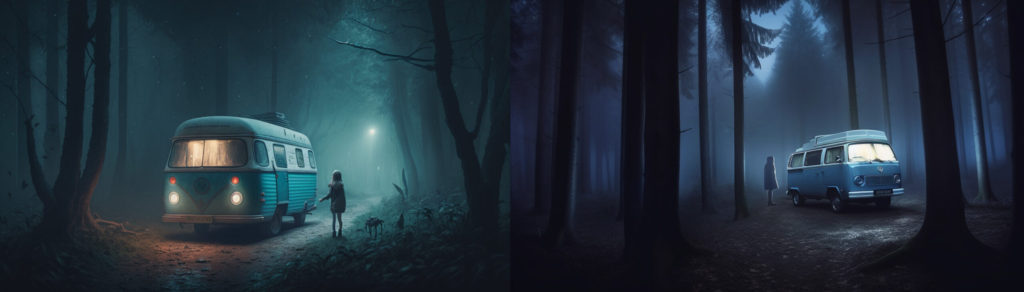
AI EXPERIMENTING > Using your images produce a variety of AI generated images (at least 10 variants) using Photoshop AI, DreamStudio or Midjourney. Generate AI images inspired by street photography and Cartier-Bresson’s theory around the decisive moment. Either ‘train’ AI on your original images or recreate street photographs using relevant text prompts. For example,use key terminology, such as specific words and phrases linked to subject matter, capturing moment, locations & places, points of view, approaches, composition and formal analysis, camera handling and techniques.
ARTISTS REFERENCES > INSPIRATIONS
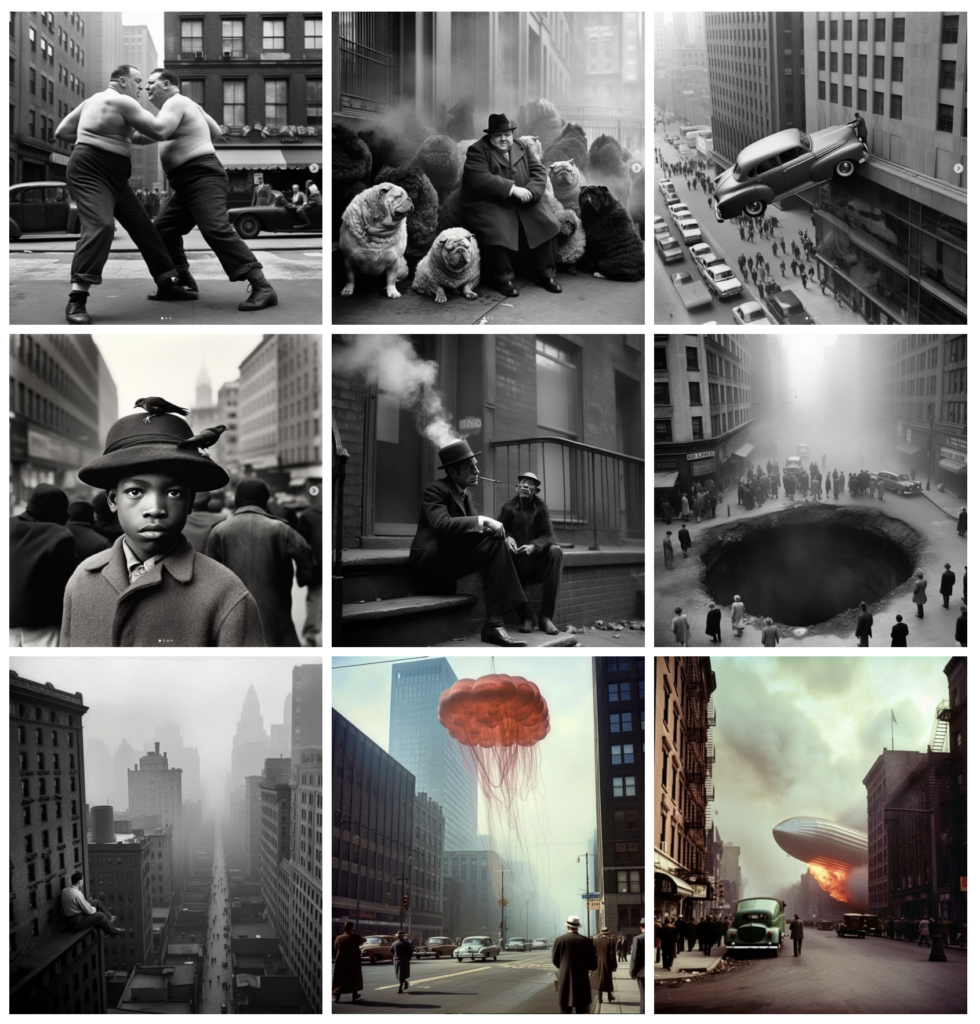
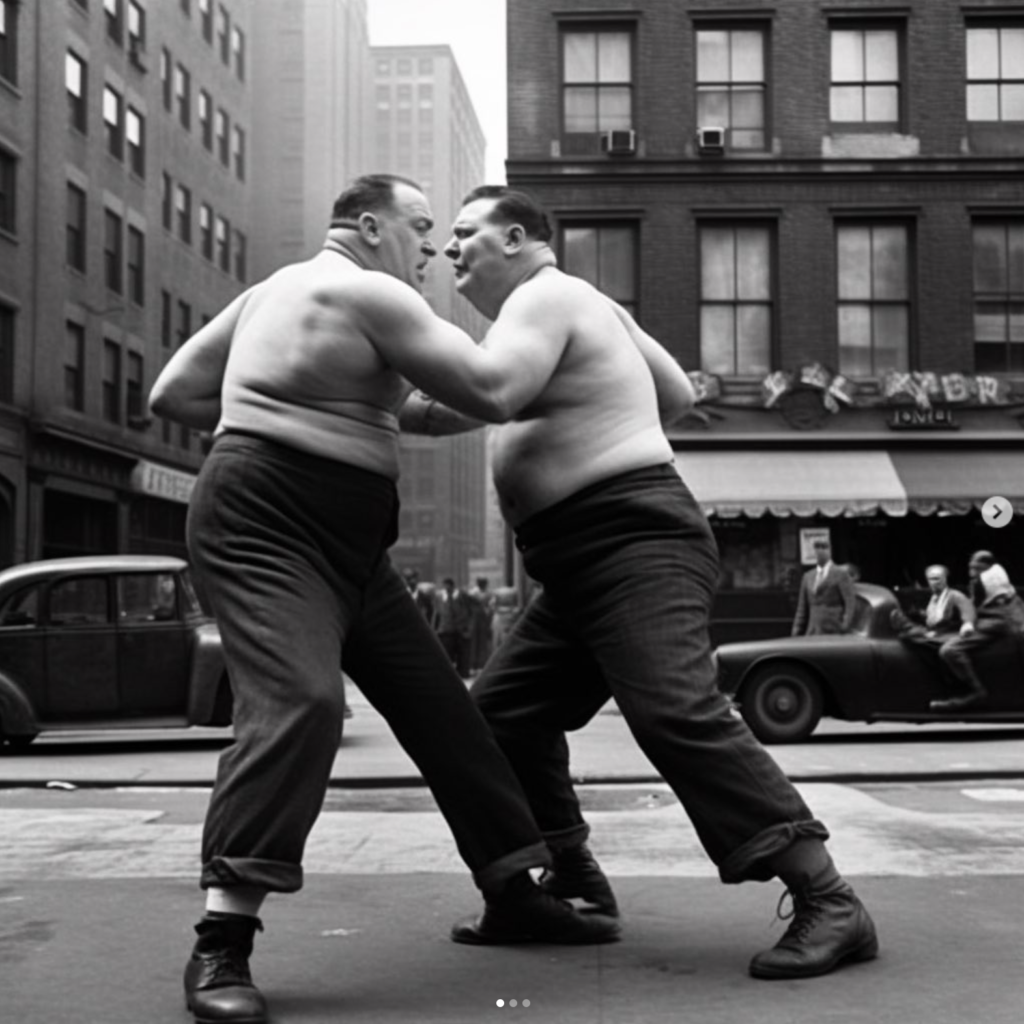
Philip Toledano: I’ve noticed a lot of work uses ai to recreate photography as it is now-some sort of reflection of reality -but what’s utterly intriguing is that AI has its own voice. For instance, this image of the two men fighting I would argue is much more interesting than the one I posted yesterday (can you see what’s different ?) because (metaphorically) I allowed ai to have a say -now this image asks more questions (which is ALWAYS a good thing in art)
I’m also surprised to see how it handles the animal images I’ve been doing -especially the monkeys and apes-the images have such emotion in them -and finally, I’m very much enjoying the way in which you can abstract the human form …
From his series, another America …
Photos courtesy of the latest version of Midjourney, an AI program which generates realistic deepfakes – Copyright Reddit – Twitter. Read article here
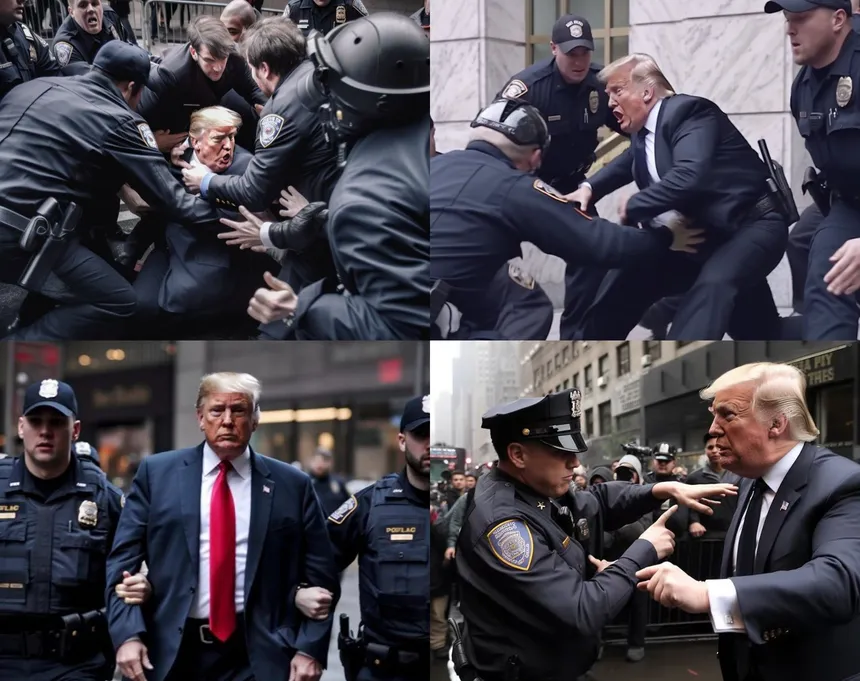
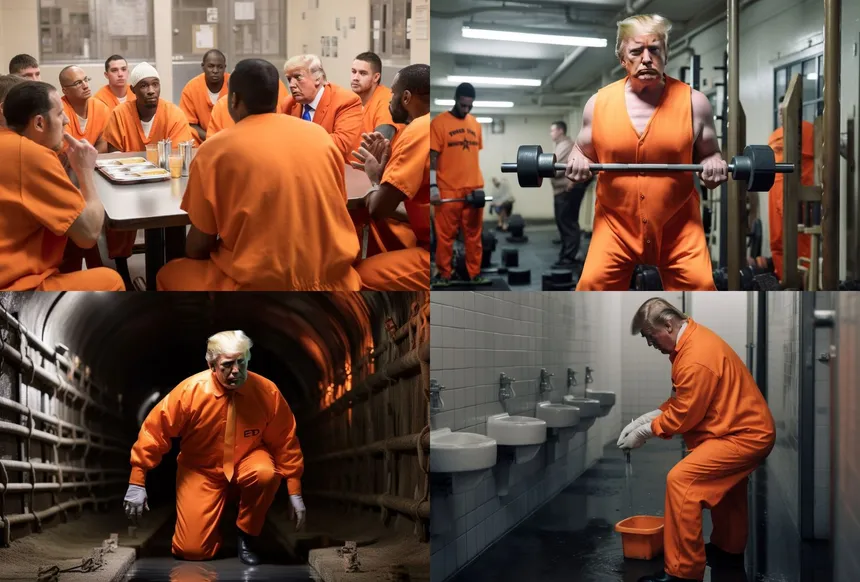
AI-created images of Donald Trump, shared by @EliotHiggins’s account. – Twitter – Midjourney
AI-created images of Donald Trump, shared by @EliotHiggins’s account. – Twitter – Midjourney
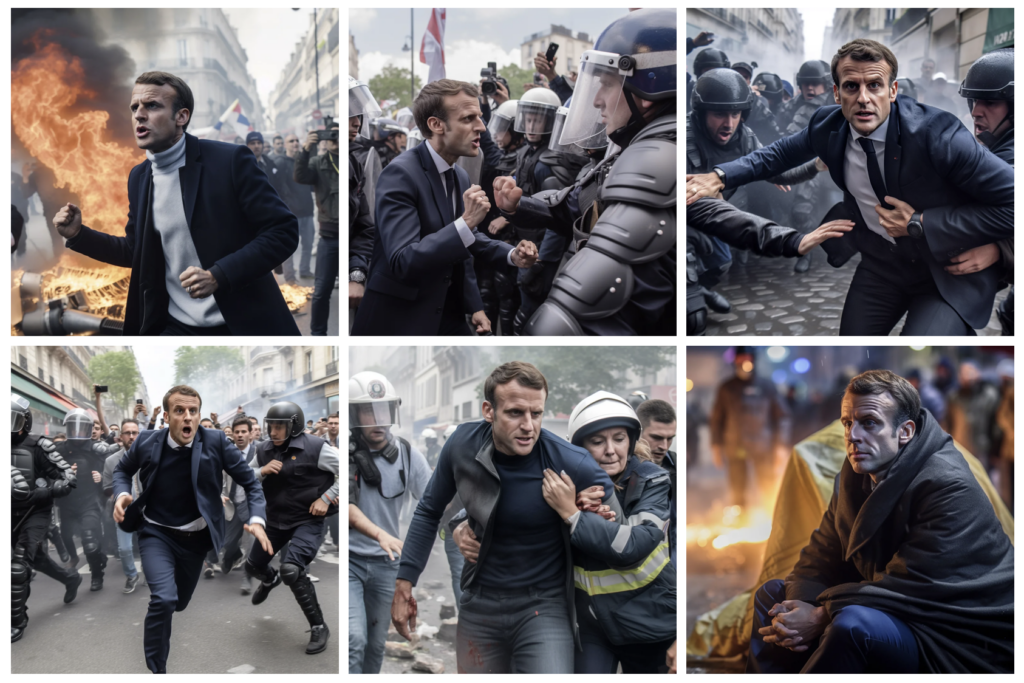
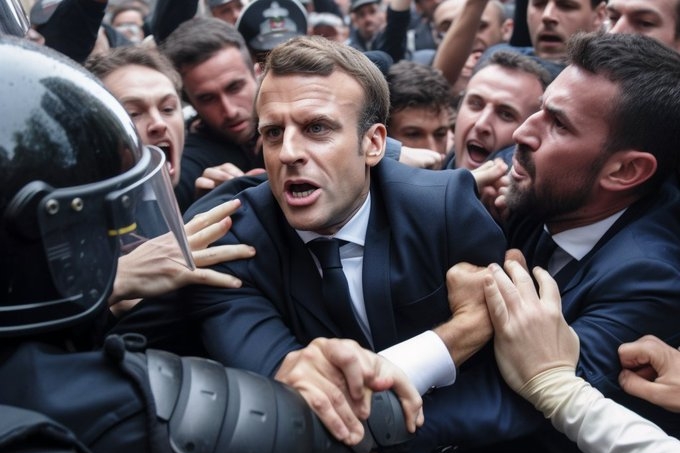
David Fathi: False image generated by photographer David Fathi via Midjourney showing Emmanuel Macron in contact with police officers. Credit: David Fathi / Midjourney
AI Image generating software: DreamStudio, Midjourney, DALL-E 2, Dream by Wombo, Craiyonand new version of Photoshop with AI
Photoshop AI
A general tip in Photoshop is just to get familiar with Layers, Selections, Masking, and Groups. Almost every complex task just involves being better at these and most problems proceed from small misunderstandings in them. There are free videos explaining any of these, for people who want targeted learning there is a short video on every tool available on Phlearn. The site will try and get you to pay for Premium Content, but there’s loads of free stuff.
For example, these are all free/quick, the presenter is great, and most contain free sample files to practice on.You can teach yourself a good standard of Photoshop just by following along. Click here for tutorials.
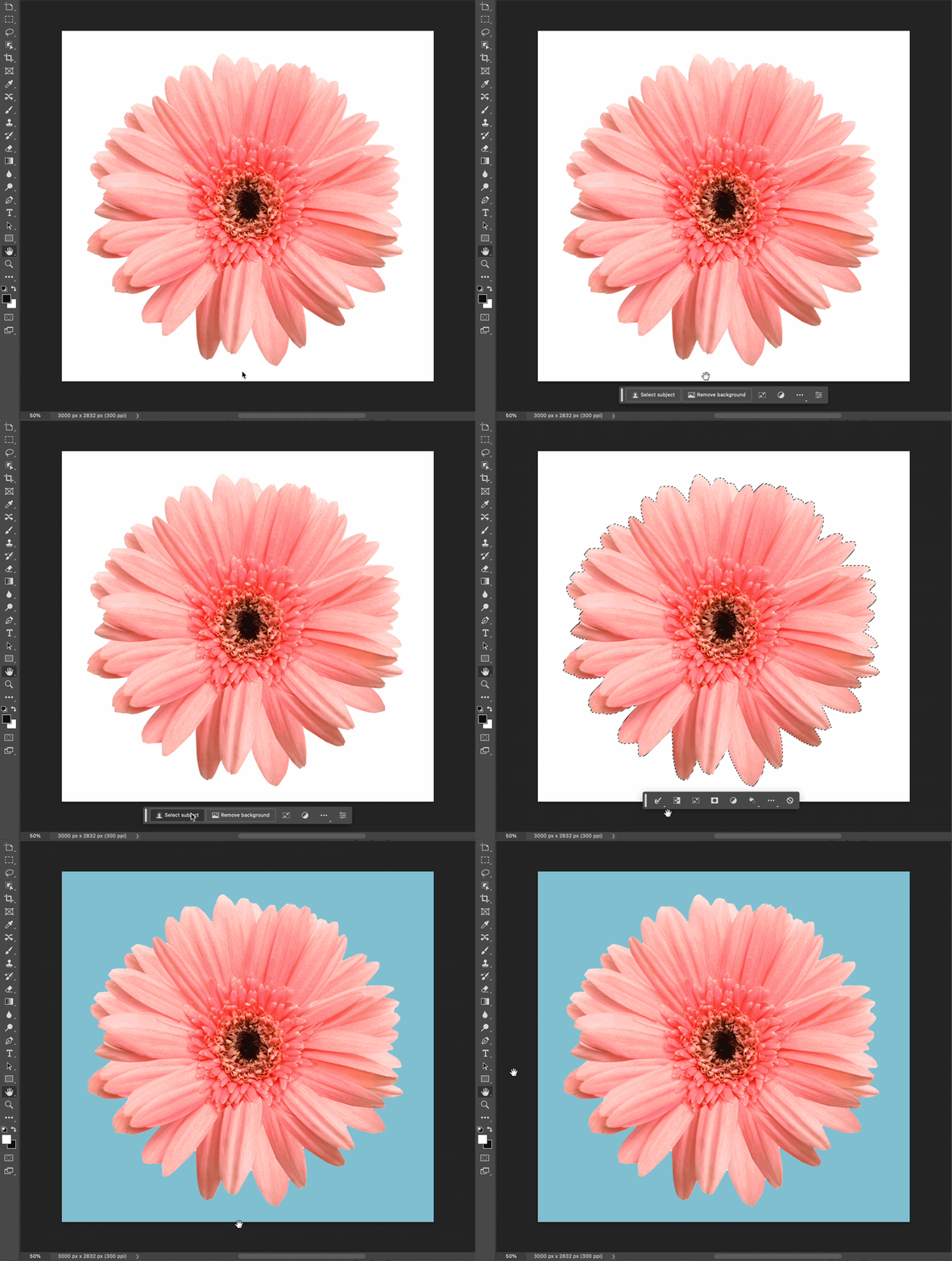
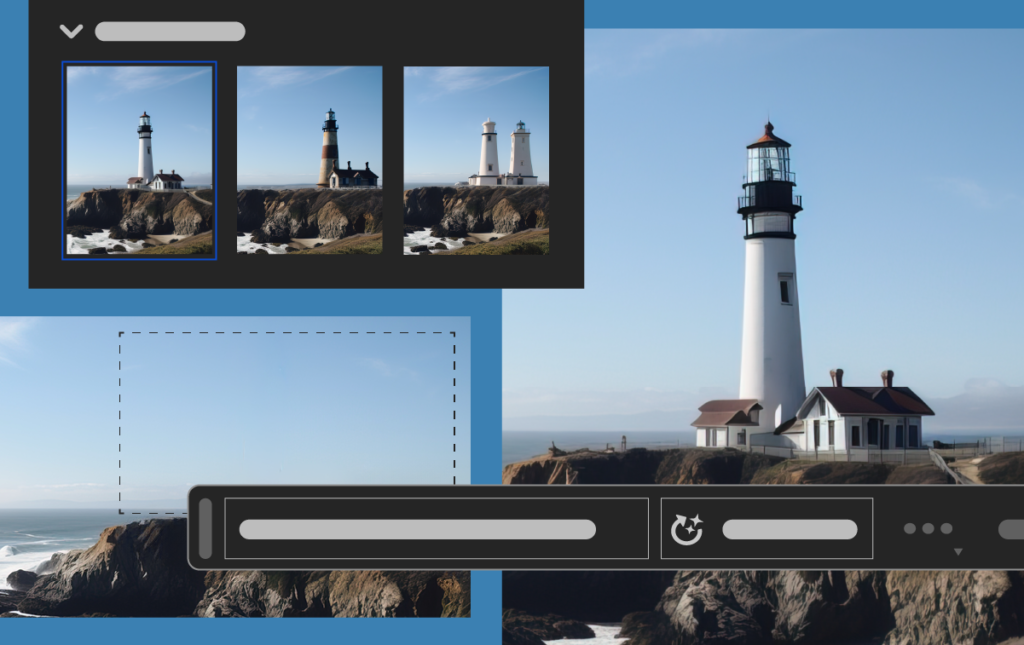
Introduction from Adobe to Photoshop AI: Nearly three and a half decades since we first brought Photoshop to the world, we’re writing a new chapter in our history with the integration of Generative AI and Adobe Firefly into Photoshop. Today we deliver an incredible new capability into creators’ hands that empowers them to work at the speed of their imagination while fundamentally transforming the experience into something more natural, intuitive and powerful.
Generative Fill – Adobe Photoshop Quickly create, add to, remove or replace images right in Adobe Photoshop with simple text prompts powered by Adobe Firefly generative AI.
https://youtu.be/Sp6K3qpVFO0Learn the basics of Generative Fill that is now integrated into the Beta version of Adobe Photoshop. This technology allows you to write simple text prompts to enhance your own images directly in Photoshop.
What’s new in Photoshop
The new features introduced to Photoshop are designed to accelerate everyday creative workflows, streamline complex tasks, and reduce clicks.
Adjustment Presets
Adjustment Presets are filters that speed up complex tasks by enabling you to preview and change the appearance of images in just a few steps to achieve a distinctive look and feel, instantly.
There are 32 new presets in the Adjustments panel that you can hover over to see what your image would look like with each preset applied before selecting it. Once a preset is selected, it can be further refined by editing the automatically created adjustment layers in the layers panel.
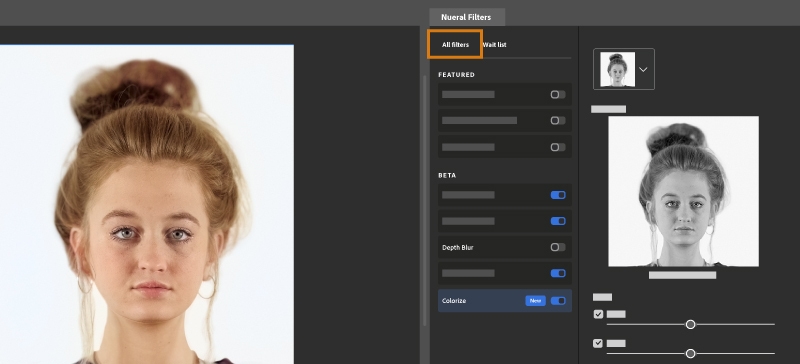
Neural Filters is a new workspace in Photoshop with a library of filters that dramatically reduces difficult workflows to just a few clicks using machine learning powered by Adobe Sensei. Neural Filters is a tool that empowers you to try non-destructive, generative filters and explore creative ideas in seconds. Neural Filters helps you improve your images by generating new contextual pixels that are not actually present in your original image.
Click here for a tutorial on how to use Generative Fill
Gradients update
The Gradients feature has been significantly improved, and the workflow has been expedited.
The feature enables you to create gradients in just a few steps and now includes new on-canvas controls which help you have precise controls over many aspects of the gradient in real-time. A live preview that’s created automatically shows you instantly how the changes you make affect your image.
You can now also make non-destructive edits to your gradients, which means you can go back and make changes to your gradient without permanently altering your original image.
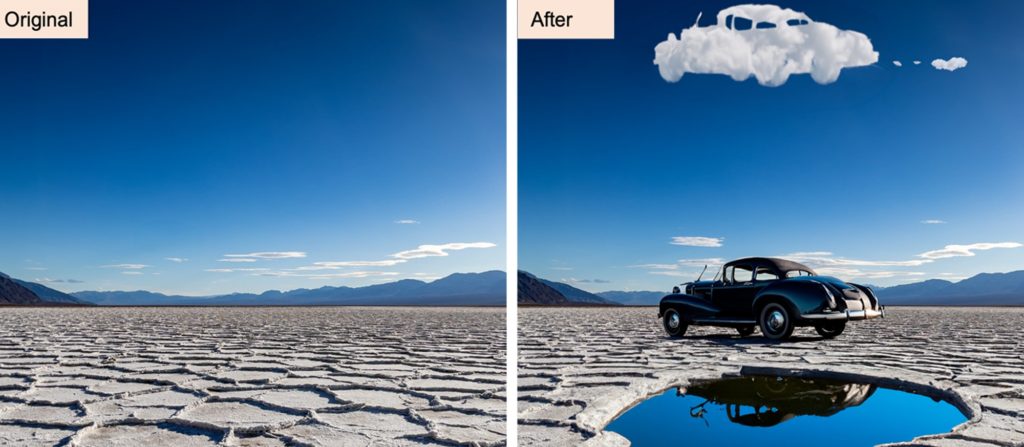
The Remove Tool is an AI-powered feature that enables you to replace an unwanted object by simply brushing over it, preserving the integrity of nearby objects and providing an uninterrupted transition on complex and varied backgrounds.
The Remove Tool is particularly powerful when removing larger objects and matching the smooth focus shift across the image. For example, the tool can remove an entire building or car from an alpine landscape image while seamlessly maintaining the fidelity of the progression from meadow to mountains.
Use the Remove tool for:
Big objects
An object near other objects
An object on a varied-focus background
An object with structure behind it (think lines, like a fence or horizon)
The Contextual Task Bar is an on-screen menu that recommends the most relevant next steps in several key workflows, reducing the number of clicks required to complete a project, and making the most common actions more easily accessible.
For example, when an object is selected, the Contextual Task Bar appears below your selection and suggests actions for selection refinement that you might want to use next, such as Select and Mask, Feather, Invert, Create Adjustment Layer, Fill Selection, or generate something with the new Generative Fill capabilities.
The revolutionary and magical new suite of AI-powered capabilities grounded in your innate creativity, enabling you to add, extend, or remove content from your images non-destructively using simple text prompts. You can achieve realistic results that will surprise, delight, and astound you in seconds.
Click here for a tutorial on how to use Generative Fill
DreamStudio
https://youtu.be/AKyOWNXWxXUTutorial as we explore the amazing capabilities of DreamStudio, from creating realistic portraits to coming up with prompts and structuring your work for maximum impact,
https://youtu.be/AEzIgDMaoiUFollow more advanced tutorial here
DALL-E and DALL-E 2 are deep learning models developed by OpenAI to generate digital images from natural language descriptions, called “prompts”. DALL-E was revealed by OpenAI in a blog post in January 2021, and uses a version of GPT-3 modified to generate images. In April 2022, OpenAI announced DALL-E 2, a successor designed to generate more realistic images at higher resolutions that “can combine concepts, attributes, and styles”.
STARTING POINT 5: PHOTOGRAPHY & HERITAGE < Personal stories, ancestry & family history < Identity & culture < Self-portraiture & autobiography
Photographers often focus on very personal subject matter, documenting familial relationships that capture the essence of human connection, vulnerability, privacy and shared experiences. From candid moments to staged portraits, photographers use the familial lens to explore universal themes of love, identity and the passage of time.
Larry Sultan’s Pictures From Home explore both the traditional perceptions of family and the deep personal connections within it. His photographs of his parents in their retirement, capture the more traditional ideas of the American Dream, but do so striking a beautiful balance between candid photography and carefully crafted compositions. The result is a collection of family moments, frozen in an instant and seemingly strange in their immediacy, permanence and location.
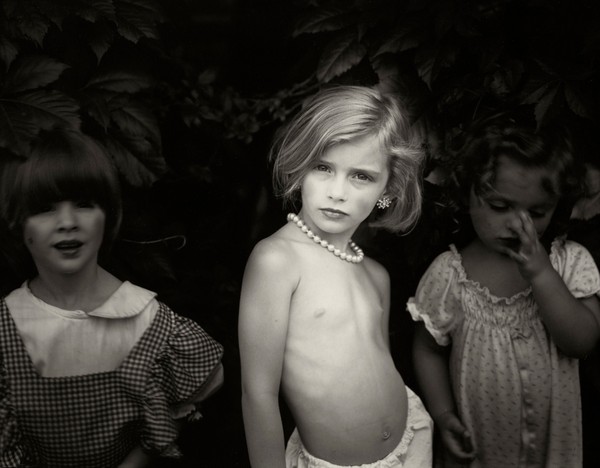
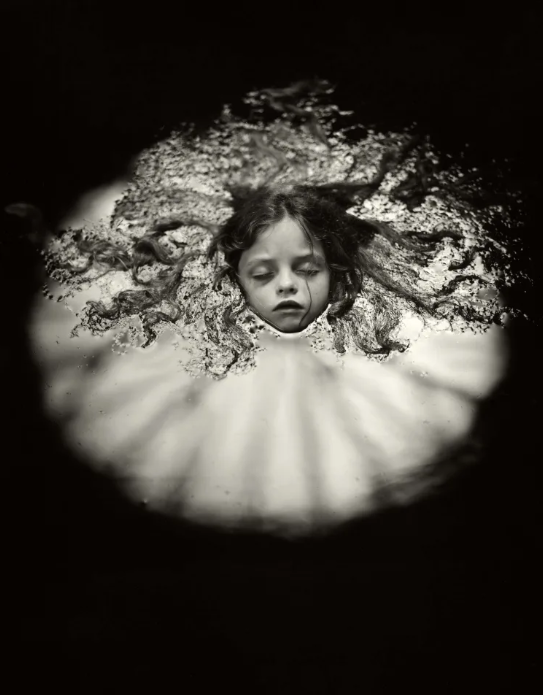
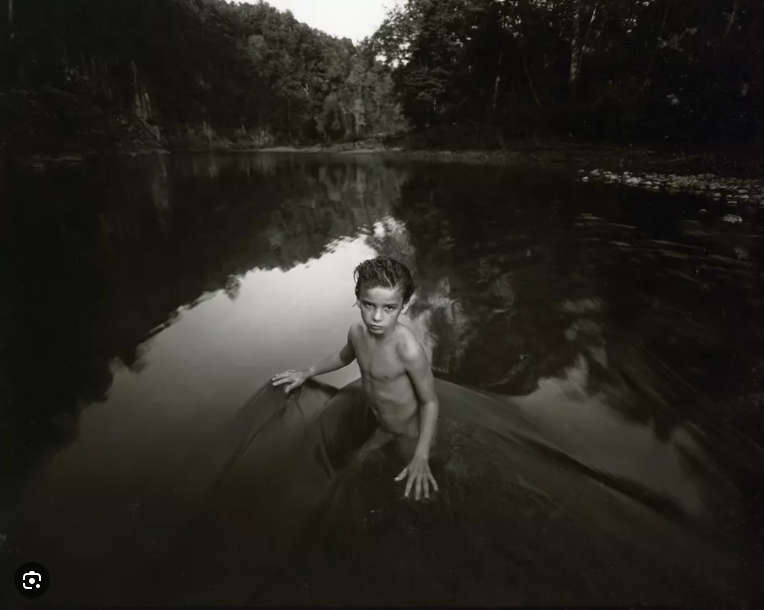
Other photographers who use family and the home, both their own or the intimacy found in others, are Richard Billingham, Gueorgui Pinkhassov, Sally Mann, Siân Davey, Chien-Chi Chang and Olivia Arthur.
Jacqui Davies Ella Smith and Justin Salinger in RAY & LIZ, 2018
Documentary approach > recording life as it is > camera as witness Documentary is storytelling through a series of images of people involved in real events to provide a factual report on a particular subject. Read more here Documentary Photography
Larry sultan vs Richard Billingham > artists photographing their parents > straight photography vs snapshot aesthetics > formal vs informal.
Larry Sultan, Pictures from Home
Richard Billingham, Ray’s A Laugh
Richard Billingham: Watch film where Sultan talks about his project Picture from Home and photographing his parents
Here are some Davey’s photography projects, most of which have been published as photobooks too.
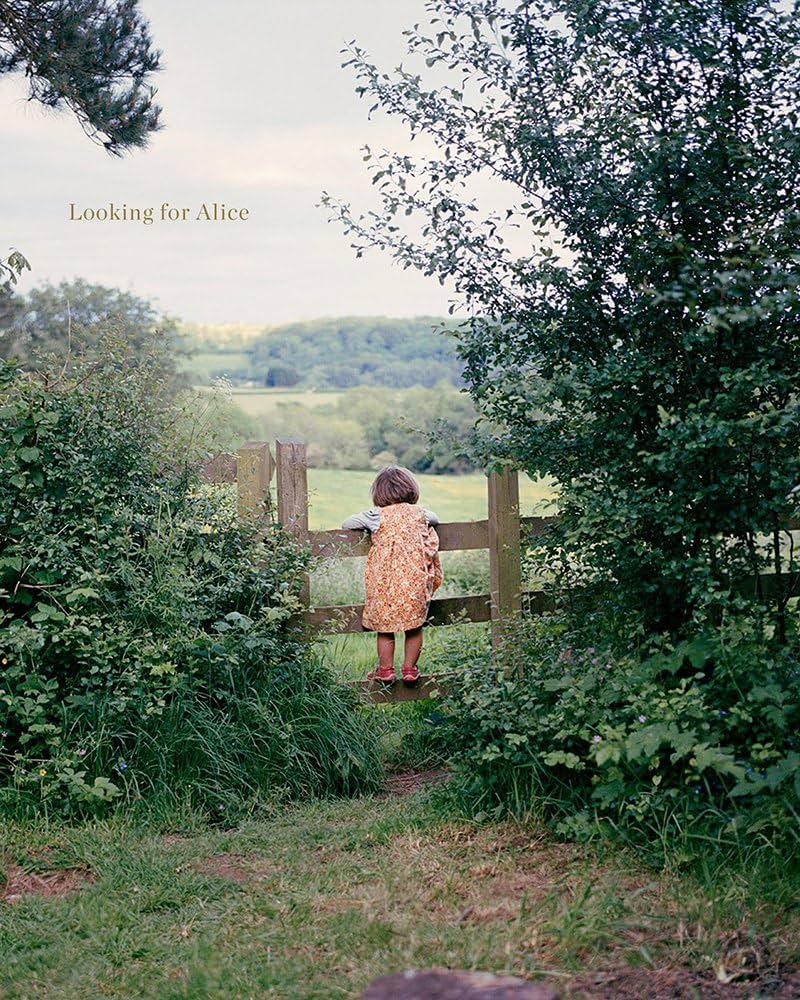
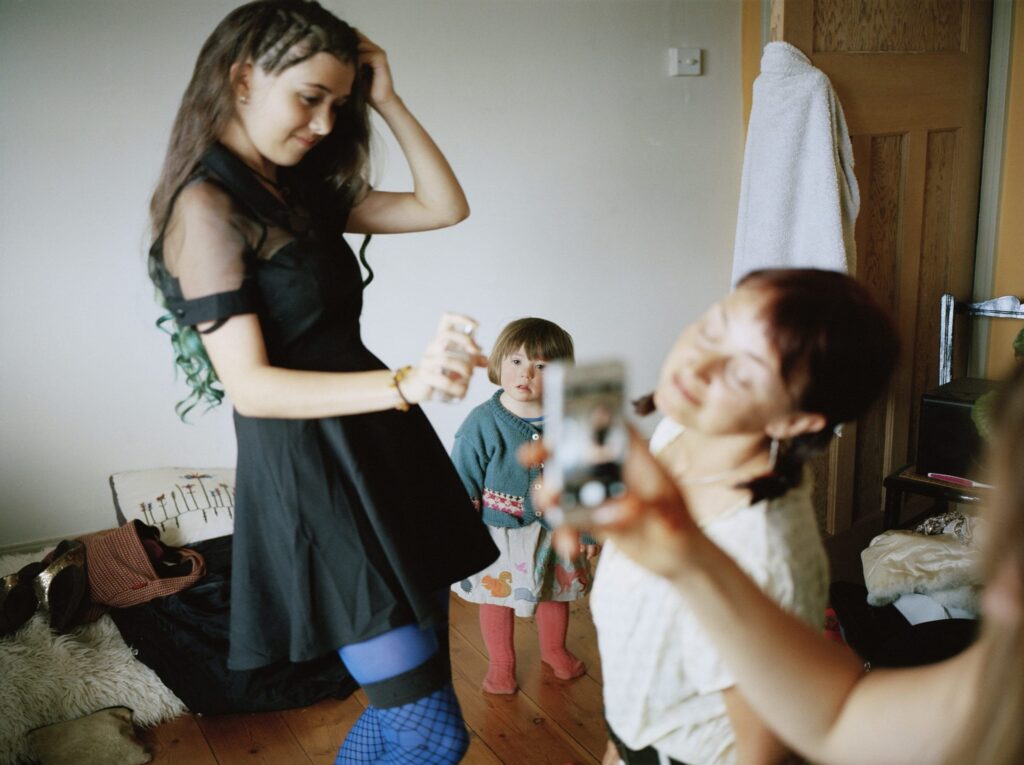
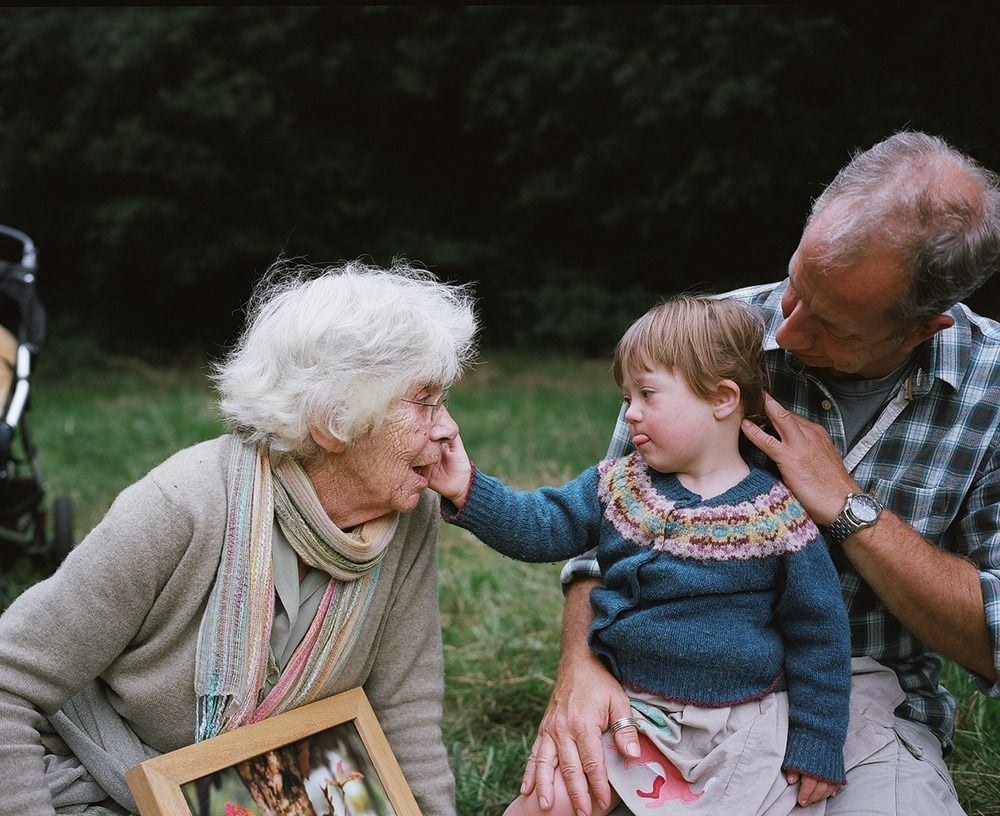
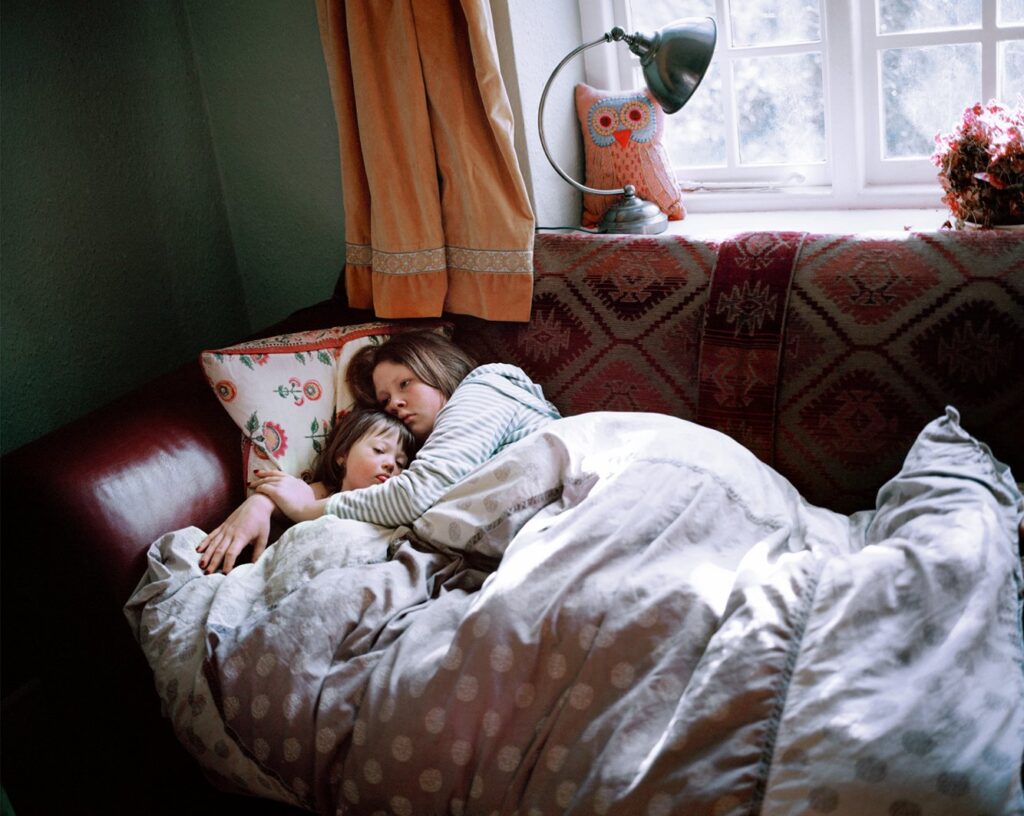
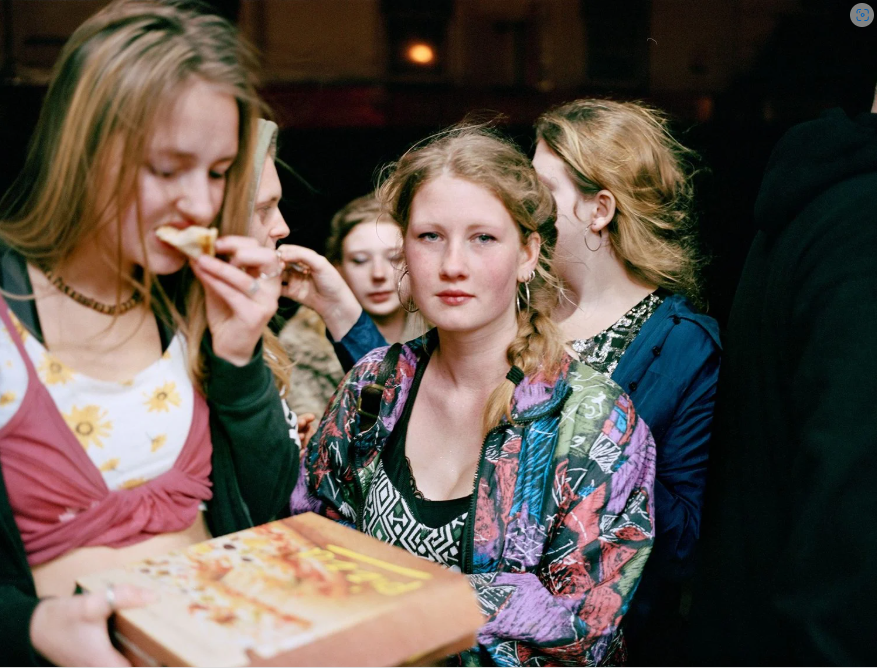
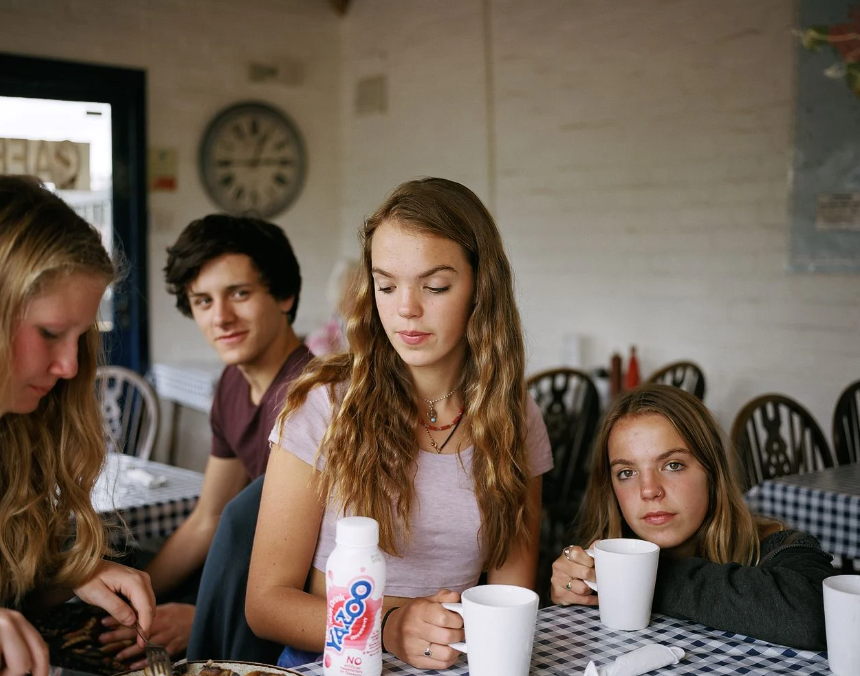
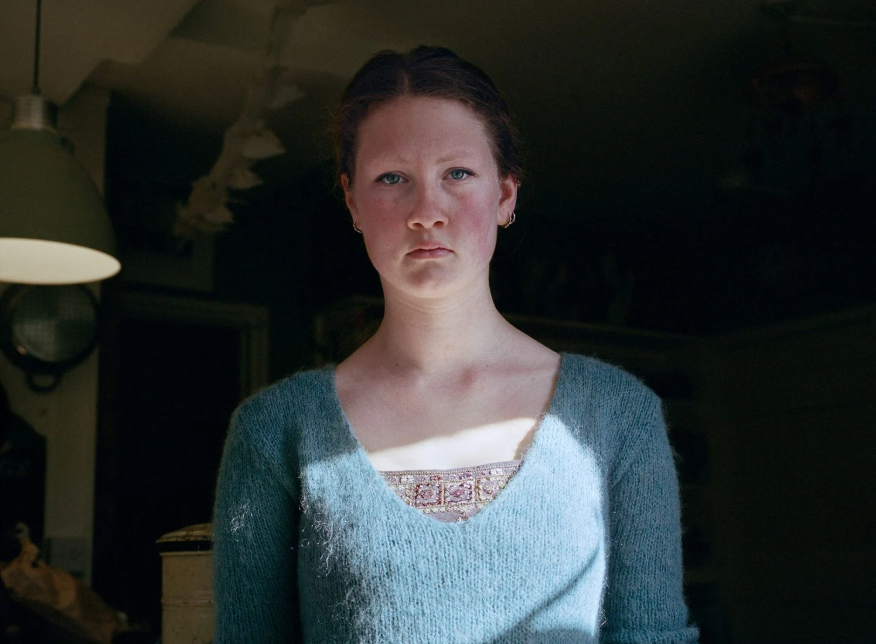
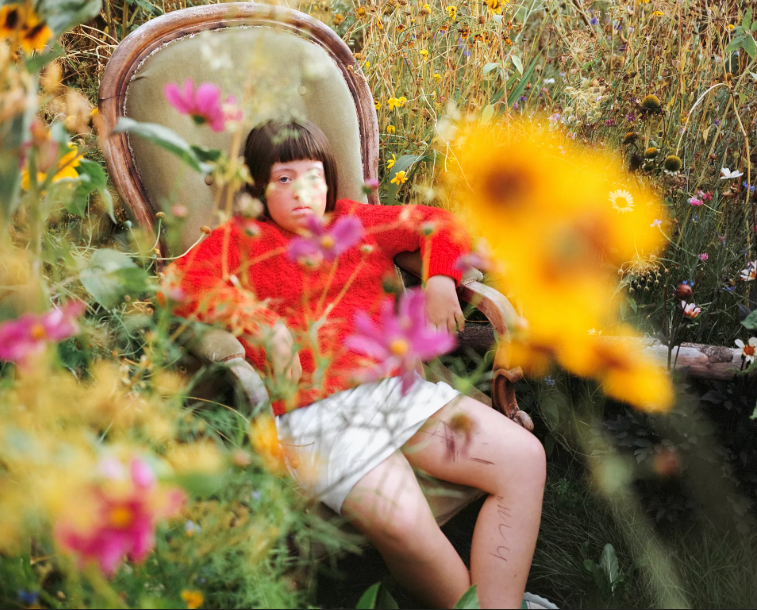
Looking for Alice: about her daughter with Down syndrome
Martha: about her teenager daughter – see link to portfolio here on LensCulture
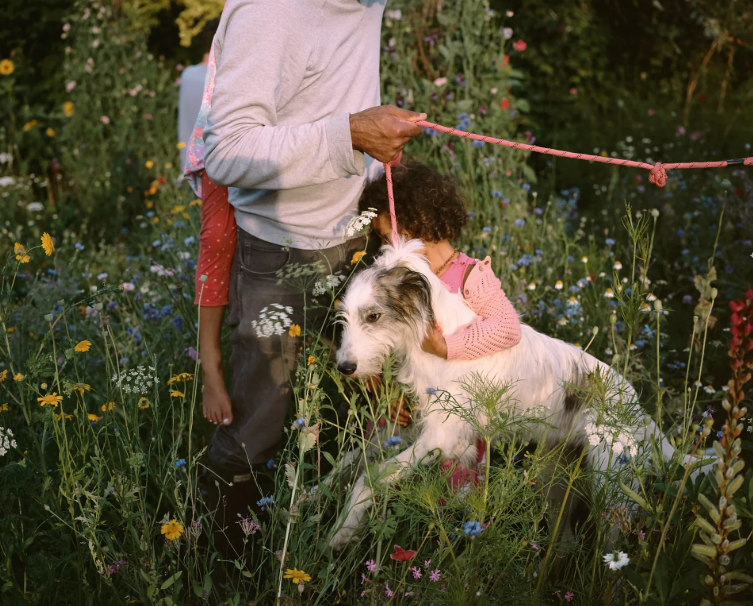
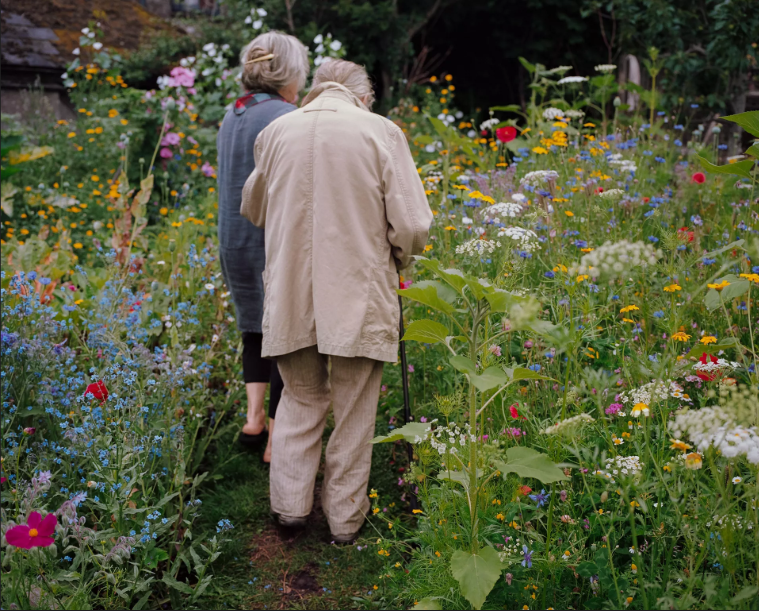
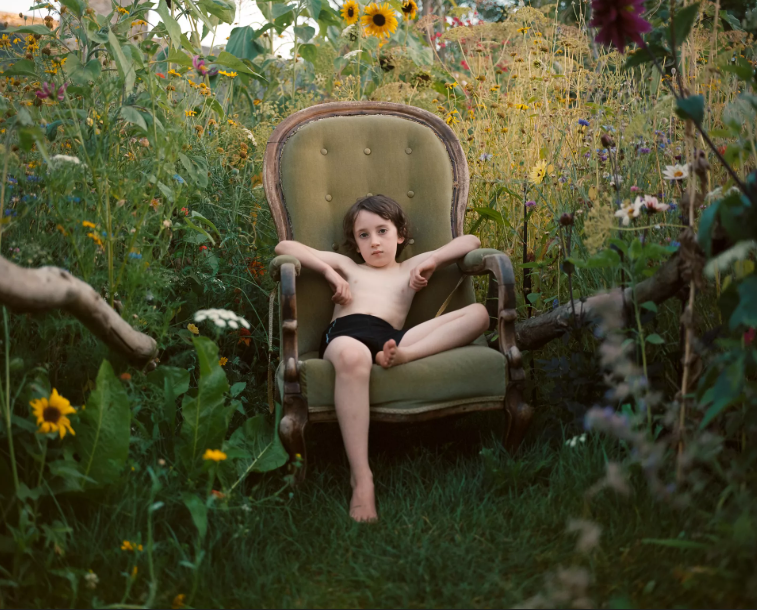
Her latest work, book and exhibition is: The Garden, which is currently on show at The Photographer’s Gallery in London.
Everyone has a place in our garden. I am the garden. Those who enter are the garden. Without distinction, without separation.- Siân Davey
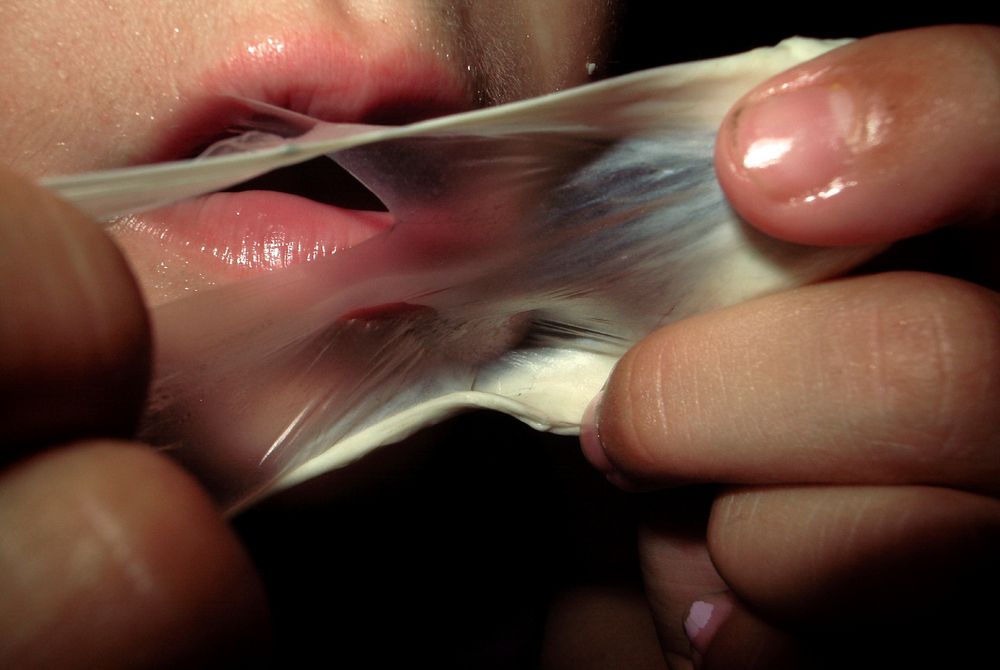
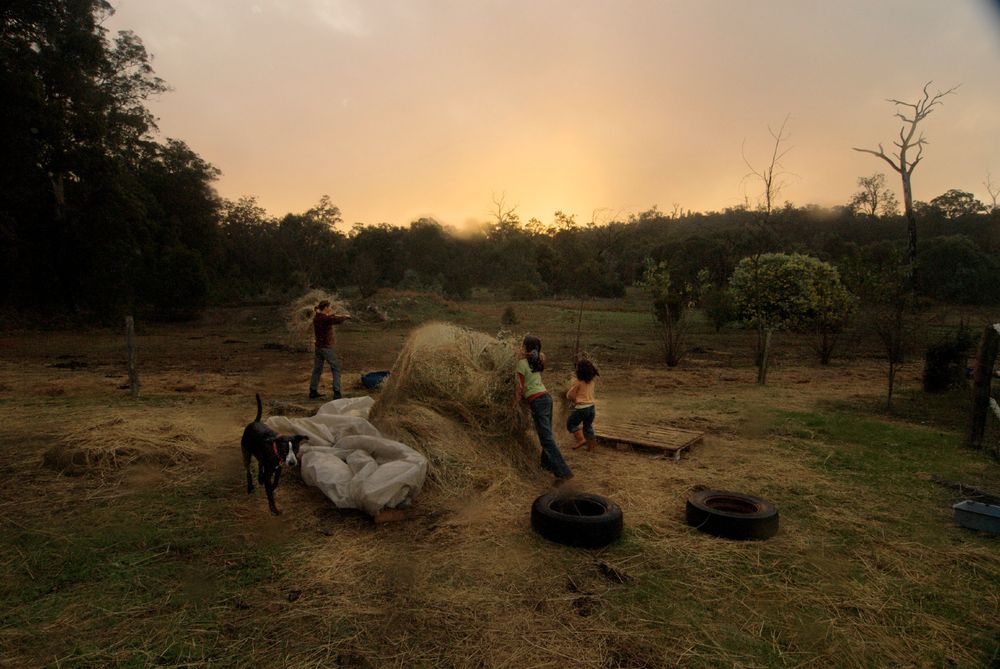
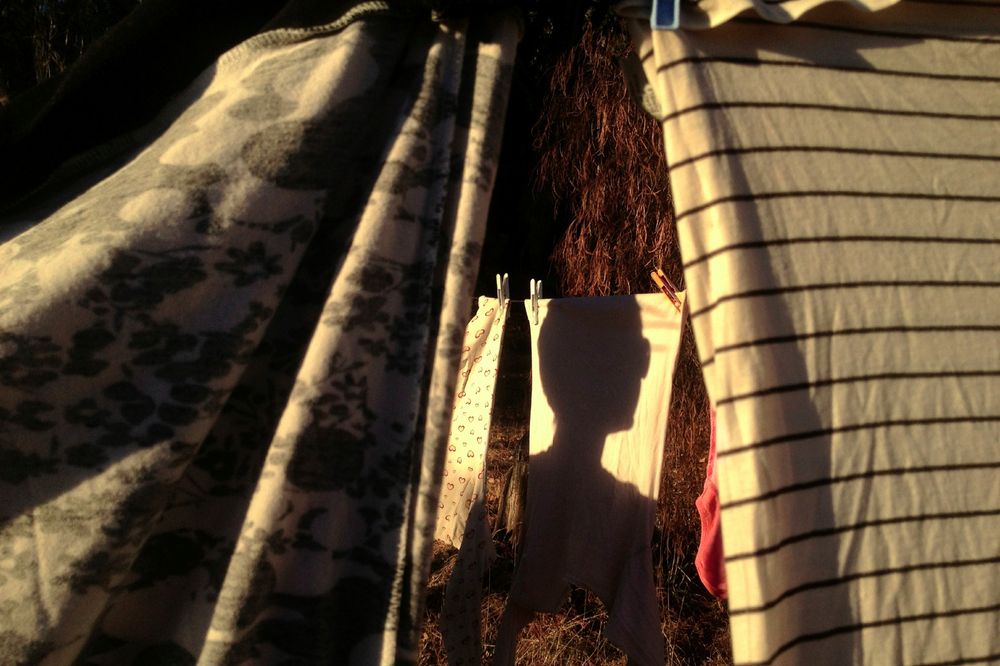
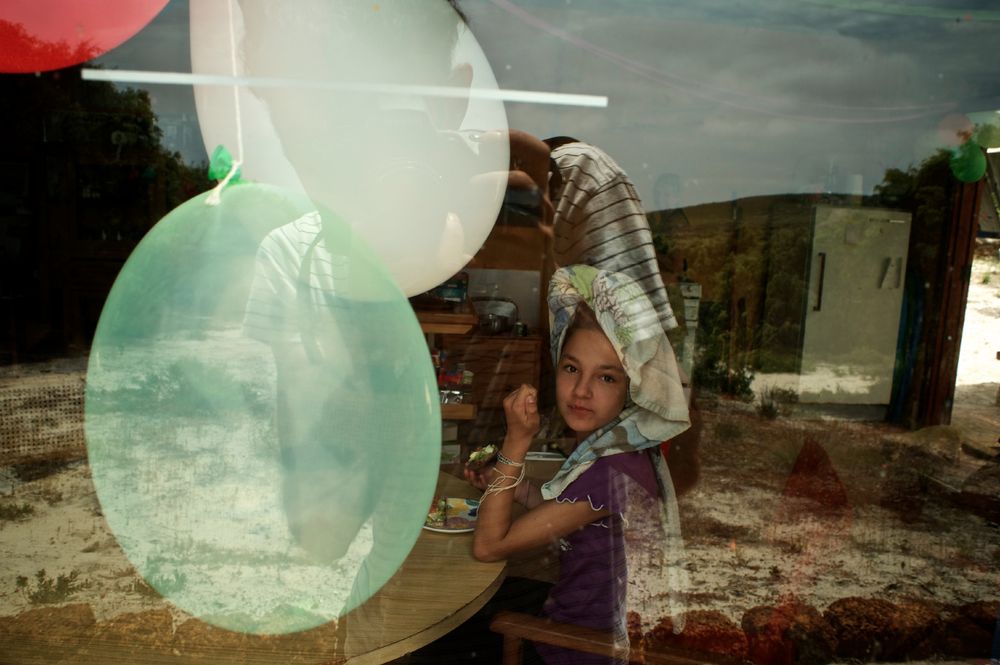
Sam Harris, The Middle of Somewhere
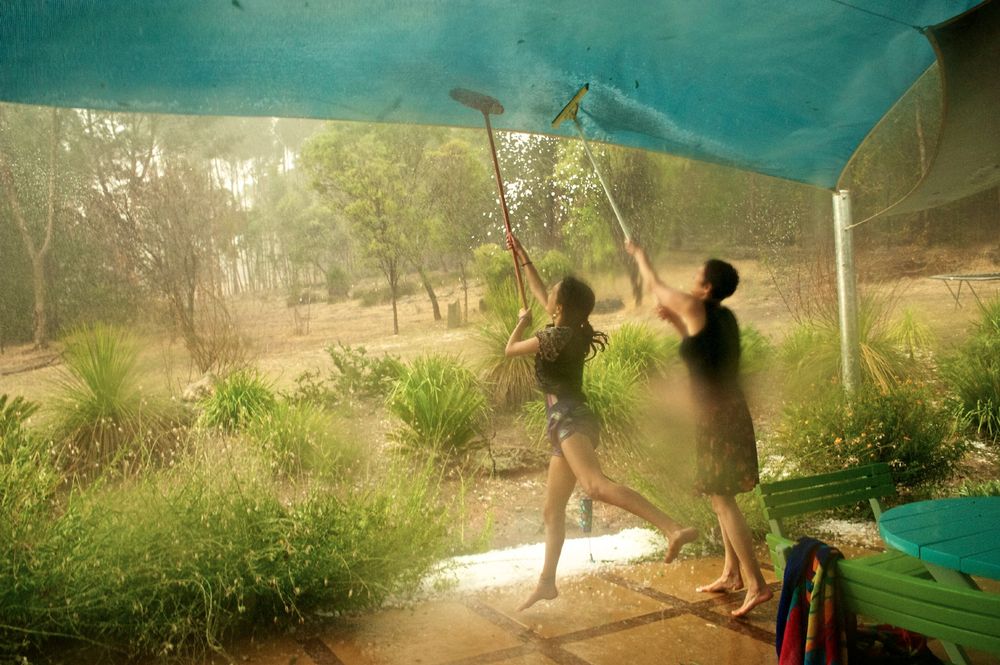
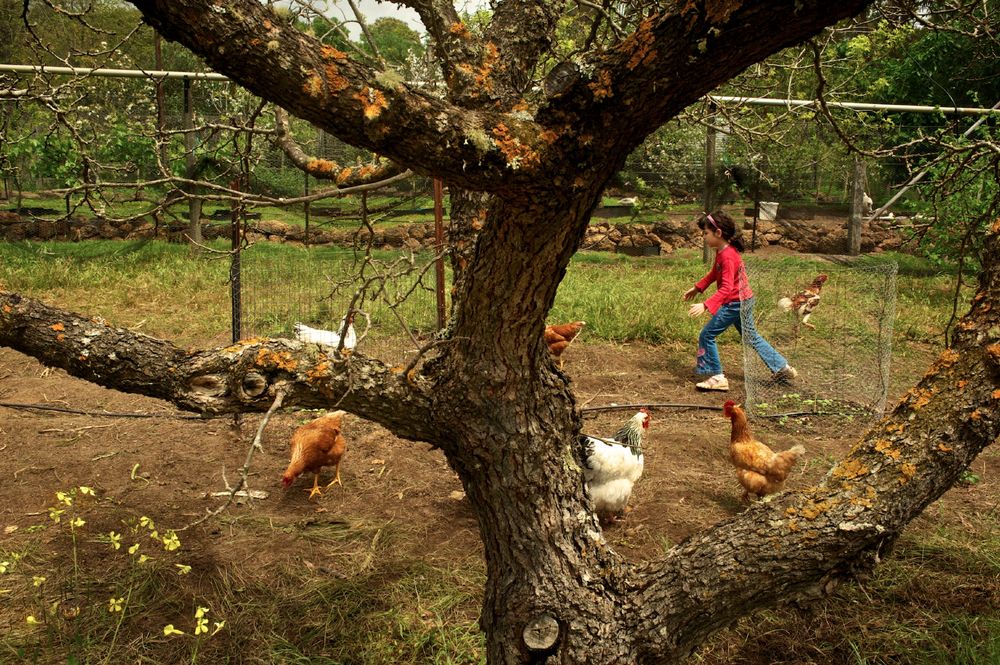
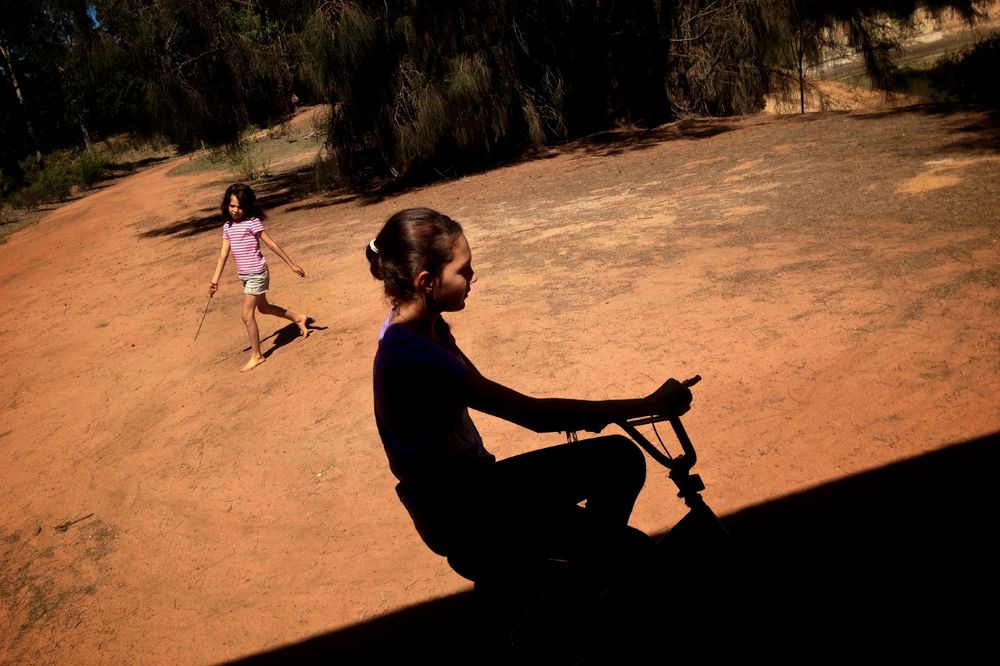
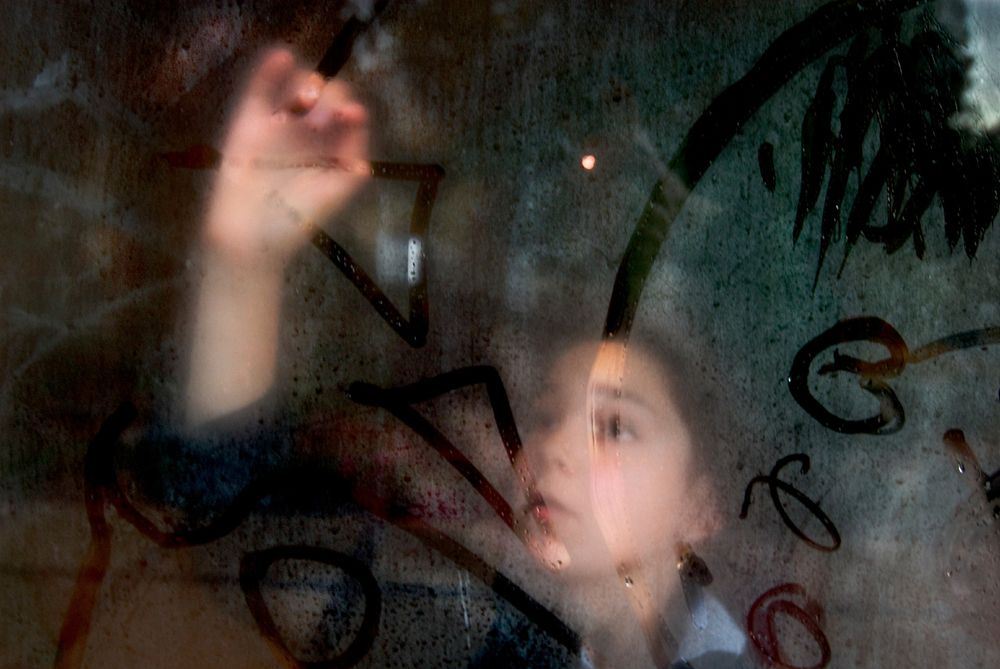
Sam Harris and his project The Middle of Somewhere – see portfolio and review on Lensculture here.T
he body of work spans a twelve-year period in the life of the photographer’s family, since they have boldly decided to leave the rat race in search for a simpler existence. A Travelogue insert is included in the book from the family’s life on the road in Australia and in villages in India where they lived for several years and birthed their second daughter.
Simultaneously expressing something about the meanings of love, growing up, sisterhood, family, landscape, and the rhythm of nature, Harris’ work is at once both intimate and all embracing and is a memorable and inspiring collection of images that will both please the eye and stir the soul.
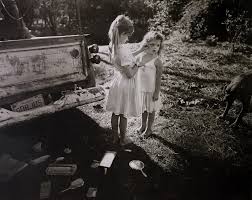
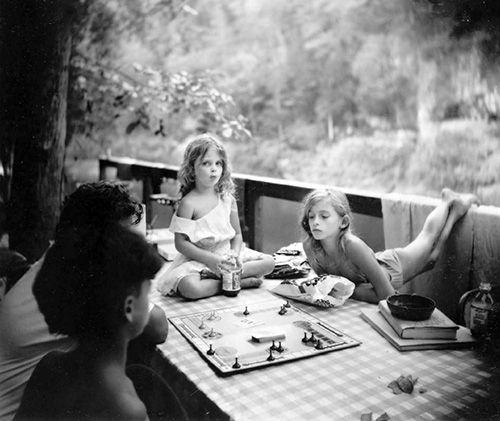
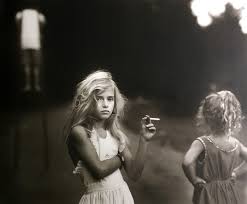
Sally Mann and her seminal work and photobook: Immediate Family
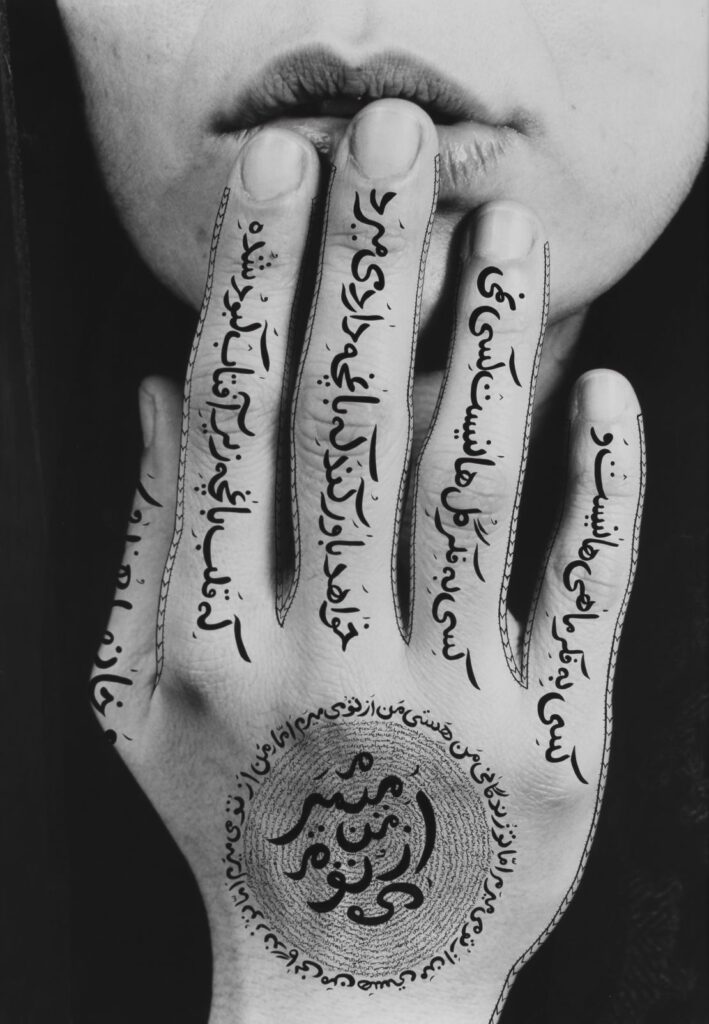
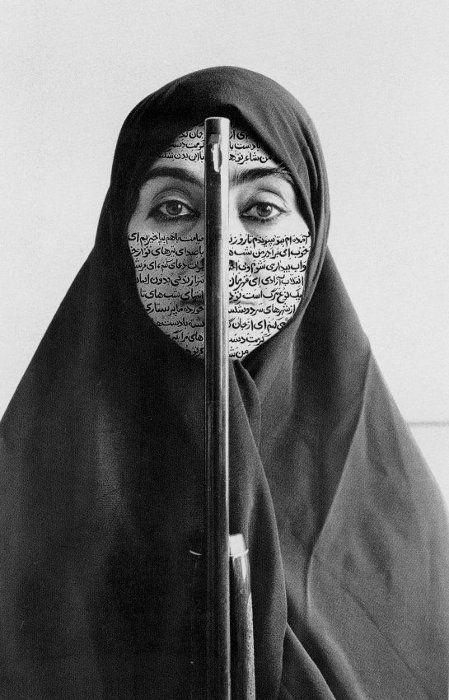
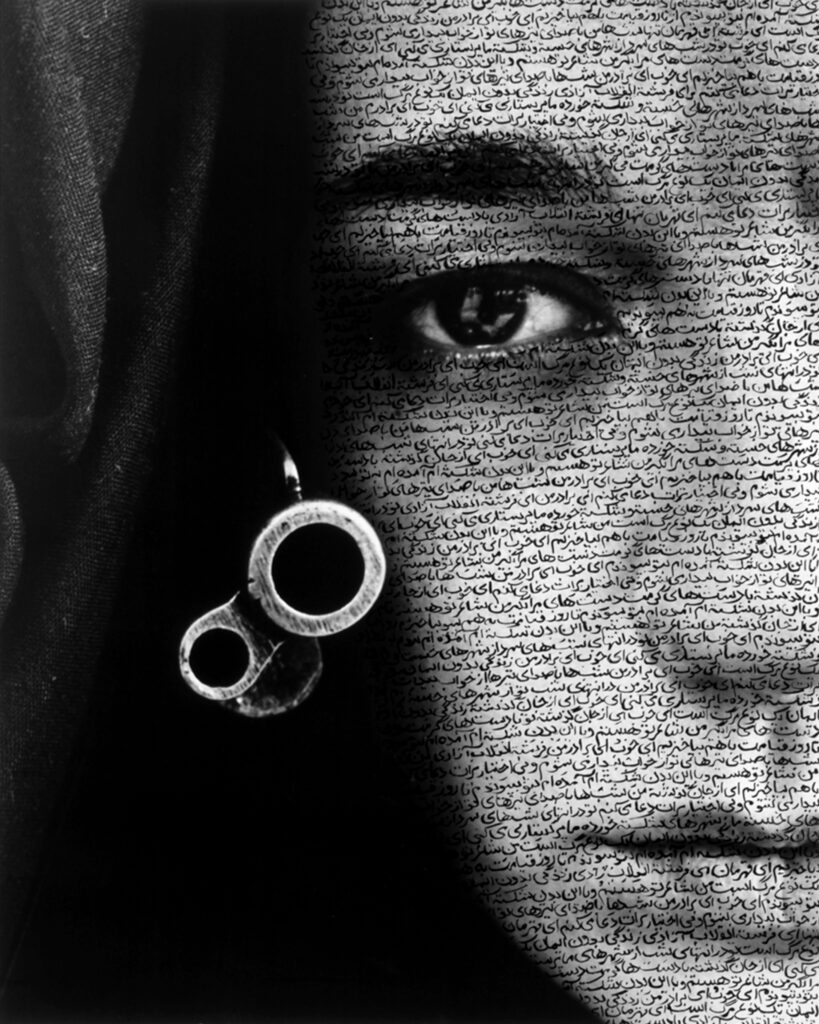
Shirin Neshat (b. 1957, Qazvin, Iran) is an Iranian-born artist and filmmaker living in New York. Neshat’s early photographic works include the Women of Allah series (1993–1997), which explored the question of gender in relation to Islamic fundamentalism and militancy. Her subsequent video works departed from overtly political content or critique in favor of more poetic imagery and narratives. In her practice, she employs poetic imagery to engage with themes of gender and society, the individual and the collective, and the dialectical relationship between past and present, through the lens of her experiences of belonging and exile.